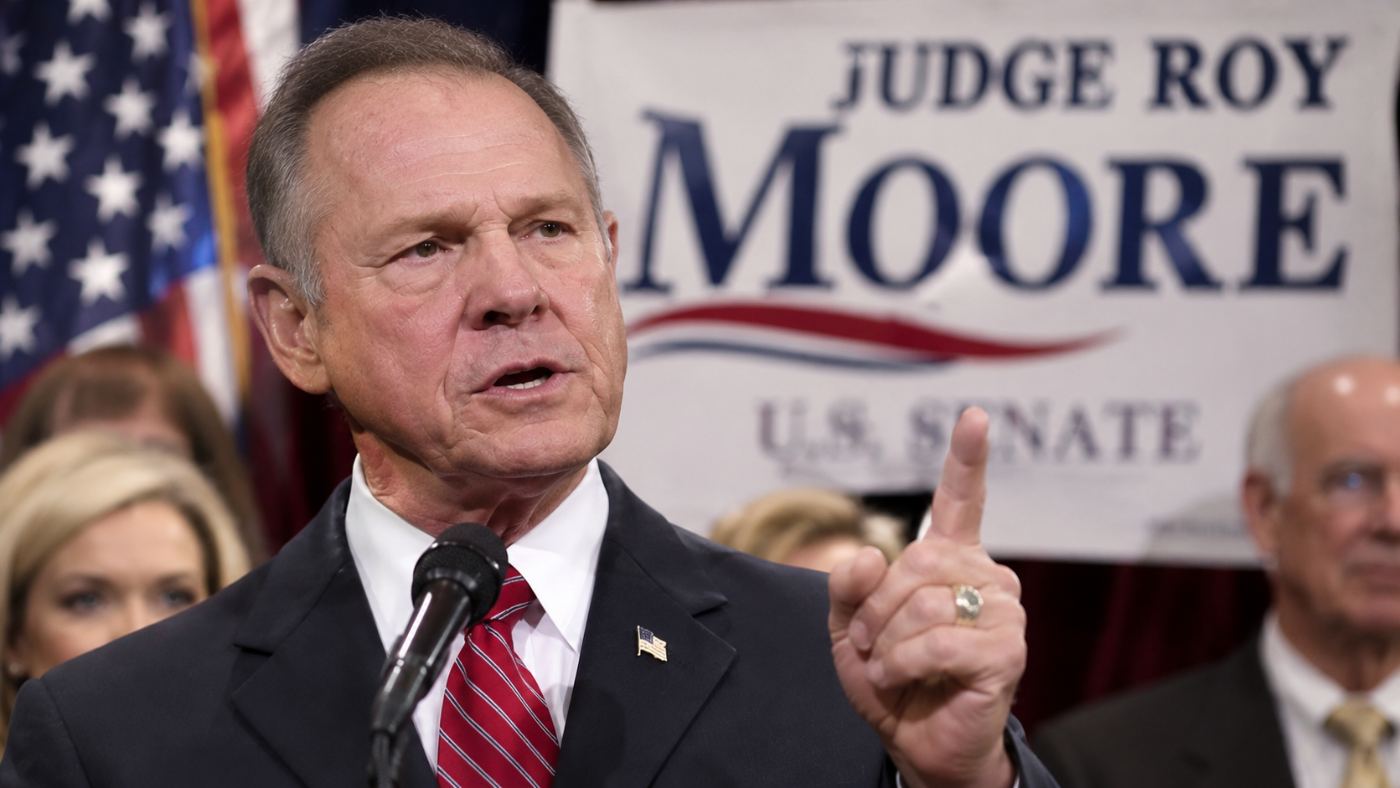
On December 10, 2017, President Donald Trump intensified his support for Alabama Republican Senate candidate Roy Moore as a recorded telephone endorsement was released to voters just two days before a closely watched special election.
The intervention came despite allegations from multiple women that Moore had pursued teenage girls or engaged in sexual misconduct decades earlier.
Moore denied the accusations, but the controversy had already prompted prominent Republicans to distance themselves from his candidacy.
Trump chose a different approach: putting the presidency's political influence directly behind Moore's campaign.
A Presidential Endorsement Delivered by Telephone
The Moore campaign released a recorded message featuring Trump's voice urging Alabama Republicans to support the former state Supreme Court chief justice.
In the recording, Trump argued that Republicans needed Moore in the Senate to advance his administration's priorities, including immigration enforcement, military spending, gun rights, and opposition to abortion.
Trump warned that electing Democrat Doug Jones would obstruct his legislative agenda.
The message represented one of Trump's most direct interventions in the race.
The White House had confirmed the recording on December 9, and national news organizations reported its release and planned distribution to Alabama voters on December 10.
Serious Allegations Against Moore
Moore's campaign had been engulfed in controversy since November, when women came forward with allegations about his conduct decades earlier.
One woman alleged that Moore initiated sexual contact with her when she was 14 and he was in his 30s.
Other women described inappropriate advances or relationships that began when they were teenagers.
Moore repeatedly denied the allegations, describing them as politically motivated attacks.
The accusations created a major controversy within the Republican Party, with several senior figures questioning whether Moore should remain in the race.
Republicans Divided Over Moore
Senate Majority Leader Mitch McConnell had previously called for Moore to withdraw.
Alabama Republican Senator Richard Shelby publicly refused to support Moore, revealing on December 10 that he had written in another Republican rather than vote for his party's nominee.
Shelby argued that Republicans could do better.
Trump, however, continued supporting Moore.
At a December 8 rally in Pensacola, Florida, near the Alabama border, Trump had urged voters to elect Moore.
The recorded telephone message extended that effort directly into Alabama households.
Control of the Senate at Stake
The special election was scheduled for December 12, 2017.
The seat had previously been held by Jeff Sessions, who left the Senate to become Trump's attorney general.
Republicans held a narrow Senate majority, making the contest politically important for Trump's legislative priorities.
Trump's support reflected his stated belief that securing another Republican vote was essential to advancing his agenda.
The allegations against Moore raised a separate question about the standards political leaders should apply when deciding whom to endorse.
Moore Ultimately Loses
On December 12, Democrat Doug Jones defeated Moore in a closely contested election.
Jones became the first Democrat elected to the U.S. Senate from Alabama since 1992.
Moore initially refused to concede, but the election results were ultimately certified.
Trump's intervention had not been enough to secure Moore's victory.
Why December 10 Matters
The December 10 robocall demonstrated Trump's willingness to continue supporting a politically important candidate despite serious allegations and objections from members of his own party.
The episode exposed divisions among Republicans over political loyalty, allegations of misconduct, and the importance of maintaining Senate control.
It remains a documented example of how Trump's political priorities influenced his decisions about controversial candidates during his first presidency.