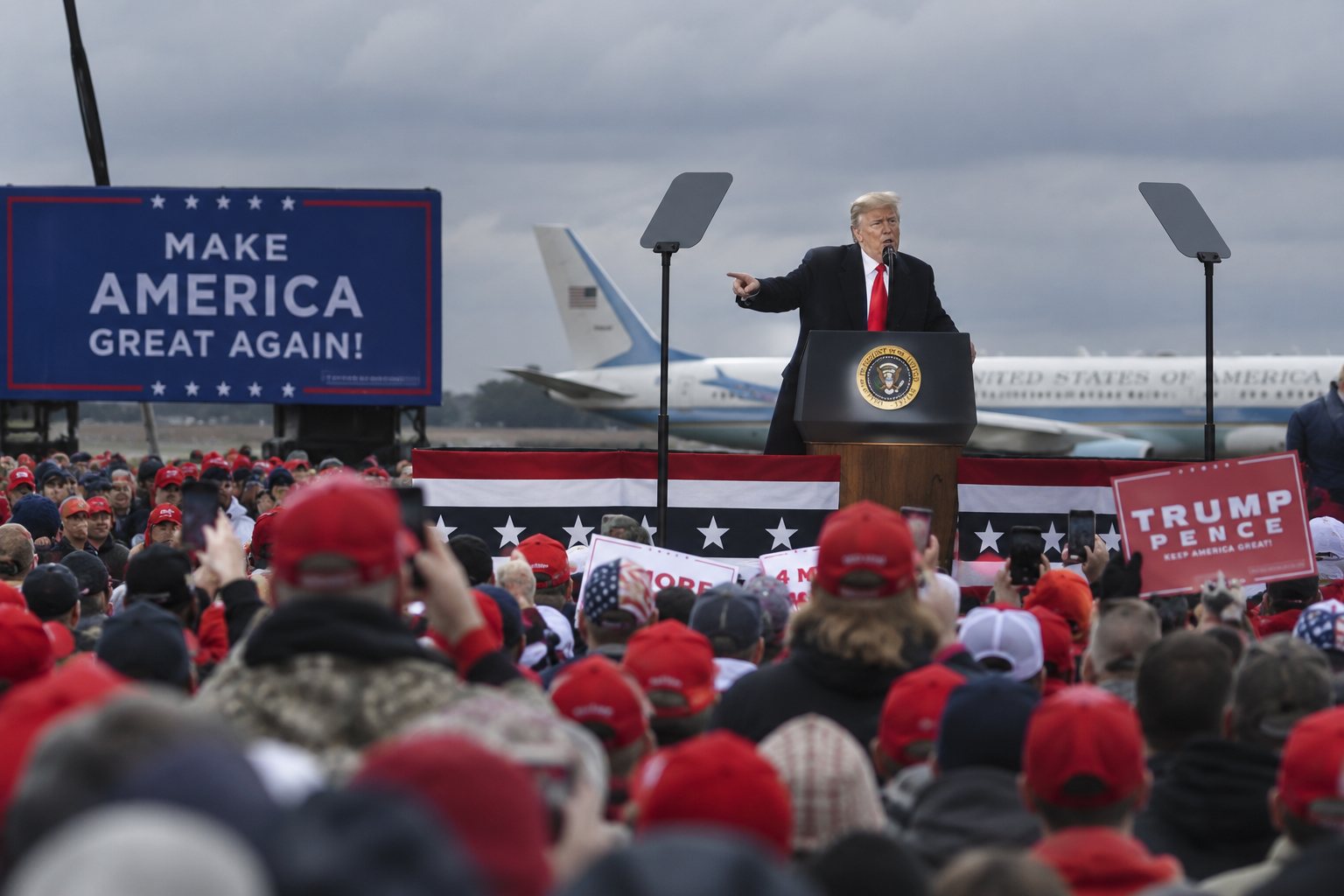
Just nine days after federal authorities announced the discovery of a plot to kidnap Michigan Governor Gretchen Whitmer, President Donald Trump stood before thousands of supporters at a campaign rally and attacked the Democratic governor over her handling of the COVID-19 pandemic.
As Trump criticized Whitmer, the crowd erupted into chants of "Lock her up!" Rather than condemn the calls to imprison a governor who had recently been targeted by an alleged domestic terrorism plot, Trump smiled and responded, "Lock 'em all up."
The extraordinary scene unfolded on October 17, 2020, at Muskegon County Airport, less than three weeks before the presidential election.
Whitmer, whose life had been threatened by anti-government extremists, condemned the president's remarks, warning that his rhetoric was putting public officials and their families in danger.
The incident raised serious questions about presidential responsibility, political intimidation, and the consequences of inflammatory rhetoric during an increasingly volatile election season.
A Kidnapping Plot That Shocked the Country
On October 8, 2020, federal and state authorities announced charges against 13 men in connection with alleged plots involving Whitmer and Michigan government institutions. Additional charges brought the number of defendants to 14.
According to investigators, several suspects had discussed kidnapping Whitmer, transporting her to another location, and placing her on trial for what they considered unconstitutional restrictions imposed during the coronavirus pandemic.
The investigation uncovered allegations of surveillance of the governor's vacation home, paramilitary training, discussions involving explosives, and plans to attack law enforcement officers.
Federal prosecutors alleged that the conspiracy involved members of an anti-government extremist network angered by pandemic restrictions and hostile toward government authority.
The plot was not merely an online expression of political frustration. Authorities alleged that participants had taken concrete steps toward carrying out an abduction.
The FBI infiltrated the group, gathered evidence, and intervened before the alleged kidnapping could occur.
At the time, the arrests were widely regarded as a serious warning about the threat of politically motivated violence in the United States.
Trump's Months of Attacks Against Whitmer
The confrontation did not emerge in isolation.
Throughout 2020, Trump repeatedly criticized Whitmer for restrictions intended to slow the spread of COVID-19.
In April, as armed protesters gathered at the Michigan Capitol to oppose pandemic restrictions, Trump posted a message on social media declaring:
"LIBERATE MICHIGAN!"
The message came during a period of intense political conflict over business closures, public gatherings, mask requirements, and emergency health powers.
Whitmer maintained that her administration's restrictions were necessary to protect public health and prevent hospitals from becoming overwhelmed.
Trump and other critics argued that the restrictions were excessive and imposed unacceptable economic and personal costs.
The policy disagreement was legitimate political territory. But the discovery of an alleged kidnapping conspiracy transformed the context in which attacks against Whitmer were being made.
By October 17, the president knew that authorities had uncovered a serious threat against the governor.
Nevertheless, he continued making her a target of criticism before large campaign crowds.
'Lock Her Up' — And Trump Joins In
At the Muskegon rally, Trump urged supporters to pressure Whitmer into lifting restrictions.
He called on Michigan residents to get their governor to reopen the state and its schools.
The crowd responded with the familiar chant:
"Lock her up! Lock her up!"
Rather than tell supporters to stop, Trump smiled and answered:
"Lock 'em all up."
The exchange was particularly alarming because the governor being targeted had recently been the subject of an alleged violent conspiracy.
Trump also appeared to minimize the seriousness of the threat against Whitmer.
Referring to the recently announced plot, he told supporters:
"So, I guess they said she was threatened."
He then complained that Whitmer had blamed him.
The president did not accuse the governor of a specific crime that would justify imprisonment. The chants were an expression of political hostility, not a response to criminal charges against Whitmer.
The scene drew immediate criticism from Democrats and others who argued that a president should not encourage calls to imprison a political opponent, particularly one facing documented security threats.
Whitmer Responds: 'It Needs to Stop'
Whitmer responded publicly that evening, condemning the rhetoric and warning about its potential consequences.
In a statement posted on social media, she wrote:
"This is exactly the rhetoric that has put me, my family, and other government officials' lives in danger while we try to save the lives of our fellow Americans. It needs to stop."
Members of her staff also warned that hostile online messages intensified following Trump's attacks.
Tori Saylor, Whitmer's deputy digital director, said she regularly observed threatening rhetoric directed at the governor and that presidential attacks were followed by escalations in hostile social media activity.
The following day, Whitmer appeared on NBC's Meet the Press, where she accused Trump of encouraging dangerous extremism.
She described the president's conduct as disturbing and warned that the consequences extended beyond her own safety.
Whitmer's criticism was directed at what she saw as a pattern: political attacks from the president followed by increasingly hostile behavior from some of his supporters.
There was no established evidence that Trump had directed or participated in the kidnapping conspiracy. The controversy concerned his rhetoric toward a governor who had already been targeted.
From Campaign Slogan to Threatening Political Atmosphere
The phrase "Lock her up" had become a fixture of Trump's political rallies during the 2016 presidential campaign, when supporters used it against Democratic nominee Hillary Clinton.
By 2020, the chant had expanded to other political opponents.
At the Michigan rally, however, the circumstances were significantly different.
The target was a sitting governor whose alleged kidnappers had been arrested just over a week earlier.
Investigators had described plans involving surveillance, weapons, and preparations for an abduction.
The contrast between those allegations and the president's response to calls for Whitmer's imprisonment drew national attention.
Political leaders regularly criticize their opponents, sometimes in harsh language. But critics argued that Trump's participation in the chant demonstrated insufficient concern for the risks facing an elected official.
Supporters of Trump maintained that the chant was political rhetoric and that his criticism of Whitmer's pandemic policies was protected political speech.
The dispute highlighted a larger question: what responsibility does a president have to discourage threatening language when political disagreements are already accompanied by credible threats of violence?
A Country Already on Edge
The Muskegon rally took place during an exceptionally turbulent period in American history.
The COVID-19 pandemic had killed more than 200,000 Americans by October 2020. Millions had lost jobs, schools and businesses had experienced prolonged disruptions, and disagreements over public-health measures had become deeply politicized.
The country was also confronting protests over racial injustice, armed demonstrations, threats against public officials, and growing concerns about domestic extremism.
Trump's reelection campaign increasingly emphasized warnings about radical political movements and threats to American society.
At the October 17 rally, he portrayed Democrats as a danger to the country's values and institutions.
His criticism of Whitmer formed part of that broader campaign message.
But the revelation of the kidnapping plot meant that the governor was no longer simply another political opponent being criticized over policy.
She was an elected official whose security had become the subject of a major federal criminal investigation.
The Kidnapping Case Continued After the Election
The investigation eventually produced a complicated series of federal and state prosecutions.
Some defendants were convicted, others were acquitted, and several cases generated disputes over the FBI's use of informants and undercover agents.
In December 2022, two leading federal defendants, Adam Fox and Barry Croft Jr., received substantial prison sentences after being convicted of conspiracy to kidnap Whitmer and related offenses.
Other defendants received different outcomes, including acquittals and guilty pleas.
Those developments underscored the importance of distinguishing the allegations against individual defendants from the broader political controversy surrounding Trump's statements.
The criminal proceedings established serious wrongdoing by some participants, but they did not establish that Trump organized or directed the plot.
The October 17 rally remained significant for a different reason: the president's public response to demands that a political opponent be imprisoned shortly after authorities disclosed a conspiracy against her.
A Defining Moment in the Politics of 2020
The events of October 17, 2020, illustrated how deeply the country's political divisions had intensified during the pandemic.
Trump's criticism of Whitmer's public-health restrictions was part of a broader disagreement over the appropriate limits of government emergency powers.
But the crowd's calls for imprisonment, the president's response, and the recent kidnapping allegations raised questions extending well beyond pandemic policy.
Whitmer had faced a credible security threat serious enough to prompt a major law-enforcement operation.
Nine days after the plot became public, the president appeared at a rally in her state and responded approvingly to a crowd demanding that she be locked up.
The lasting significance of the episode lies in that contrast: a governor had recently been targeted for kidnapping, yet the president of the United States chose to join a crowd's calls for her imprisonment rather than discourage them.