Three days after firing FBI Director James Comey, President Donald Trump introduced another extraordinary question into the rapidly growing controversy surrounding Comey's dismissal:
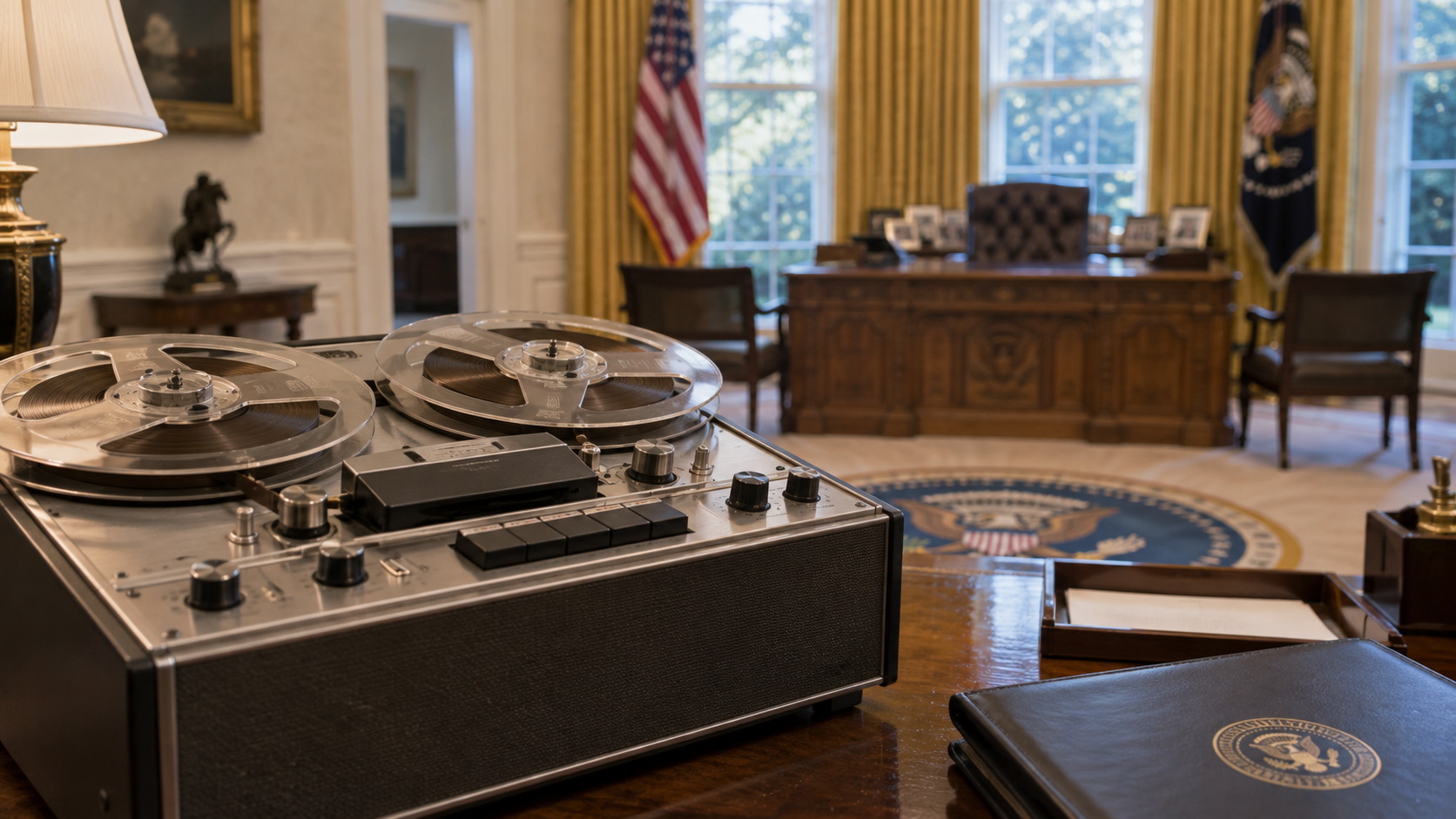
Had the president secretly recorded their private conversations?
On the morning of May 12, Trump posted a warning directed at the FBI director he had just fired:
> “James Comey better hope that there are no ‘tapes’ of our conversations before he starts leaking to the press!”
Trump didn't say recordings existed.
But he didn't say they didn't exist either.
And with that single message, the White House suddenly faced weeks of questions about whether the president had a secret recording system.
Where Are the Tapes?
The suggestion immediately carried historical significance.
Secret White House recordings inevitably recalled President Richard Nixon, whose taping system produced evidence that became central to the Watergate scandal.
Reporters therefore began asking a straightforward question:
Were Trump's conversations with Comey recorded?
The White House didn't immediately provide a definitive answer.
Trump himself continued allowing the uncertainty to linger.
The controversy became especially important because Trump and Comey offered conflicting accounts of some of their private conversations.
If recordings existed, they potentially could have established exactly what had been said.
Comey Welcomes the Possibility
The issue followed Comey into his highly anticipated testimony before the Senate Intelligence Committee on June 8.
Comey had written contemporaneous memos documenting several of his interactions with Trump.
When senators asked about Trump's suggestion that recordings might exist, Comey didn't appear worried.
“Lordy, I hope there are tapes,” Comey told the committee.
Comey said that if recordings existed, they should be released publicly.
Suddenly, Trump's original warning had created the possibility of evidence that could independently confirm — or contradict — accounts of the president's private conversations with the former FBI director.
Trump Keeps Everyone Waiting
Even after Comey's testimony, Trump still didn't immediately settle the question.
At a June 9 White House news conference, reporters again asked whether recordings existed.
Trump responded that he might provide an answer “in the very near future.”
The mystery continued.
Meanwhile, congressional investigators wanted answers as well.
The House Intelligence Committee requested information concerning any recordings of Trump's conversations with Comey.
What began as a presidential social-media post had now become a subject of congressional interest.
Finally, an Answer
On June 22 — nearly six weeks after first raising the possibility — Trump finally addressed the question directly.
He said he had not made recordings of his conversations with Comey and did not possess any.
That effectively ended the mystery Trump himself had created.
There was no cache of Trump-Comey tapes produced by the White House.
No secret presidential recordings emerged to settle their competing accounts.
A Remarkable Self-Created Controversy
The episode became another example of how Trump's own public statements could create controversies that consumed his administration.
Nobody outside the White House had announced the existence of Trump-Comey recordings.
Trump himself raised the possibility.
His administration then spent weeks facing questions about whether those recordings existed before Trump finally said that he had neither made nor possessed them.
And the original message had another consequence.
Comey later testified that Trump's reference to possible tapes prompted him to arrange for the contents of one of his memos to be shared with a reporter through a friend.
Comey said he hoped doing so might lead to the appointment of a special counsel.
A special counsel had already been appointed by the time Comey publicly explained that decision.
Robert Mueller would ultimately spend nearly two years investigating Russian election interference, contacts involving members of the Trump campaign and questions concerning possible obstruction of justice.
The mysterious “tapes,” meanwhile, never materialized.
For more than a month, Washington debated whether a secret White House recording system existed largely because the president had publicly suggested that it might.
Then Trump provided the answer:
He hadn't made the tapes.
And he didn't have them.
Category: Politics / Courts & Justice
Tags: Donald Trump, James Comey, FBI, Comey Tapes, Robert Mueller, Russia Investigation, White House, Senate Intelligence Committee, 2017