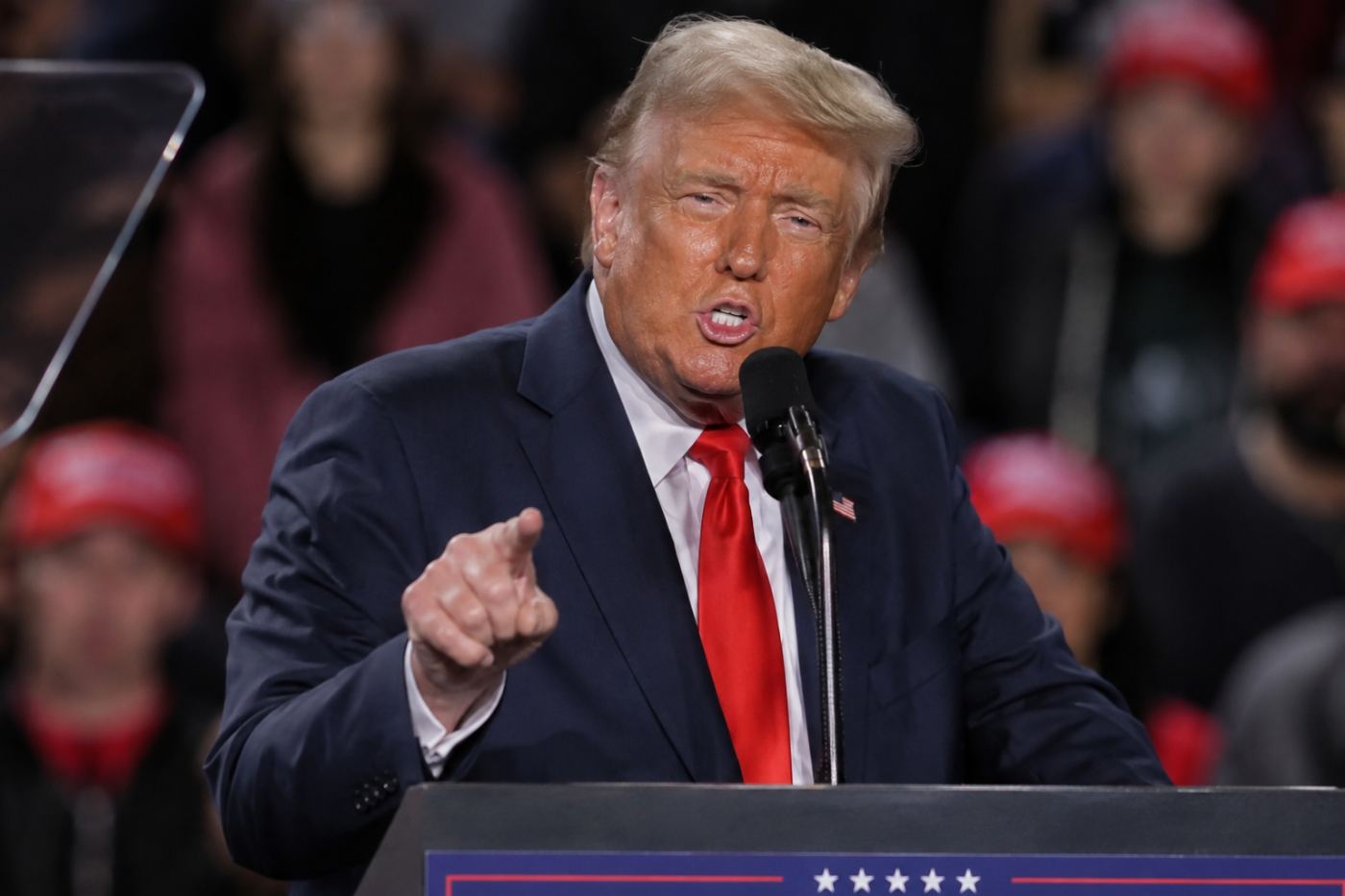
Donald Trump wants greater support from Black Americans. Yet his repeated comments about Black voters continue to generate controversy, raising questions about whether his political messaging undermines his own efforts to expand the Republican coalition.
A November 13 Jezebel article highlighted the contradiction, revisiting Trump's relationship with an electorate that has historically supported Democratic presidential candidates by substantial margins.
The controversy follows another incident in which Trump publicly insulted voters while attempting to influence their political choices.
Trump Calls Black Voters Crazy
During an October 29 campaign rally in Rock Hill, South Carolina, Trump attacked Michigan Democratic Senate candidate Abdul El-Sayed, a Muslim American.
Trump warned Black and Jewish voters against supporting El-Sayed, declaring that they would be crazy to vote for him.
He then added another remark suggesting they were crazy anyway.
The comments drew immediate criticism from civil rights advocates and Democratic officials, who accused the president of insulting entire communities while promoting religious divisions.
Trump also falsely associated El-Sayed with the Muslim Brotherhood.
Rather than explaining why Republican policies might appeal to these voters, the president resorted to personal insults and accusations.
A History of Controversial Appeals
The October incident was hardly the first time Trump's attempts to court Black voters generated backlash.
During a February 2024 Black Conservative Federation event, Trump suggested that Black Americans might identify with him because of his criminal indictments and mugshot.
He claimed that Black people understood his experiences with discrimination.
The remarks drew criticism from the NAACP and other civil rights advocates, who rejected comparisons between Trump's legal problems and the historical discrimination experienced by Black Americans.
Trump also suggested that his mugshot had become particularly popular among Black supporters.
Critics argued that the comments reduced Black Americans to racial stereotypes rather than addressing their actual political concerns.
The Republican Party's Outreach Problem
Republicans have spent years attempting to expand their support among Black voters, particularly younger men and socially conservative Americans.
Trump made gains among some Black voters during the 2024 election, demonstrating that the electorate is not politically uniform.
Black conservatives have also defended Trump, pointing to economic policies, criminal justice initiatives, and their dissatisfaction with Democratic leadership.
But those gains do not erase the controversy surrounding his rhetoric.
Political support cannot be assumed simply because a candidate believes certain policies should appeal to a particular demographic.
Voters evaluate candidates through their experiences, priorities, and perceptions of leadership.
The Midterm Backlash
The November 3, 2026, midterm elections brought substantial Republican losses, prompting renewed debate over Trump's political influence and the party's relationship with different voter groups.
The results have encouraged some Republicans to question whether the party's messaging and policy priorities are limiting its appeal.
Trump's remarks about Black voters offer one example of the challenge.
While Republican leaders seek broader support, the president's public statements have repeatedly become controversies of their own.
Respect Cannot Be Demanded
The central contradiction is difficult to ignore.
Trump frequently argues that Black Americans should recognize his administration's accomplishments, yet his rhetoric has sometimes portrayed voters who disagree with him as irrational or misguided.
Political loyalty, however, is not an entitlement.
Black Americans, like every other electorate, are free to judge candidates by their policies, conduct, and record.
For Republicans hoping to build lasting support beyond Trump's existing coalition, the challenge is not simply persuading voters that the party deserves their votes.
It is demonstrating through words and actions why those voters should trust its leadership.