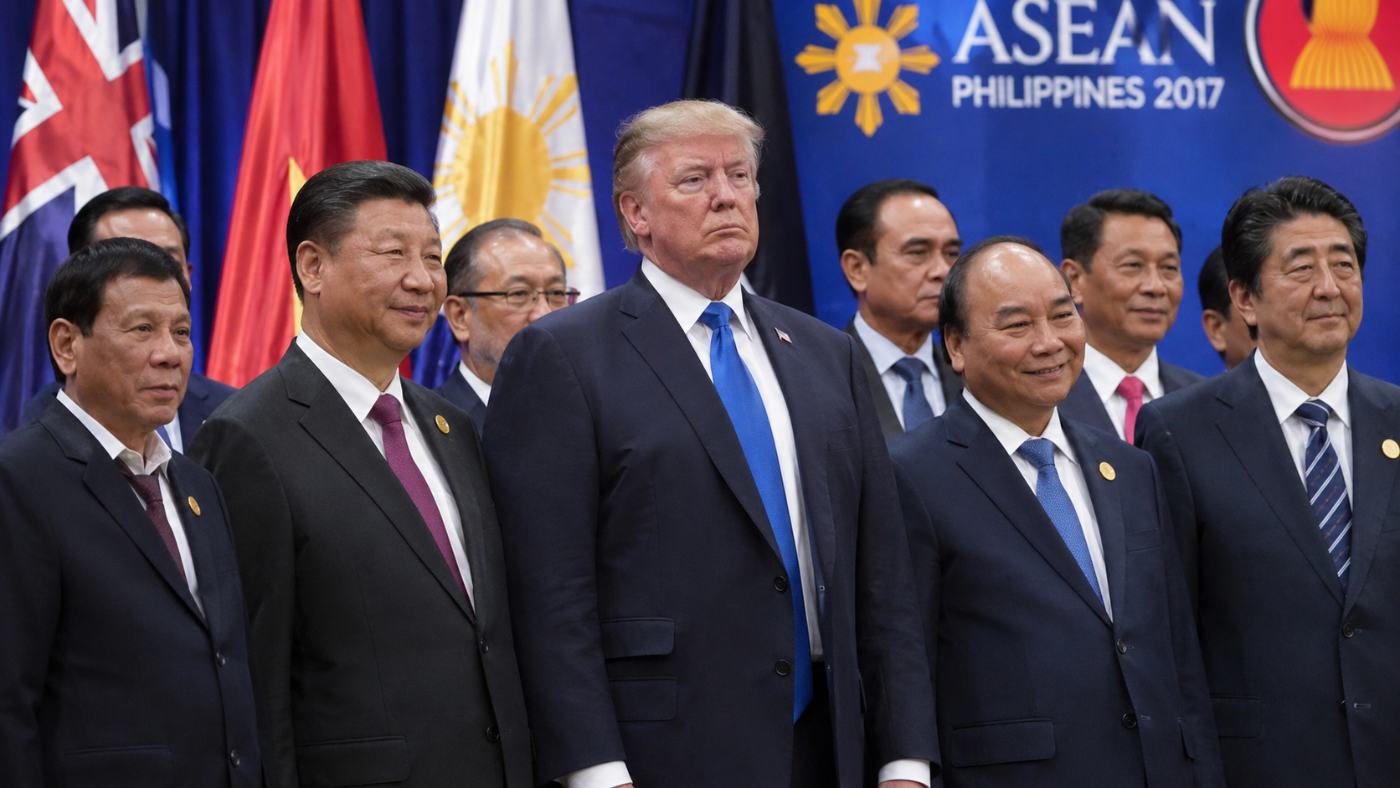
As President Donald Trump's first official tour of Asia approached its conclusion on November 13, 2017, a troubling pattern had emerged. Across five countries and nearly two weeks of diplomatic meetings, Trump repeatedly offered warm praise to powerful leaders while largely avoiding public criticism of serious human rights abuses.
From China's restrictions on political dissent to the Philippines' deadly campaign against suspected drug offenders, the president's approach drew criticism from human rights advocates who questioned whether his administration was retreating from America's traditional role in defending democratic freedoms.
China's President Receives a Warm Welcome
During his visit to Beijing, Trump praised Chinese President Xi Jinping, describing him as a very special man.
The compliments came despite China's extensive restrictions on political expression, independent journalism, religious freedom, and internet access.
Xi had recently consolidated his authority following a Communist Party congress, strengthening his position within China's one-party political system.
Rather than publicly challenging those restrictions, Trump emphasized trade negotiations, North Korea, and the importance of maintaining a productive relationship with Beijing.
The administration argued that economic and security cooperation required constructive diplomacy.
Critics questioned whether that approach diminished American pressure for political reform.
Vietnam's Political Prisoners Receive Little Attention
In Vietnam, Trump met with the country's communist leadership while focusing primarily on trade and regional security.
At the time, Vietnamese authorities were conducting a crackdown on independent journalists, bloggers, and political activists.
Human rights organizations had documented arrests and imprisonment of individuals who criticized the government or advocated democratic reforms.
Trump did not make those abuses a prominent subject of his public remarks.
His approach disappointed advocates who had hoped an American presidential visit would bring greater attention to Vietnam's political prisoners.
Silence Over the Rohingya Crisis
One of the most serious humanitarian emergencies in the region was unfolding in Myanmar, also known as Burma.
A military campaign against the Rohingya Muslim minority had forced hundreds of thousands of people to flee into neighboring Bangladesh.
Survivors described killings, sexual violence, and the destruction of entire villages.
The United Nations' top human rights official had characterized the campaign as a textbook example of ethnic cleansing.
Yet as of November 13, Trump had made no public statement directly addressing the crisis during his Asian tour.
White House officials said he had discussed the situation privately with regional leaders.
For human rights advocates, the absence of a prominent presidential statement was a significant omission.
Duterte's Deadly Drug War
The final stage of Trump's trip brought him to the Philippines, where President Rodrigo Duterte faced international condemnation over his government's campaign against suspected drug offenders.
Thousands had died in police operations and killings attributed to unidentified gunmen.
Despite those allegations, Trump praised his relationship with Duterte during their meeting in Manila.
When reporters attempted to question the leaders about human rights, Duterte interrupted and dismissed the questioning.
The White House later said human rights had briefly arisen during private discussions. Duterte's spokesman disputed that account.
The public exchange reinforced concerns that Trump was reluctant to confront leaders whose cooperation he valued.
A Selective Approach to Human Rights
Trump did speak forcefully about human rights during the trip, particularly when condemning North Korea's dictatorship in an address to South Korea's parliament.
That contrast became central to the