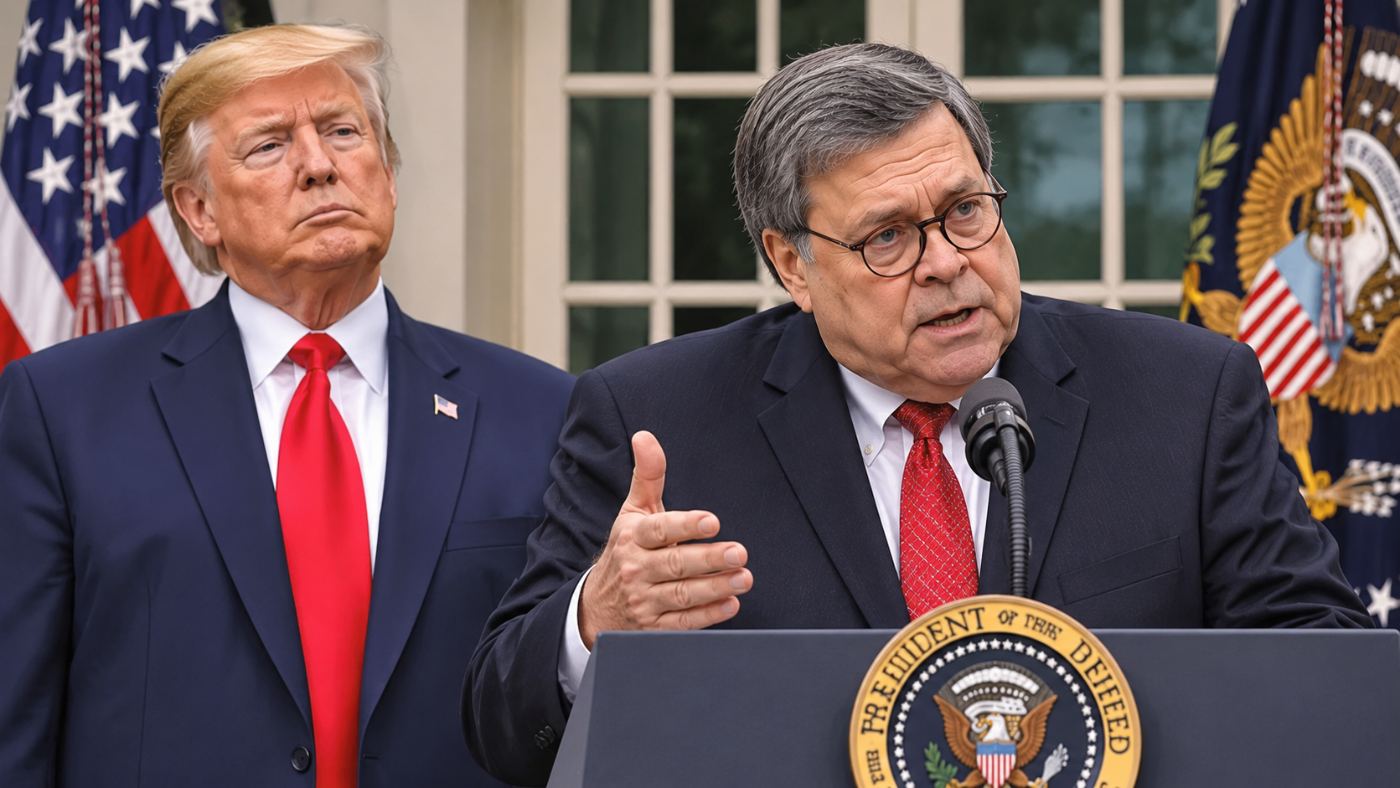
On December 7, 2018, President Donald Trump announced his intention to nominate William Barr as attorney general, selecting a former Justice Department leader who had publicly questioned aspects of the investigation into Russian interference in the 2016 presidential election.
The announcement came just one month after Trump forced Attorney General Jeff Sessions from office following months of public attacks over Sessions' decision to recuse himself from the Russia investigation.
The nomination immediately raised questions about whether the Justice Department's independence could be maintained while investigators examined the president's own conduct.
Trump Had Already Driven Out His Attorney General
Sessions had been one of Trump's earliest and most prominent political supporters.
But their relationship deteriorated after Sessions recused himself from investigations involving the 2016 presidential campaign.
Trump repeatedly criticized the decision, arguing that Sessions should have remained involved in overseeing the investigation.
The recusal placed Deputy Attorney General Rod Rosenstein in charge of supervising Special Counsel Robert Mueller.
Mueller was investigating Russian election interference, possible coordination involving Trump's campaign, and potential obstruction of justice.
Trump repeatedly attacked the investigation, calling it a witch hunt and questioning the credibility of its investigators.
Following the November 2018 midterm elections, Sessions resigned at Trump's request.
Trump temporarily replaced him with Matthew Whitaker, another outspoken critic of Mueller's investigation.
Barr Had Already Questioned the Investigation
Barr previously served as attorney general under President George H. W. Bush and possessed extensive Justice Department experience.
But his public statements about Trump-related investigations raised concerns.
In 2017, Barr suggested that the Justice Department had more reason to examine Hillary Clinton's involvement in the Uranium One controversy than to investigate possible collusion between Trump's campaign and Russia.
He also criticized the political composition of Mueller's investigative team and defended Trump's decision to dismiss FBI Director James Comey.
Those statements attracted attention because Barr would potentially supervise the very investigation he had questioned.
On the day Trump announced the nomination, the president continued attacking Mueller and Comey on social media.
The contrast was striking: the president was publicly disparaging federal investigators while selecting the official who would eventually oversee their work.
An Even More Troubling Memo Emerges
A development later that month intensified scrutiny of Barr's nomination.
On December 19, reports revealed that Barr had written an unsolicited memorandum in June 2018 challenging a legal theory concerning possible obstruction of justice by Trump.
Barr argued that Mueller's approach to presidential obstruction could threaten legitimate executive authority.
The memorandum was written before Barr's nomination, although its contents did not become public until after December 7.
Critics questioned whether someone who had already expressed such strong views could impartially supervise the investigation.
Barr maintained that his criticism concerned a particular legal theory rather than the entire Russia investigation.
Congress Demands Independence
Democratic lawmakers called for assurances that Mueller would be permitted to complete his investigation without political interference.
Some Republicans expressed similar concerns.
Senator Susan Collins emphasized the importance of protecting the investigation and preserving independent prosecutorial decisions.
Barr's supporters pointed to his previous service and extensive legal experience as evidence that he was qualified to lead the department.
But the central question remained whether the nation's chief law enforcement officer could operate independently of a president whose conduct was under investigation.
The Controversy Would Continue
Barr was confirmed in February 2019.
When Mueller completed his investigation, Barr issued a four-page summary of its principal conclusions before releasing a redacted version of the report.
Mueller subsequently expressed concern that Barr's initial presentation had failed to fully capture the investigation's findings.
The report documented numerous contacts between Russians and Trump campaign associates but did not establish a criminal conspiracy between the campaign and the Russian government. On obstruction of justice, Mueller declined to reach a traditional prosecutorial judgment and explicitly did not exonerate Trump.
Barr and Rosenstein concluded that the evidence was insufficient to establish an obstruction offense.
The disagreement intensified questions about how the administration handled the investigation's findings.
December 7, 2018, marked a consequential moment in Trump's confrontation with federal investigators: after removing an attorney general whose recusal had angered him, Trump selected a successor who had already publicly questioned important aspects of the investigation into his presidency.