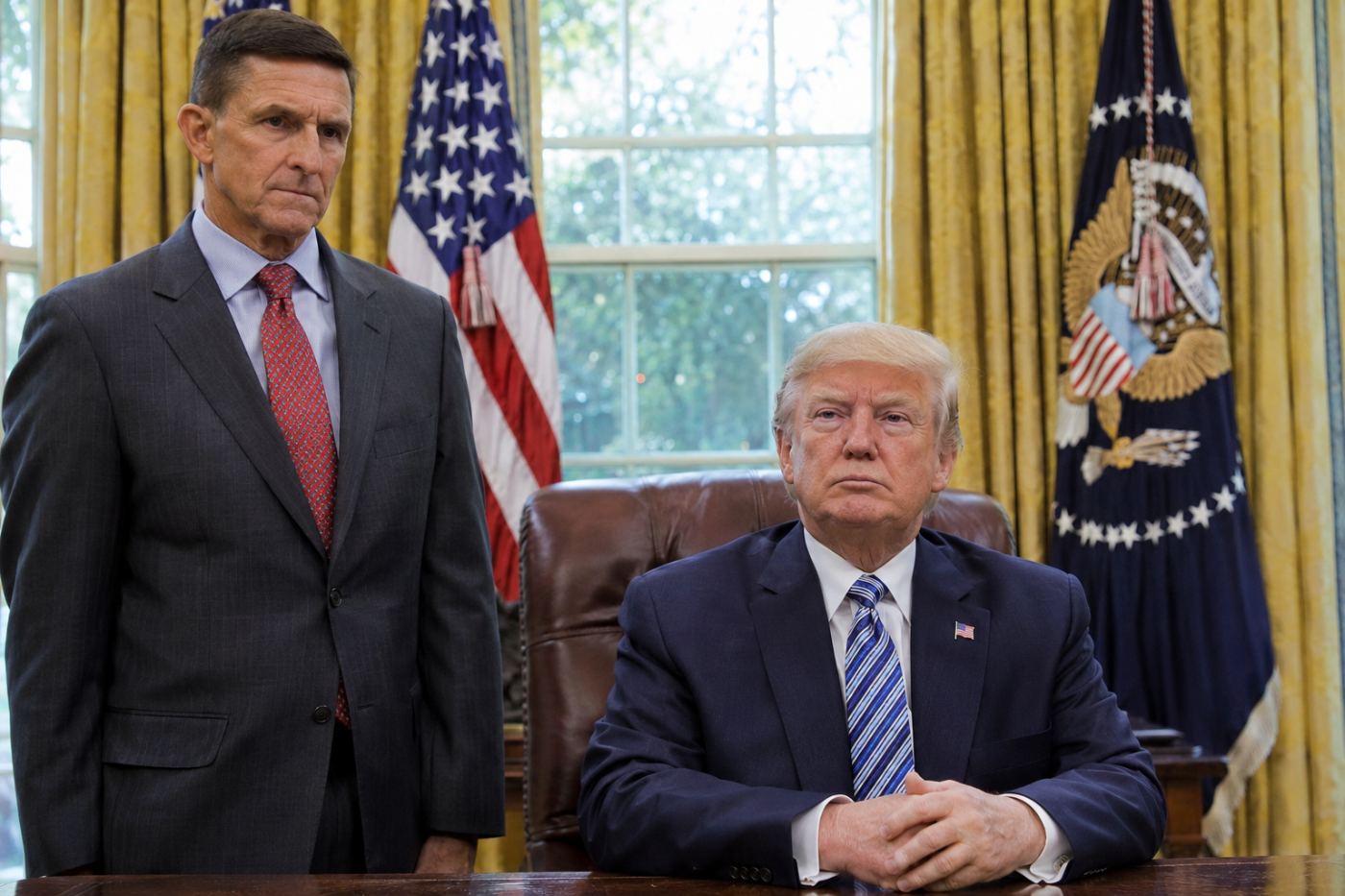
As Donald Trump prepared to leave the White House following his election defeat, he used one of the presidency's most extraordinary powers to rescue a former political ally from federal prosecution.
On November 25, 2020, Trump granted a full and unconditional pardon to Michael Flynn, his former national security adviser, who had twice pleaded guilty to lying to the FBI about conversations with Russia's ambassador.
The pardon ended a years-long legal battle and raised serious questions about Trump's willingness to use presidential authority to protect individuals connected to his administration.
The National Security Adviser Who Lasted Less Than a Month
Flynn entered the Trump administration in January 2017 as national security adviser.
He lasted just 24 days.
Flynn had discussed American sanctions against Russia with Russian Ambassador Sergey Kislyak during the presidential transition.
When questioned by FBI investigators, Flynn made false statements about those conversations.
He also misled Vice President Mike Pence about his contacts with Kislyak, contributing to his departure from the White House in February 2017.
In December 2017, Flynn pleaded guilty to making false statements to federal investigators.
He reaffirmed his guilty plea in court in December 2018.
From Guilty Pleas to Claims of Innocence
Flynn initially cooperated with Special Counsel Robert Mueller's investigation into Russian interference in the 2016 presidential election.
But after changing attorneys, he sought to withdraw his guilty plea and argued that investigators had treated him improperly.
His new attorney, Sidney Powell, became a prominent critic of the Russia investigation.
In May 2020, Attorney General William Barr's Justice Department took the unusual step of asking the court to dismiss Flynn's prosecution.
The department argued that the statements Flynn made to investigators were not sufficiently material to a legitimate investigation and questioned whether the government could prove its case.
Critics, including former federal prosecutors, argued that the reversal appeared to provide special treatment to a politically connected defendant.
Federal Judge Emmet Sullivan declined to immediately approve the dismissal, allowing further examination of the government's arguments.
Trump Steps In
With the case still unresolved, Trump intervened personally.
On November 25, he announced that Flynn had received a full pardon and congratulated his family ahead of Thanksgiving.
The White House portrayed Flynn as an innocent man who had been unfairly prosecuted.
But Flynn's earlier guilty pleas were documented facts, and the pardon did not establish that investigators had acted unlawfully or that Flynn was innocent.
Rather than allowing the disputed dismissal request to reach a judicial resolution, Trump exercised his constitutional clemency authority.
The pardon effectively ended the criminal proceedings.
An Exceptionally Broad Pardon
The scope of Trump's decision went beyond the false-statements charge.
The written pardon also covered possible federal offenses connected to Flynn's case and matters within the jurisdiction of Mueller's special counsel investigation.
That language provided Flynn with unusually broad protection against potential federal criminal exposure arising from the covered conduct.
It did not grant immunity for unrelated future offenses or state crimes.
The breadth of the pardon nevertheless attracted scrutiny because it extended protection to an individual who had served at the highest levels of Trump's administration.
Presidential Power and Political Loyalty
The Constitution gives presidents broad authority to pardon federal offenses.
Trump therefore possessed the legal power to grant Flynn clemency.
But the existence of that authority did not resolve the ethical questions surrounding its use.
Flynn had been an early Trump supporter, a senior White House official, and a vocal defender of the president.
Critics argued that pardoning such a close political ally risked creating the appearance that loyalty to the president could provide protection from criminal accountability.
Trump and Flynn's supporters maintained that the prosecution had been unjust and that clemency corrected an abuse of government power.
The competing interpretations centered on whether the pardon represented a legitimate correction of prosecutorial misconduct or preferential treatment for a presidential ally.
A Pattern of Clemency for Trump Associates
Flynn was not the first individual connected to the Russia investigation to receive clemency from Trump.
In July 2020, Trump commuted the prison sentence of longtime adviser Roger Stone, who had been convicted of obstruction, witness tampering, and lying to Congress.
Flynn's pardon added another prominent Trump associate to the list.
Both decisions prompted criticism that the president was using his clemency authority to benefit people whose legal troubles arose from investigations involving his political circle.
What Happened to Flynn's Case?
On December 8, Judge Sullivan formally dismissed Flynn's criminal case because the presidential pardon had rendered the proceedings moot.
Sullivan emphasized that a pardon was an exercise of presidential political authority, not a judicial determination of innocence.
The dismissal meant Flynn would not be sentenced on the false-statements charge.
It did not amount to a finding that his earlier guilty pleas were false or that the prosecution had been legally baseless.
The case ended because Trump had exercised his pardon power.
November 25: The President Protects an Ally
The Flynn pardon illustrated the extraordinary reach of presidential clemency.
Trump had the constitutional authority to issue it, and his administration insisted that Flynn deserved relief.
But the decision also protected a former senior adviser who had admitted under oath to lying to federal investigators.
It brought a controversial prosecution to an end without a final judicial resolution of the Justice Department's request to dismiss the case.
For critics, the central concern was not whether Trump possessed the power to pardon Flynn.
It was whether a president should use that power to shield a politically loyal former official from the consequences of a criminal prosecution.
On November 25, 2020, Trump chose to do exactly that.
The pardon closed Flynn's federal case, but it left unresolved questions about political favoritism, accountability, and the use of presidential power.