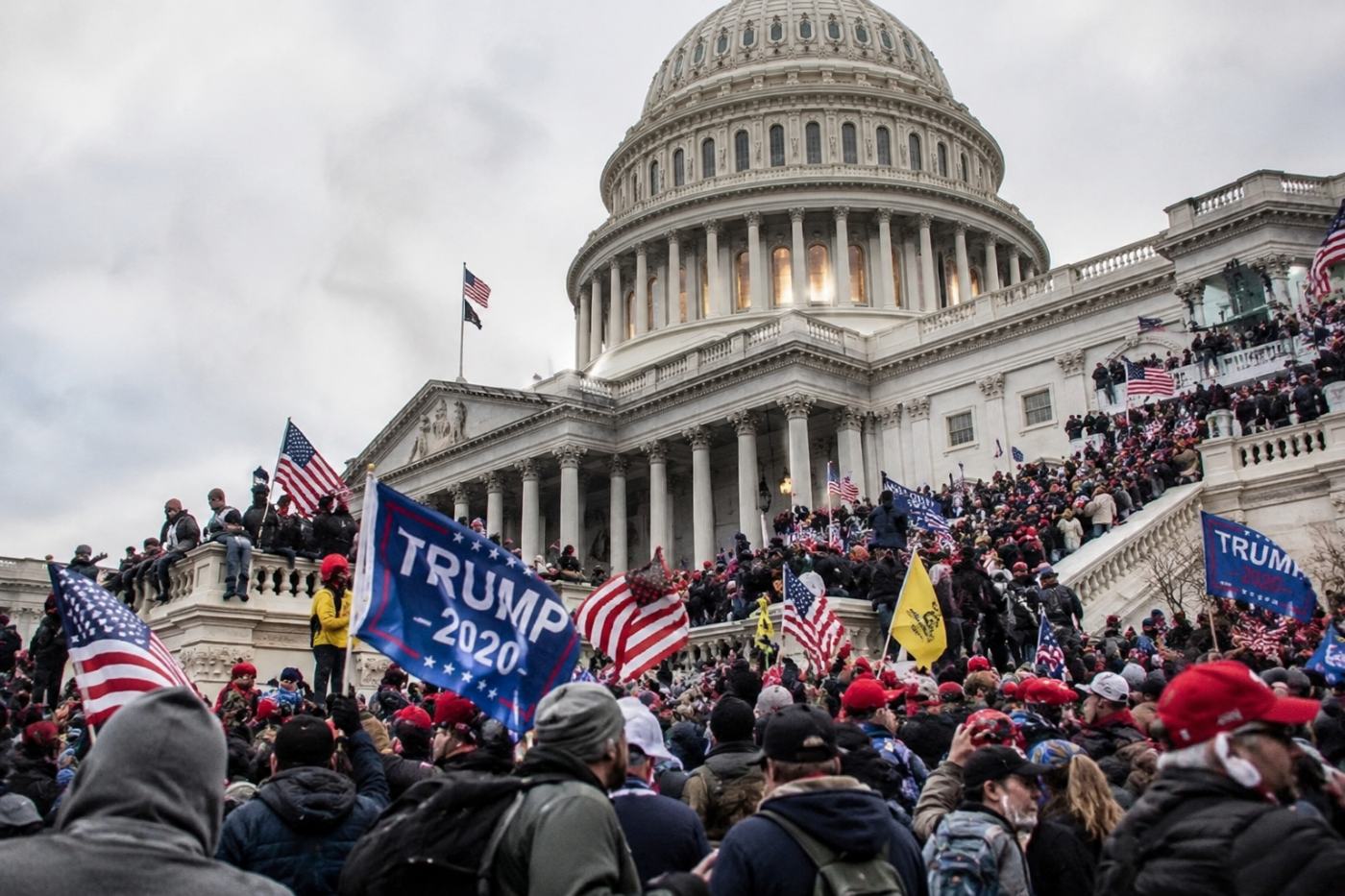
A Georgia man pardoned by President Donald Trump for threatening to murder former House Speaker Nancy Pelosi is facing federal criminal charges again, this time after allegedly calling for the execution of judges who handled January 6 prosecutions.
Cleveland Grover Meredith Jr., who received presidential clemency in January 2025, was arrested Monday following an FBI investigation into threatening Facebook posts.
According to a federal criminal complaint, Meredith published a message on April 23, 2026, declaring: "ALL J6 Federal JUDGES will be EXECUTED!"
The message included a smiling emoji and an obscene hand gesture.
Federal investigators allege that Meredith knowingly communicated a threat against judges who presided over criminal cases stemming from the January 6, 2021, attack on the U.S. Capitol.
The allegations are particularly troubling given Meredith's previous criminal history.
In January 2021, Meredith traveled toward Washington, D.C., intending to participate in demonstrations surrounding Congress's certification of Joe Biden's presidential victory.
Mechanical problems delayed his arrival until after the Capitol attack.
Nevertheless, Meredith attracted federal attention after sending threatening messages about Nancy Pelosi, including statements about shooting the then-House speaker in the head.
When FBI agents searched his vehicle and trailer, they discovered a 9mm handgun, an assault-style rifle, approximately 2,500 rounds of ammunition, and multiple high-capacity magazines.
Meredith subsequently pleaded guilty to transmitting interstate threats and received a 28-month federal prison sentence.
His criminal conviction might have remained the defining episode of his involvement in the January 6 movement.
Instead, Donald Trump granted him a presidential pardon.
On January 20, 2025, Trump issued sweeping clemency to approximately 1,600 people charged or convicted in connection with January 6, including individuals convicted of assaulting police officers and other serious offenses.
Meredith was among those who benefited.
But according to federal investigators, his threatening rhetoric continued.
An FBI affidavit states that agents interviewed Meredith in November 2024 and August 2025 concerning earlier social media statements that appeared threatening.
Investigators also examined additional Facebook posts attributed to Meredith.
One January message reportedly asked Trump, described as the "Orange King," whether Meredith could become his "Head EXECUTIONER."
Another October post identified federal judges who had ruled against Trump or January 6 defendants and suggested that Defense Secretary Pete Hegseth had plans for them.
An October 30 message allegedly predicted that the military would exterminate political opponents during a coming period of upheaval.
There is no evidence that Trump or Hegseth authorized, endorsed, or participated in those alleged threats.
FBI Special Agent Richard Taylor argued that Meredith's previous conviction, repeated threatening language, and explicit reference to executing judges supported probable cause for a new federal prosecution.
U.S. Magistrate Judge J. Elizabeth McBath agreed that probable cause existed for a charge involving interstate communication of threats under federal law.
Meredith has not been convicted of the new allegation, and prosecutors must still prove their case.
The arrest nevertheless raises renewed questions about the consequences of Trump's sweeping January 6 pardons.
Presidential clemency eliminated criminal penalties for past conduct but did not provide immunity from future prosecution.
Meredith's case illustrates that distinction.
A man previously imprisoned for threatening one of America's highest-ranking elected officials, and subsequently pardoned by the president, now stands accused of threatening the federal judges responsible for administering justice.
For the judiciary, the allegations underscore the continuing challenge of protecting judges from politically motivated intimidation.
For the Trump administration, they revive scrutiny of a clemency decision that erased a conviction for an explicit threat of political violence.