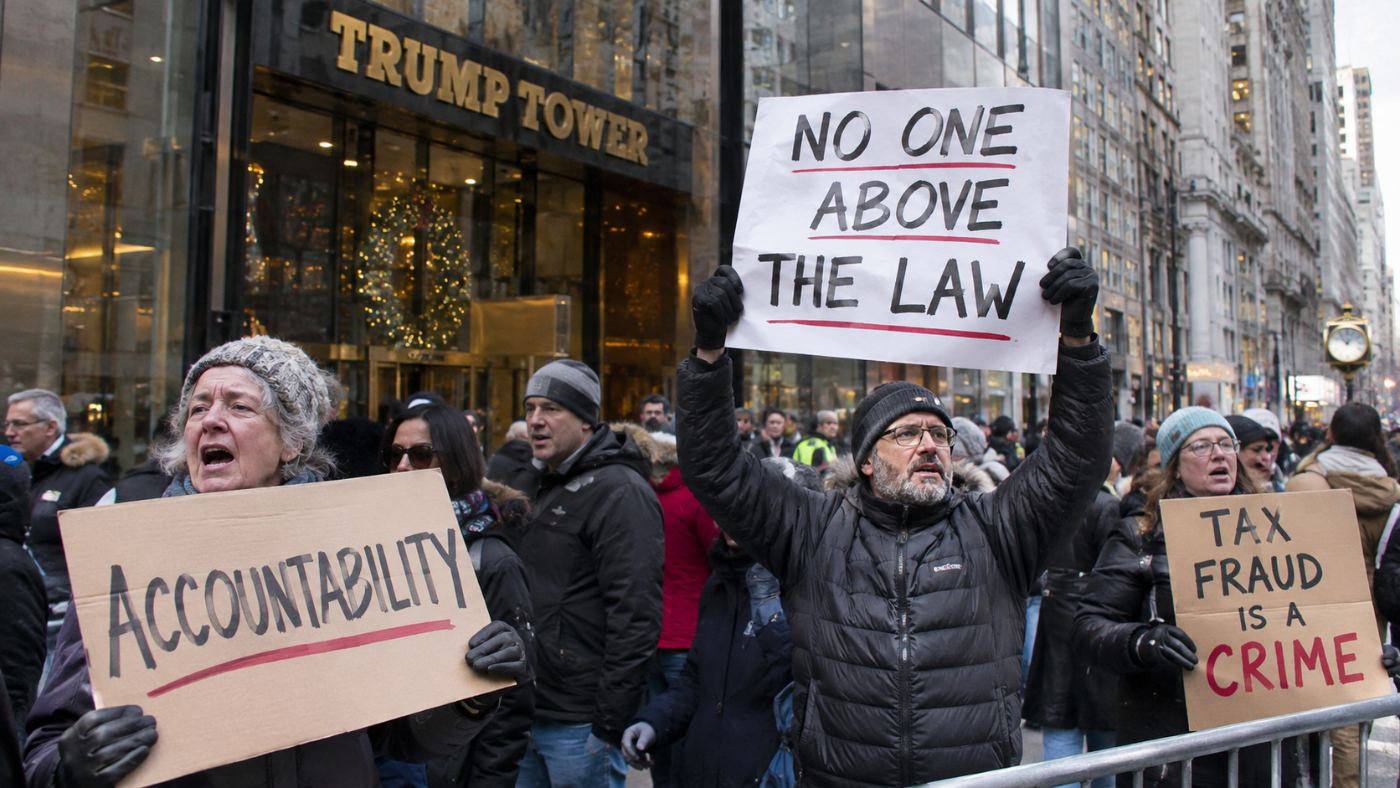
On December 6, 2022, Donald Trump's business empire suffered a historic legal defeat when a Manhattan jury found two Trump Organization companies guilty on all 17 criminal counts, including tax fraud, conspiracy, and falsifying business records.
The verdict marked the first criminal convictions of Trump's companies and exposed a years-long scheme in which senior executives received lavish, unreported compensation while avoiding taxes.
The Trump Corporation and Trump Payroll Corporation were convicted following a six-week trial that revealed how the businesses concealed compensation from federal, state, and local tax authorities.
At the center of the scheme was longtime Trump Organization Chief Financial Officer Allen Weisselberg, who had worked for the Trump family for decades.
Prosecutors demonstrated that Weisselberg received approximately $1.76 million in unreported compensation, including a luxury Manhattan apartment, Mercedes-Benz vehicles, expensive furnishings, and private school tuition for his grandchildren.
Rather than reporting these benefits as taxable income, the companies concealed them through improper accounting practices.
The scheme lasted approximately 13 years.
Weisselberg had already pleaded guilty to 15 criminal charges and testified against the companies as part of an agreement with prosecutors.
Manhattan District Attorney Alvin Bragg described the case as one involving greed and cheating, emphasizing that corporations were not above the law.
The verdict was particularly damaging to Trump's carefully cultivated image as a successful businessman. For decades, Trump had promoted his organization as an example of financial sophistication and executive competence. Now, a jury had concluded that two of its central companies had engaged in systematic criminal misconduct.
Trump himself was not charged in this particular case, and the verdict did not establish his personal criminal liability. Prosecutors nevertheless argued that the fraudulent practices benefited the companies, while the defense maintained that executives had acted for their own personal advantage.
The jury rejected the companies' defense and returned guilty verdicts on every count.
The convictions also came just three weeks after Trump announced his campaign to reclaim the presidency in 2024, adding another serious legal controversy to his political comeback attempt.
The companies subsequently received the maximum financial penalties permitted under New York law. On January 13, 2023, they were fined a combined $1.61 million.
For a business empire associated with extraordinary wealth, the financial penalty was relatively modest. The criminal convictions, however, carried a far more significant reputational cost.
The case demonstrated that the financial practices inside Trump's business organization were not merely questionable or controversial. A criminal jury had examined the evidence and found two of his companies guilty beyond a reasonable doubt.
December 6, 2022, became the day Donald Trump's business empire acquired its first criminal convictions, permanently undermining the image of unquestioned business success he had spent decades promoting.