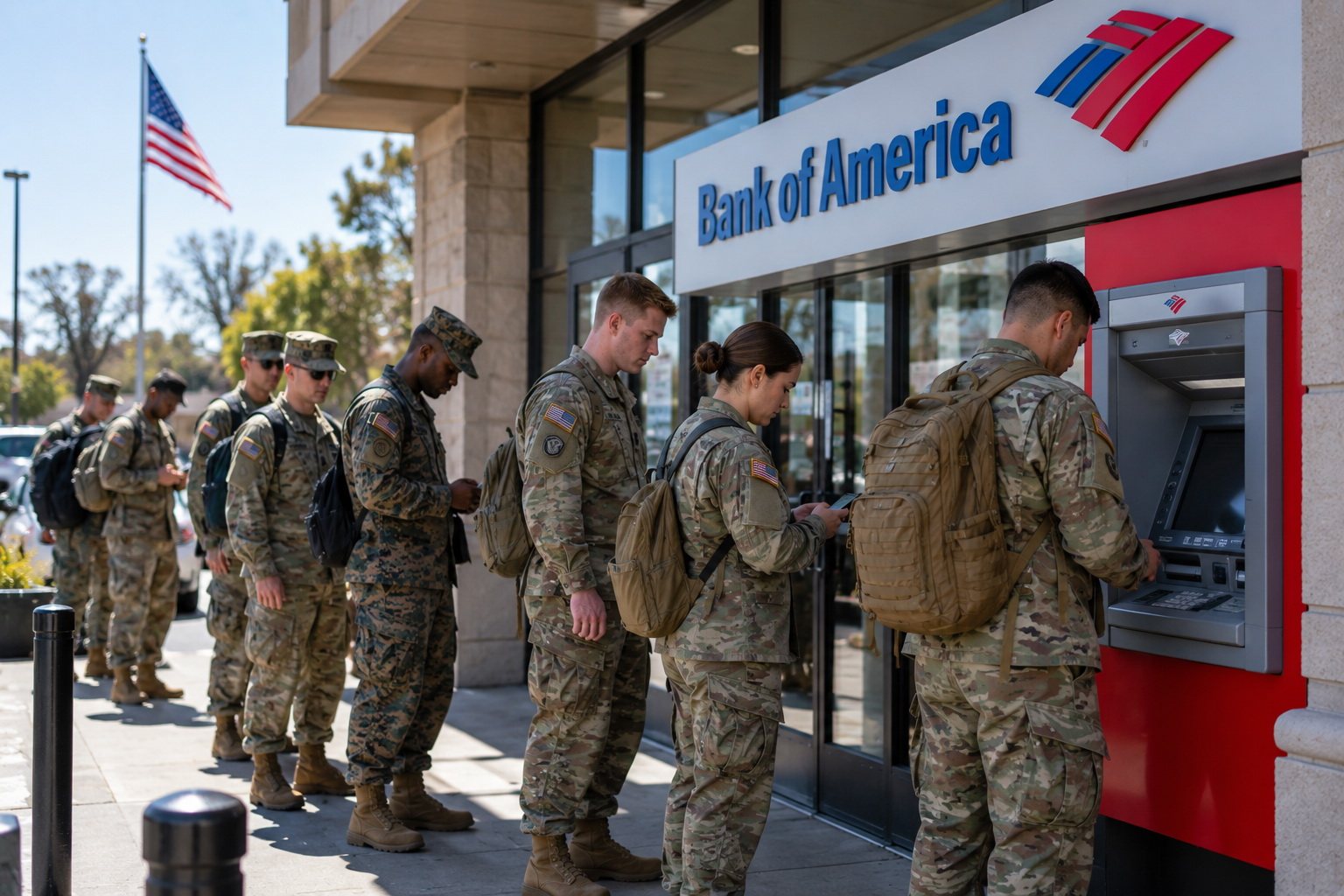
Eleven days into a federal government shutdown, the United States was approaching a politically explosive deadline.
Approximately 2.1 million American service members were due to receive their next paychecks on October 15.
Without congressional funding, those paychecks were in jeopardy.
President Donald Trump announced a workaround.
On October 11, Trump directed Defense Secretary Pete Hegseth to find available Pentagon money and use it to pay the troops despite the shutdown.
“We have identified funds to do this,” Trump announced.
The decision meant military families would receive their mid-month paychecks.
But it didn't reopen the government.
It didn't resolve the underlying funding dispute.
And it came as Trump's administration was simultaneously moving ahead with layoffs affecting more than 4,100 civilian federal workers.
The shutdown had become another extraordinary chapter in Washington's recurring inability to perform one of Congress's most basic responsibilities:
Fund the government.
And once again, Donald Trump was president while it happened.
Republicans Controlled Washington
The political circumstances surrounding the 2025 shutdown were particularly significant.
Republicans controlled the White House.
Republicans controlled the House of Representatives.
Republicans controlled the Senate.
Yet the government still shut down.
That did not mean Republicans could pass whatever funding legislation they wanted without Democratic votes.
Republicans held 53 Senate seats, while most legislation required 60 votes to overcome a filibuster and advance.
That gave Senate Democrats leverage.
Democrats demanded that negotiations address healthcare provisions, particularly enhanced Affordable Care Act premium tax credits that were scheduled to expire.
Republicans wanted Congress to first approve a temporary funding measure and negotiate healthcare separately.
Neither side gave way.
The House passed a Republican-backed continuing resolution that would have funded the government temporarily.
But it could not obtain the 60 Senate votes necessary to advance.
Democrats proposed their own funding measure containing healthcare priorities.
That proposal also failed.
The result was a stalemate.
But it was a stalemate occurring while one party controlled the presidency and both chambers of Congress.
The Government Shuts Down
Funding authority expired at midnight entering October 1.
Federal agencies began shutdown procedures.
Hundreds of thousands of federal workers were furloughed.
Other employees deemed essential continued working without receiving their normal paychecks until funding resumed.
National parks, regulatory agencies, government offices and federal programs began adjusting operations.
Military personnel remained on duty.
American troops do not stop defending the country because Congress fails to pass a funding bill.
They continue reporting for duty.
But unless Congress acts, they can be required to work without being paid on schedule.
By October 11, that possibility was rapidly approaching.
October 15 Was the Deadline
The next military payday was Wednesday, October 15.
About 2.1 million troops were expecting checks.
For military families living paycheck to paycheck, the political fight in Washington was becoming something much more immediate.
Rent.
Mortgages.
Car payments.
Groceries.
Childcare.
Credit-card bills.
Trump announced that he would not allow the shutdown to stop those paychecks.
He said he was using his authority as commander in chief to direct Hegseth to use “all available funds” to pay service members.
Trump wrote:
“We have identified funds to do this, and Secretary Hegseth will use them to PAY OUR TROOPS.”
The Pentagon ultimately identified billions of dollars in previously appropriated research and development funds that could be redirected to cover the October 15 military payroll.
It was an unusual solution to an unusual problem.
Paying the Troops Didn't End the Shutdown
Trump's decision solved one immediate crisis.
But it also removed one of the strongest pressure points pushing Congress toward an agreement.
Military families missing paychecks would have generated enormous public pressure on lawmakers.
By finding another source of money, the administration protected service members from that immediate consequence.
But hundreds of thousands of civilian federal workers remained furloughed or working without pay.
And the government remained shut down.
The fundamental problem had simply been postponed.
At the Same Time, Thousands Were Being Fired
There was another striking contrast.
While the administration searched for money to ensure military personnel received their checks, it was moving forward with permanent layoffs across the civilian federal workforce.
The administration told a federal court that reduction-in-force notices had been issued or were expected for more than 4,100 employees across multiple agencies.
The planned reductions included approximately:
- 1,446 employees at the Treasury Department
- 1,100 at Health and Human Services
- 466 at the Department of Education
- 442 at Housing and Urban Development
- 315 at the Commerce Department
- 187 at the Energy Department
- 176 at Homeland Security
- additional