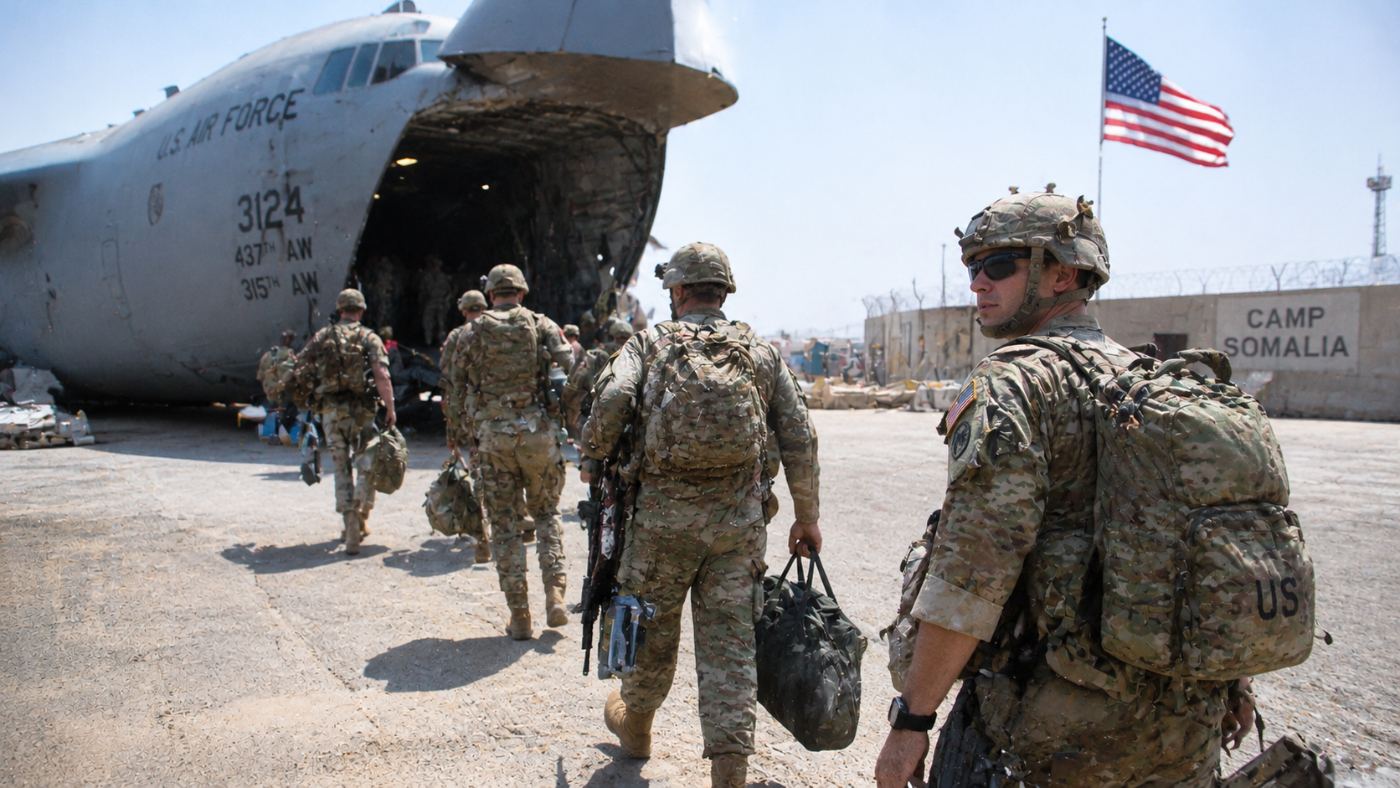
On December 4, 2020, President Donald Trump ordered the withdrawal of most American military personnel from Somalia, reducing the U.S. presence in a country where American forces were helping combat the al-Qaeda-affiliated terrorist organization al-Shabaab.
The Pentagon announced that the majority of approximately 700 U.S. troops would leave Somalia by early 2021, just weeks before Trump was scheduled to leave office.
The decision raised concerns about the future of counterterrorism operations and the security of American allies in East Africa.
A Sudden Change in Military Deployment
American troops had been operating in Somalia primarily to train, advise, and assist Somali security forces fighting al-Shabaab.
The extremist organization had conducted deadly attacks throughout Somalia and neighboring Kenya, targeting civilians, government institutions, and military installations.
Under Trump's order, many American personnel would relocate to neighboring countries, including Kenya and Djibouti.
The Pentagon emphasized that U.S. forces would retain the ability to conduct cross-border counterterrorism operations.
However, the withdrawal significantly reduced the American military presence inside Somalia itself.
Concerns About al-Shabaab
The decision came as military assessments warned that al-Shabaab remained a serious regional threat.
A Defense Department inspector general report released shortly before the announcement concluded that the terrorist organization remained resilient despite years of military pressure.
The report described persistent problems with Somali security forces and warned that al-Shabaab continued operating across significant portions of southern Somalia.
Critics questioned whether removing American advisers would make it more difficult for Somali forces to maintain pressure on the organization.
The concerns were particularly significant because American personnel provided training, intelligence support, and assistance with military operations.
American Forces Had Already Been Targeted
The threat to U.S. personnel was not theoretical.
In January 2020, al-Shabaab militants attacked a military installation at Manda Bay, Kenya.
One American soldier and two American contractors were killed.
The attack demonstrated the organization's ability to strike American facilities beyond Somalia's borders.
U.S. commanders continued to regard al-Shabaab as a threat to regional security and potentially to American interests.
Pentagon Defends the Repositioning
General Stephen Townsend, commander of U.S. Africa Command, emphasized that the United States was not abandoning its counterterrorism mission.
He explained that American troops would remain elsewhere in East Africa and continue supporting regional partners.
The Pentagon maintained that the decision represented a change in troop positioning rather than a fundamental change in American policy.
Nevertheless, conducting operations from neighboring countries presented different logistical and operational challenges than maintaining forces inside Somalia.
Part of Trump's Broader Military Drawdown
The Somalia announcement followed Trump's decisions to reduce American troop levels in Afghanistan and Iraq.
His administration had ordered both countries' deployments reduced to approximately 2,500 personnel by January 15, 2021.
Trump presented these reductions as part of his commitment to ending prolonged American military involvement overseas.
Supporters argued that the United States needed to reduce its military commitments and avoid indefinite deployments.
Critics questioned whether the timing and pace of the reductions adequately accounted for security conditions.
A Decision With Lasting Consequences
The withdrawal was completed during the final weeks of Trump's presidency.
American forces continued conducting operations in the region, but the reduced presence complicated aspects of their cooperation with Somali partners.
In May 2022, President Joe Biden approved the return of several hundred American troops to Somalia to support counterterrorism operations.
The reversal reflected continuing concerns about al-Shabaab and the effectiveness of conducting missions from outside the country.
The December 4, 2020, announcement remains an important moment in the history of American counterterrorism policy, illustrating the challenges of reducing overseas military commitments while confronting persistent security threats.