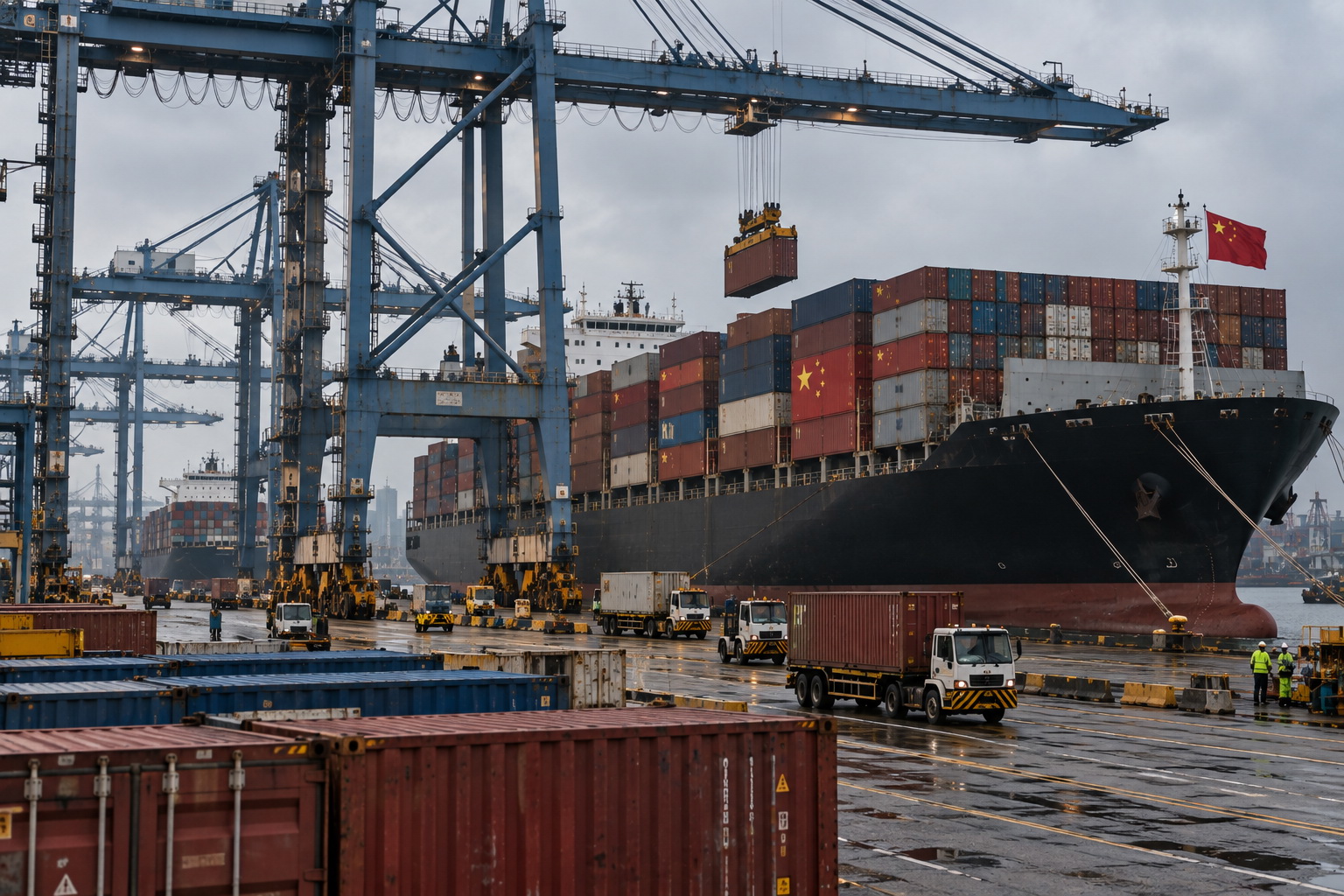
President Donald Trump dramatically escalated America's trade confrontation with China, signing a presidential memorandum directing his administration to prepare tariffs and other measures in response to Chinese practices involving technology transfers, intellectual property and investment.
The action followed a months-long investigation conducted by the Office of the U.S. Trade Representative under Section 301 of the Trade Act of 1974.
The administration argued that China had used government policies, investment restrictions, technology-transfer requirements and cyber intrusions to obtain valuable American technology and intellectual property.
Trump's decision would prove to be much more than another trade-policy announcement.
It helped set in motion the largest U.S.-China tariff confrontation in decades.
The Section 301 Investigation
Trump had directed the U.S. Trade Representative in August 2017 to examine Chinese policies involving intellectual property, technology transfer and innovation.
The investigation focused on several major allegations.
USTR concluded that China used restrictions on foreign ownership and administrative processes to pressure American companies into transferring technology to Chinese partners.
Investigators also examined Chinese technology-licensing rules, Chinese investment in American companies and cyber intrusions targeting commercially valuable information.
The administration estimated that the practices caused tens of billions of dollars in annual harm to the American economy.
On March 22, USTR released its findings.
Trump responded the same day.
Trump Orders a Broad Response
The president's memorandum directed his administration to pursue several avenues against China.
The U.S. Trade Representative was instructed to consider additional tariffs on Chinese products and produce a proposed list within 15 days.
The administration also announced plans to challenge Chinese technology-licensing practices through the World Trade Organization.
At the same time, the Treasury Department was directed to develop proposals addressing Chinese investment in the United States when those investments involved strategically important technologies.
The administration initially discussed trade actions affecting roughly $50 billion to $60 billion worth of Chinese products.
Trump framed the action as an attempt to establish what he called a more reciprocal trading relationship between the world's two largest economies.
China Was Different
Trump had already demonstrated his willingness to use tariffs.
Earlier in March, he announced tariffs on imported steel and aluminum using national-security authority under Section 232.
But the China action was different.
This wasn't primarily about protecting a particular American industry from imported products.
It targeted the fundamental economic relationship between the United States and China.
The administration was challenging China's industrial strategy, technology policies and treatment of American companies operating inside the country.
That made the potential confrontation considerably larger.
China had become deeply integrated into American manufacturing and consumer supply chains. American companies relied heavily on Chinese factories, while China represented an enormous market for American agricultural products, aircraft, automobiles and other goods.
A tariff battle between the two countries therefore had the potential to reach far beyond Washington and Beijing.
The Tariffs Arrive
The March 22 announcement began a process rather than immediately imposing tariffs.
On April 3, the U.S. Trade Representative released a proposed list of Chinese products that could face additional duties.
China responded with proposed retaliation against American goods.
The confrontation escalated from there.
On July 6, the United States imposed a 25 percent tariff on approximately $34 billion worth of Chinese imports.
China retaliated.
In August, the United States imposed another 25 percent tariff on approximately $16 billion in Chinese goods.
China retaliated again.
The dispute continued expanding.
By September 2018, the Trump administration had imposed an additional 10 percent tariff on roughly $200 billion worth of Chinese products, with plans to increase the rate later.
China responded with tariffs of its own against American exports.
What had begun with an investigation into technology transfers and intellectual property was becoming a full-scale trade war.
American Farmers Get Caught in the Middle
China's retaliation was strategically targeted.
American agricultural exports became one of Beijing's most powerful weapons.
Soybeans were particularly important.
China had been the largest foreign market for American soybeans, purchasing billions of dollars worth each year. Retaliatory Chinese tariffs made U.S. soybeans more expensive and encouraged Chinese buyers to purchase more from countries such as Brazil.
Other American agricultural products were targeted as well.
The economic pressure eventually became serious enough that the Trump administration authorized billions of dollars in federal assistance for farmers affected by retaliatory tariffs.
The trade war therefore produced an unusual cycle.
The United States imposed tariffs on Chinese products.
China retaliated against American exports.
And the federal government provided financial assistance to some American industries hurt by China's retaliation.
A Fight That Would Outlast Trump's First Term
The confrontation eventually produced negotiations between Washington and Beijing.
In January 2020, Trump and Chinese officials signed the "Phase One" trade agreement.
China committed to increase purchases of American goods and services and made commitments involving intellectual property, technology transfer and financial services.
The agreement eased portions of the conflict but did not eliminate the tariff structure created during the trade war.
Many of the tariffs remained in place after Trump left office.
That lasting impact makes March 22, 2018 one of the most consequential trade-policy dates of Trump's first presidency.
The memorandum Trump signed that day did not itself impose the enormous tariff regime that followed.
But it opened the door.
Over the months that followed, tariffs expanded, China retaliated, American companies adjusted supply chains, farmers lost export markets and Washington increasingly treated its economic relationship with Beijing as a strategic competition rather than simply a commercial partnership.
The U.S.-China trade war had begun.