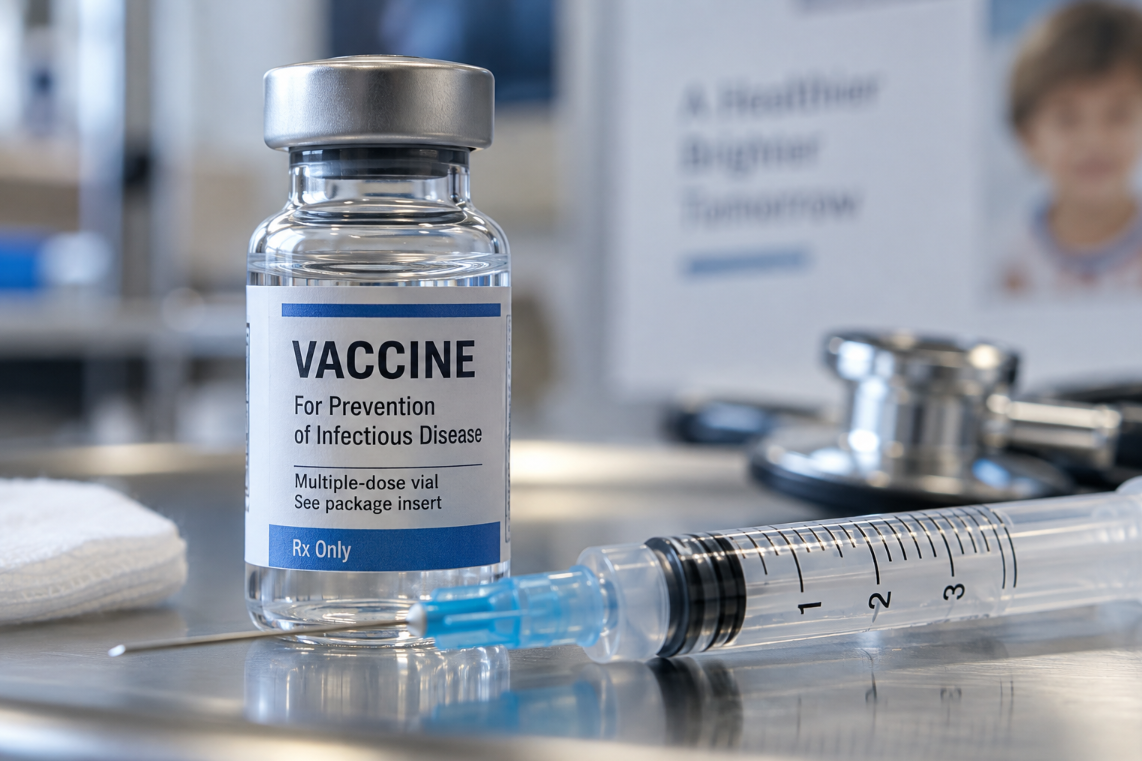
President Donald Trump has ordered a major change to federal childhood vaccine policy, establishing what his administration calls the “Gold Standard Childhood Vaccine Recommendations” and directing federal agencies to emphasize parental choice, reconsider how vaccines are scheduled and encourage states to review their school vaccination requirements.
Trump signed Executive Order 14420 on August 10, 2026.
The order divides childhood immunizations into three categories and recommends vaccines against 11 diseases for all children. Other vaccines are placed into categories for high-risk populations or decisions made between parents and healthcare providers.
The change does not eliminate vaccines that are no longer included in the universal category. They can remain available even though the federal government's recommendation for their routine use has changed.
But the order goes considerably further than simply reorganizing a list.
A New Definition of the Core Childhood Schedule
Under Trump's order, immunizations against measles, mumps, rubella, diphtheria, tetanus, pertussis, polio, Haemophilus influenzae type B, pneumococcal disease, human papillomavirus and varicella are recommended for all children.
Other immunizations receive different treatment.
Hepatitis A, hepatitis B, rotavirus, meningococcal disease, influenza and COVID-19 are among those placed in the shared clinical decision-making category, although hepatitis A and B are also recommended for certain high-risk populations.
The federal government is therefore drawing a new distinction between vaccines routinely recommended for every child and vaccines for which individual circumstances and discussions between families and healthcare providers are intended to play a greater role.
It represents a significant change in how Washington communicates childhood vaccine recommendations.
Trump Wants Separate Measles, Mumps and Rubella Vaccines Available
One of the most striking provisions concerns the familiar MMR vaccine.
For decades, children have commonly received a combination vaccine protecting against measles, mumps and rubella.
Trump's order calls for individual measles, mumps and rubella vaccines to become available as alternatives once those products are domestically available. The administration is also seeking to maintain access to the existing combination vaccine.
The order additionally directs federal health officials to examine the timing and sequencing of childhood vaccinations.
Claims about the safety of existing combination vaccines are a separate scientific question. Changes in federal policy or calls for additional research do not themselves establish that an existing vaccine has been demonstrated to be unsafe.
The Order Emphasizes Parental Choice
Parental authority is one of the central themes running through the executive order.
Trump declares it federal policy that government programs and funding should support greater parental choice over childhood vaccination while remaining consistent with federal law.
That does not mean the president has abolished school vaccination requirements nationwide.
Those requirements are generally established at the state level.
Instead, Trump's order encourages states and territories to review their laws and consider whether their school vaccination requirements should be changed to reflect the administration's new recommendations.
The distinction is important.
A presidential executive order does not simply erase every state vaccination law in the country.
The Justice Department Is Getting Involved
Trump is also directing the federal government to become more involved in legal disputes surrounding vaccine requirements.
The Attorney General is instructed to take appropriate measures involving legal challenges to state laws when the administration believes those laws conflict with federal constitutional or statutory protections involving parental authority, religious freedom, disability accommodations or equal protection.
The Departments of Justice, Education and Health and Human Services are also directed to ensure that federal contractors and grant recipients comply with applicable federal requirements.
That potentially moves the administration beyond simply issuing medical recommendations and into disputes over how states enforce vaccination requirements.
HHS Has Been Told to Reconsider How Vaccines Are Given
Trump has directed the Department of Health and Human Services to continue examining childhood vaccination through its Task Force on Safer Childhood Vaccines.
The administration wants federal health officials to examine the timing and sequencing of vaccinations, continually evaluate risks and benefits using American and international data, improve vaccine-safety monitoring and transparency, and investigate alternatives to aluminum-containing vaccine adjuvants.
Federal officials are also supposed to work toward making individual measles, mumps and rubella vaccines available while preserving access to the existing combination vaccine.
The administration therefore isn't simply changing today's recommendations.
It is establishing a process that could produce additional changes later.
A Broader Transformation of Federal Vaccine Policy
The August order did not emerge in isolation.
Earlier in 2026, Trump directed federal health agencies to reconsider America's childhood vaccine recommendations by comparing them with practices in other developed countries while placing greater emphasis on parental authority and religious liberty.
The August order goes further by establishing the administration's new framework and directing federal agencies to begin implementing it.
The White House argues that these changes will give parents and physicians greater flexibility and bring American recommendations closer to those used in some peer countries.
Critics of major changes to childhood immunization policy, meanwhile, have warned that reducing routine recommendations or making schedules more complicated could lower vaccination rates and make outbreaks of preventable diseases more likely.
Those are questions that will ultimately depend on how the new policies are implemented and how parents, physicians and states respond.
Washington Can Recommend. States Still Have a Major Role.
One of the most important things to understand about Trump's order is what it does not do.
It does not create a single nationwide vaccination law governing every American child.
States retain substantial authority over school vaccination requirements, exemptions and public-health regulations.
That means America's childhood vaccination policies could increasingly vary from state to state even as Washington changes the recommendations coming from federal health agencies.
The practical effects of Trump's order will also depend on future actions by the Department of Health and Human Services, the Justice Department, vaccine manufacturers, state governments and healthcare providers.
What is already clear is that childhood vaccination policy has become a significant focus of presidential power.
With Executive Order 14420, the Trump administration is seeking to change not only which childhood vaccines receive universal federal recommendations, but also how those vaccines are scheduled, how states approach vaccination requirements and how much discretion parents have in making those decisions.