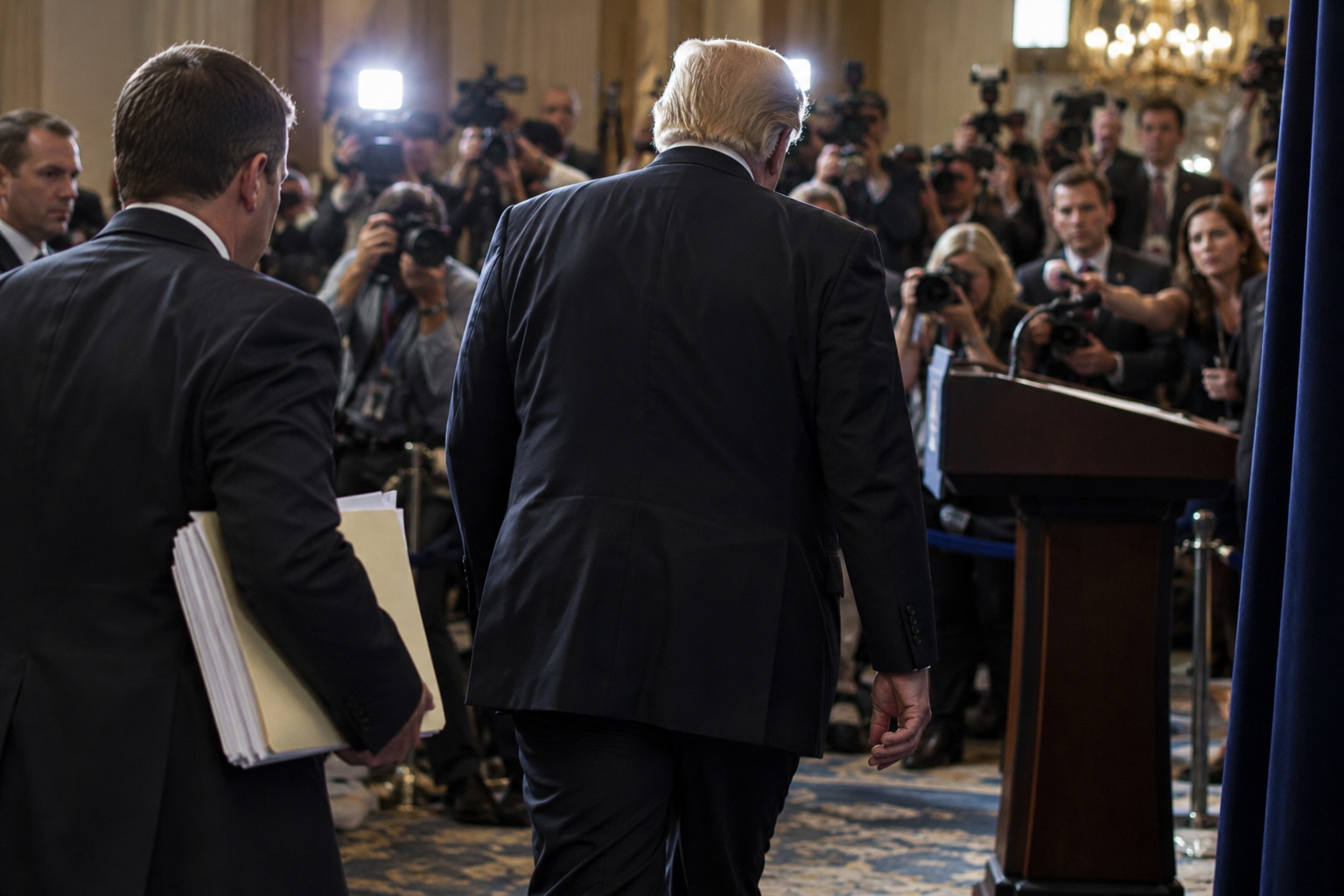
Five days after Christine Blasey Ford sat before the Senate Judiciary Committee and publicly described her allegation that Supreme Court nominee Brett Kavanaugh sexually assaulted her when they were teenagers, President Donald Trump stood before a campaign rally in Mississippi and turned portions of her testimony into a performance.
Before a cheering crowd in Southaven, Trump repeatedly mocked details Ford said she could not remember about the alleged assault.
“How did you get home?” Trump asked, imitating questions Ford had faced before the Senate.
“I don’t remember.”
“How did you get there?”
“I don’t remember.”
Trump continued through a series of questions about the location of the alleged incident and other details Ford had been unable to recall.
The crowd responded with laughter and applause.
It was a dramatic change from Trump's comments only days earlier, when he had publicly described Ford as a “very credible witness” and called her testimony “very compelling.”
Now, with Kavanaugh's Supreme Court nomination hanging in the balance, the president was openly ridiculing her account.
Ford Testifies Before the Senate
Ford had appeared before the Senate Judiciary Committee on September 27.
She alleged that Kavanaugh sexually assaulted her at a gathering in the Washington, D.C., suburbs when the two were teenagers in the early 1980s.
Ford testified that Kavanaugh pushed her onto a bed, groped her and attempted to remove her clothing while another teenager was in the room.
She said she feared Kavanaugh might accidentally kill her.
Kavanaugh categorically denied Ford's allegation.
He testified later the same day and told senators he had never sexually assaulted Ford or anyone else.
The competing testimony produced one of the most closely watched Senate hearings in modern American history.
Ford acknowledged that she could not remember certain details surrounding the alleged incident, including precisely how she arrived at the gathering or how she returned home.
But she told senators she was certain about the identity of the person she said attacked her.
Kavanaugh was equally adamant that the incident involving him never occurred.
The Senate therefore faced two witnesses making fundamentally incompatible claims.
Trump Initially Calls Ford Credible
Trump's initial reaction to Ford's testimony was notably restrained.
Speaking after the hearing, he called Ford a “very credible witness.”
He also described her testimony as compelling.
At the same time, Trump continued defending Kavanaugh and emphasized the judge's denial.
The president's comments suggested that he believed Ford could have sincerely described a traumatic experience while still maintaining that Kavanaugh had been wrongly identified or accused.
But that restraint didn't last.
Five days later, Trump's tone had changed dramatically.
A Rally Becomes a Mock Trial
At the October 2 rally, Trump focused specifically on the gaps in Ford's memory.
He reenacted portions of the Senate questioning, supplying sarcastic answers himself.
He emphasized that Ford could not identify the precise location of the gathering or explain exactly how she had traveled there and home.
Then Trump turned to Kavanaugh.
“A man's life is in tatters,” he told the crowd.
Trump portrayed the allegations and confirmation fight as part of a broader campaign by Democrats to destroy his nominee.
“They destroy people,” he said.
“These are really evil people.”
The rally crowd responded enthusiastically.
The president had transformed one of the most sensitive moments of the Kavanaugh confirmation process — sworn testimony involving an allegation of sexual assault — into campaign-rally material.
The FBI Was Still Investigating
Trump's remarks came at an especially consequential moment.
The FBI was conducting a supplemental background investigation into allegations against Kavanaugh.
The investigation had been requested after Republican Sen. Jeff Flake said he would support advancing the nomination only if the Senate delayed a final vote long enough for additional investigation.
Trump himself had said earlier on October 2 that the results mattered.
“A lot is going to depend on what comes back from the FBI,” he told reporters.
He also said that lying to Congress would be unacceptable.
Hours later, however, Trump was onstage publicly mocking the testimony of the woman whose allegation had helped prompt that investigation.
Republicans Criticize Trump
The criticism wasn't limited to Democrats.
Flake, whose vote was potentially critical to Kavanaugh's confirmation, condemned Trump's performance.
He described the remarks as “kind of appalling.”
Flake said there was no appropriate place for comments like Trump's, particularly at a political rally.
Republican Sens. Susan Collins of Maine and Lisa Murkowski of Alaska — two other senators closely watched during the confirmation battle — also criticized Trump's comments.
Collins called them “just plain wrong.”
Murkowski described the remarks as “wholly inappropriate.”
Ford's attorneys condemned the attack as well.
The criticism highlighted how far Trump had moved from his initial response to Ford's testimony.
Days earlier, she had been a credible witness.
Now her inability to remember certain details had become material for laughter at a presidential campaign rally.
Memory Becomes the Attack
Trump's argument centered on something Ford had openly acknowledged during her testimony: there were details surrounding the alleged assault she could not remember.
That was not the same as saying she remembered nothing.
Ford provided senators with an account of the alleged assault itself and testified that she was certain Kavanaugh was the person who attacked her.
Kavanaugh unequivocally denied that claim.
The difficulty for senators was determining what conclusions could reasonably be drawn from testimony concerning an alleged event decades earlier when the two principal figures offered irreconcilable accounts.
Trump dispensed with that complexity.
At the Mississippi rally, the missing details themselves became the joke.
Kavanaugh Is Confirmed
The controversy did not derail Kavanaugh's nomination.
The FBI completed its supplemental investigation and provided its findings to senators.
Democrats criticized the investigation as too limited, while Republicans argued that it had failed to corroborate Ford's allegation.
On October 6, four days after Trump's Mississippi rally, the Senate confirmed Kavanaugh to the Supreme Court by a vote of 50-48.
He was sworn in later that day.
But Trump's October 2 performance became one of the defining moments of the confirmation fight.
It wasn't merely another defense of his Supreme Court nominee.
The president of the United States stood before hundreds of supporters and reenacted the testimony of a woman who had appeared before the Senate to describe an alleged sexual assault.
Each missing detail became a punch line.
The crowd laughed.
And even members of Trump's own party said he had gone too far.