For months, Russia had hung over Donald Trump's presidency.
There were investigations into Russian interference in the 2016 election, questions about contacts between people associated with Trump's campaign and Russians, the firing of FBI Director James Comey, and the appointment of Robert Mueller as special counsel.
Then, on July 7, Donald Trump finally sat across the table from Vladimir Putin.
The two presidents met face-to-face for the first time during the G20 summit in Hamburg, Germany.
What had been scheduled as a relatively brief meeting stretched beyond two hours.
And hanging over the room was the question Trump had spent months publicly challenging and minimizing:
What would he say directly to Vladimir Putin about Russia's interference in the American presidential election?
“It's an Honor to Be With You”
Before reporters were removed from the room, Trump offered a warm public greeting.
“President Putin and I have been discussing various things, and I think it's going very well,” Trump said.
“We look forward to a lot of very positive things happening for Russia, for the United States, and for everybody concerned. And it's an honor to be with you.”
Putin responded that telephone conversations between the two leaders were not enough and that personal meetings were necessary to address major international problems.
Reporters immediately shouted questions about Russian election interference.
Trump did not answer them publicly.
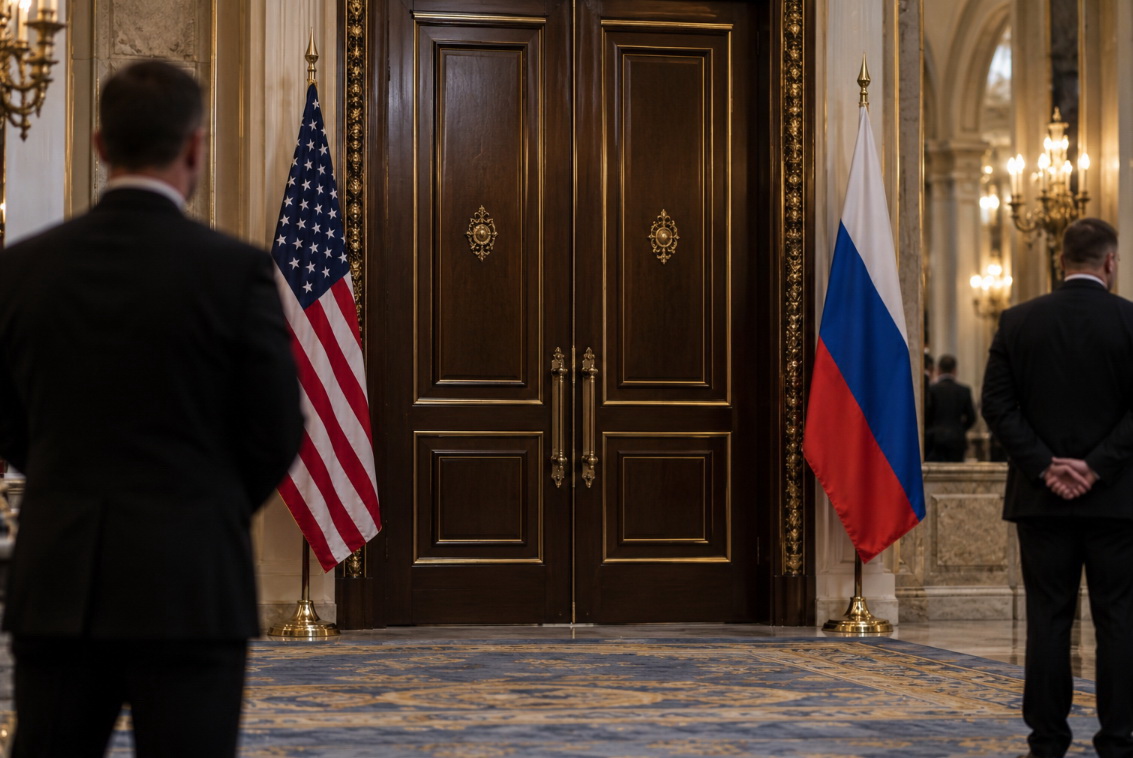
The doors closed.
The real conversation began.
Trump Raises Election Interference
According to Secretary of State Rex Tillerson, who attended the meeting, Trump raised Russian interference in the 2016 election at the beginning of the discussion.
Tillerson said Trump “pressed President Putin on more than one occasion regarding Russian involvement.”
Putin denied it.
That was hardly surprising.
Russia had repeatedly denied interfering in the American election despite the conclusion of the U.S. intelligence community that Putin had ordered an influence campaign targeting the 2016 presidential race.
Putin reportedly demanded evidence.
According to Tillerson, Trump eventually decided there was little value in continuing an argument neither side was going to resolve.
The two leaders moved on.
That alone would have generated controversy.
Then the Russian government offered a different version of what had happened.
Two Governments, Two Stories
Russian Foreign Minister Sergey Lavrov emerged from the meeting claiming Trump had accepted Putin's denial.
According to Lavrov, Trump heard Putin's assurances that Russia had not interfered and accepted them.
That was not how Tillerson described the conversation.
Tillerson said Trump had repeatedly pressed Putin on the issue and characterized Russian interference as a significant obstacle to improving relations between Washington and Moscow.
He did not say Trump had accepted Putin's denial.
The conflicting descriptions created an immediate problem.
There was no independent public record of the conversation that could resolve the discrepancy.
Inside the room were Trump, Putin, Tillerson, Lavrov and interpreters.
The American government said Trump challenged Putin.
The Russian government suggested Trump ultimately accepted Putin's explanation.
The American public was left with two different accounts.
The Intelligence Community Had Already Reached Its Conclusion
The meeting occurred six months after the U.S. intelligence community released its assessment of Russian interference in the election.
That assessment concluded that Putin had ordered an influence campaign aimed at the 2016 U.S. presidential election.
The intelligence agencies assessed that Russia sought to undermine public confidence in the American democratic process, damage Hillary Clinton and ultimately developed a preference for Trump.
Trump had repeatedly resisted giving that conclusion an unequivocal endorsement.
Just one day before meeting Putin, Trump was asked during a news conference in Poland whether he believed Russia had interfered.
“I think it was Russia,” Trump responded, before adding that he believed other countries could also have been involved.
“Nobody really knows,” he said.
Now Trump was sitting directly across from the man the American intelligence community had identified as having ordered the Russian operation.
The Meeting Keeps Going
The Trump-Putin meeting had not been expected to consume much of the afternoon.
It did.
The conversation stretched to roughly two hours and fifteen minutes.
At one point, First Lady Melania Trump entered the meeting in an effort to remind the president that he had other commitments.
According to Tillerson, the attempt did not work.
The conversation continued for roughly another hour.
Tillerson later described the interaction between Trump and Putin as having “very clear positive chemistry.”
Beyond election interference, the presidents discussed Syria, Ukraine, terrorism, cybersecurity and other issues affecting relations between the two countries.
One tangible result was an agreement involving a ceasefire in southwestern Syria.
But none of those issues attracted the attention generated by the discussion of the election.
Trying to Move Beyond Russia
Tillerson's explanation of the meeting revealed something else about Trump's approach.
The president wanted to move forward.
The administration's position was essentially that Trump had confronted Putin, Putin had denied the accusation, and endlessly repeating the disagreement would prevent Washington and Moscow from cooperating elsewhere.
“We're not dismissing the issue in any way,” Tillerson told reporters.
But he said Trump believed it was time to discuss how the two countries could move ahead despite what he described as an apparently “intractable disagreement.”
That approach was politically difficult for Trump.
The Russia investigation was not merely a diplomatic disagreement between Washington and Moscow.
It was also an active domestic investigation into an attack on the American electoral process.
And Trump himself was at the center of the political fallout surrounding it.
The Meeting America Had Been Waiting For
There was nothing unusual about an American president meeting a Russian president.
What made Hamburg extraordinary was everything surrounding this particular meeting.
Russia had interfered in an American presidential election.
The U.S. intelligence community had concluded that Putin ordered the operation.
Trump's campaign had been the beneficiary of Russia's preference in that election, according to the intelligence assessment.
The FBI had been investigating Russian interference and possible connections involving people associated with Trump's campaign.
Trump had fired the FBI director.
A special counsel had been appointed.
And now Trump was sitting across from Putin for the first time.
The question was never simply whether the two presidents would meet.
The question was what Trump would do when confronted personally with Putin's denial.
According to his secretary of state, Trump challenged him repeatedly.
According to Russia's foreign minister, Trump accepted Putin's assurances.
Those contradictory accounts ensured that the meeting did not settle the controversy surrounding Russia.
Instead, it became another part of it.
Trump and Putin finally had their face-to-face meeting.
But when the doors reopened, Americans still did not have a definitive account of exactly what their president had said to Vladimir Putin about Russia's attack on their election.