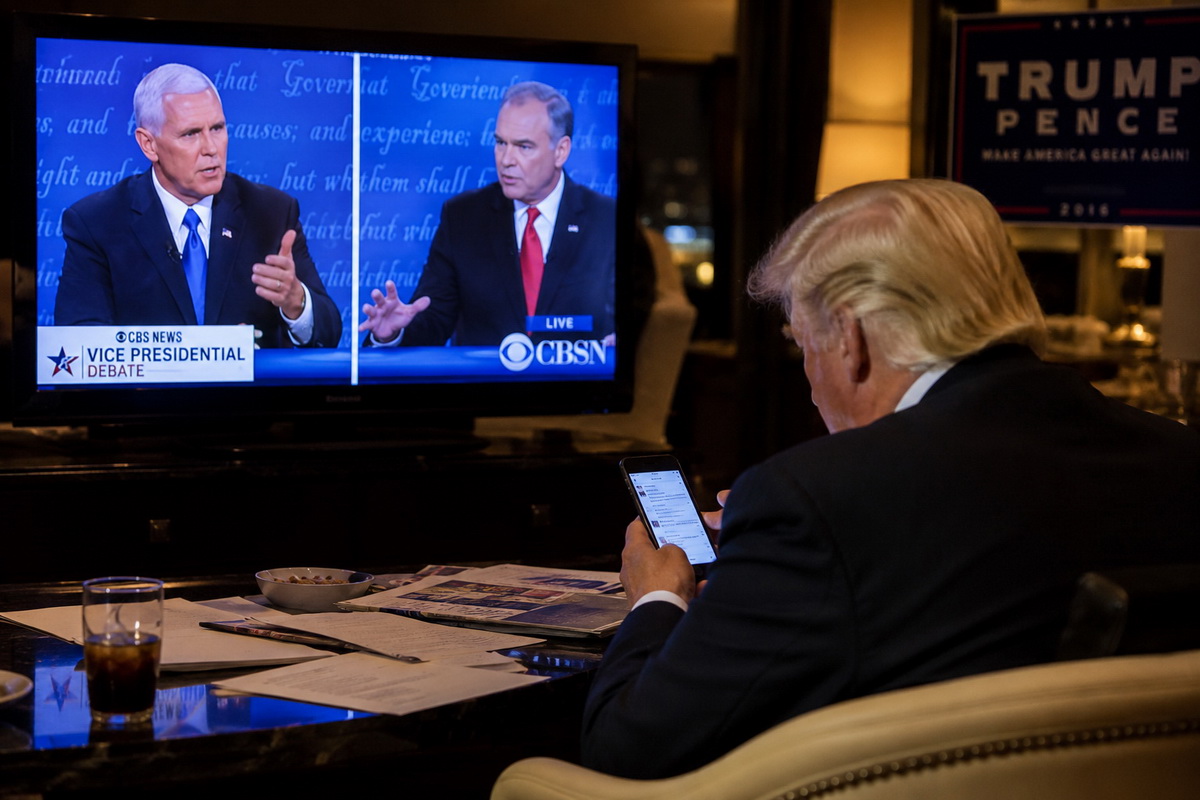
Donald Trump wasn't on the debate stage on October 4, 2016, but that didn't keep him out of the conversation.
As Republican vice-presidential nominee Mike Pence faced Democratic nominee Tim Kaine at Longwood University in Farmville, Virginia, Trump watched from Nevada and provided his own running commentary on Twitter.
Before the debate began, Trump told his followers that he would be watching Pence and live-tweeting the event. What followed was a stream of praise for his running mate, attacks on Kaine, criticism of the debate coverage and retweets of some particularly harsh comments from supporters.
Trump Takes Aim at Kaine
Throughout the debate, Kaine repeatedly challenged Pence over controversial statements Trump had made during the campaign.
Trump responded online.
He praised Pence's performance, declaring at one point that his running mate was doing a "great job" and that the debate was "no contest."
But Trump also amplified personal attacks against Kaine.
Among the messages he retweeted were supporters describing Kaine as looking foolish and comparing him to a villain from a Batman movie.
The irony wasn't lost on commentators watching the debate. Onstage, Pence accused the Clinton-Kaine campaign of running an "avalanche of insult." At nearly the same time, Trump's Twitter account was circulating insults about Pence's opponent.
Even Megyn Kelly Gets Pulled In
Kaine wasn't Trump's only target that night.
Before the debate, Fox News host Megyn Kelly joked that Trump campaign manager Kellyanne Conway might be keeping an eye on Trump's Twitter account during the event.
Trump responded directly to Kelly, pointing out that he was in Nevada while Conway was attending the debate and ending his message with a sarcastic, "Better luck next time."
It was another chapter in Trump's contentious relationship with Kelly, which had begun during the Republican primary debates and continued throughout the 2016 campaign.
Trump Questions the Moderator
Trump also joined supporters in criticizing CBS News correspondent Elaine Quijano, who moderated the debate.
When a supporter complained that Quijano was interrupting Pence more frequently than Kaine, Trump retweeted the message and added his agreement.
It was a familiar tactic during Trump's first presidential campaign. He frequently criticized moderators and news organizations he believed were treating him or his campaign unfairly.
A Preview of Presidential Politics to Come
The episode was significant for reasons extending beyond a single vice-presidential debate.
Trump's use of Twitter had already distinguished his campaign from those of previous presidential candidates. Rather than waiting for campaign aides, press releases or television appearances, Trump could respond instantly to political opponents, journalists and events unfolding in real time.
On October 4, he effectively created a second debate taking place alongside the one on television.
While Pence and Kaine argued over immigration, foreign policy, abortion, taxes and the qualifications of their running mates, Trump communicated directly with millions of people following the campaign online.
When the debate ended, there was little suspense about Trump's assessment.
He declared Pence the winner and told supporters they should be proud of him.
Five weeks later, Donald Trump and Mike Pence would win the 2016 presidential election.
The October 4 debate—and Trump's running commentary from hundreds of miles away—offered an early glimpse of the communication style that would become a defining feature of Trump's presidency: political battles conducted not only from podiums and television cameras, but directly through social media.