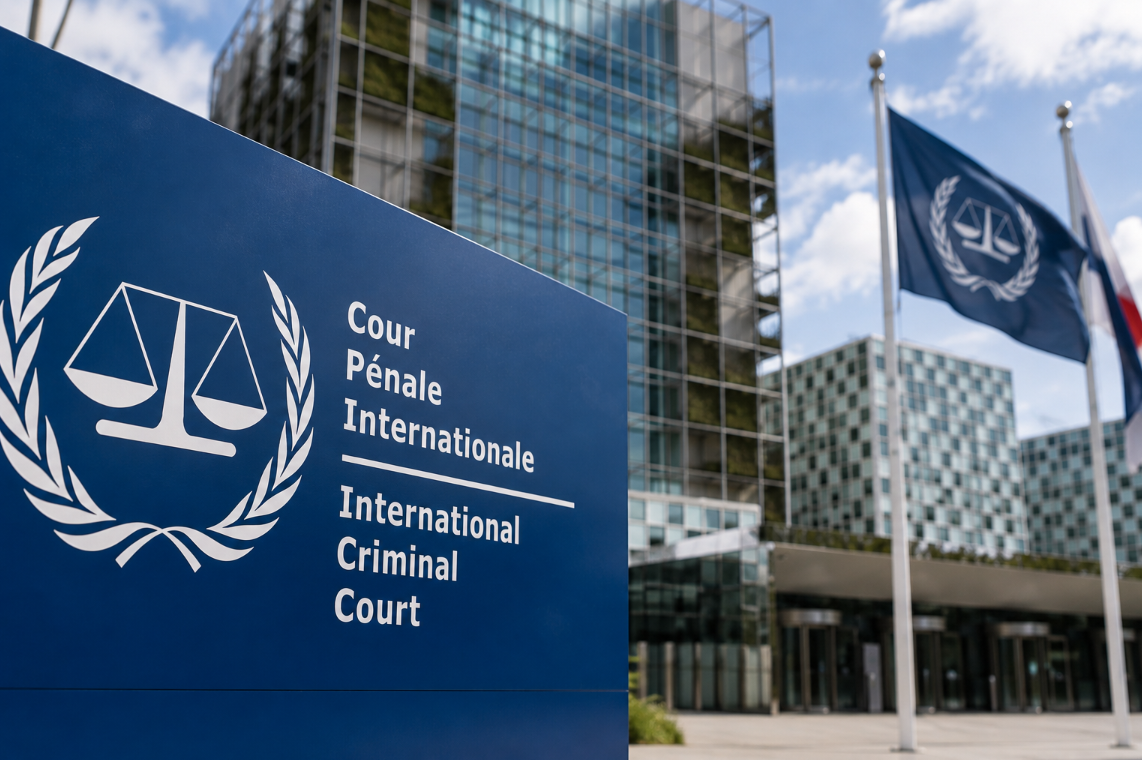
The Trump administration dramatically expanded its confrontation with the International Criminal Court on July 13, announcing an international effort designed to weaken the court and persuade other countries to distance themselves from it.
The campaign represents a significant escalation from Washington's previous strategy of sanctioning individual ICC officials.
This time, the administration is looking beyond the court itself.
It wants other countries involved.
The State Department said the United States would use diplomatic and economic pressure to challenge the ICC's authority, particularly its ability to investigate or prosecute American military personnel and government officials.
Among the measures under consideration are additional sanctions, travel restrictions, visa revocations and pressure on governments that continue supporting the court.
The administration is also encouraging countries to withdraw from the ICC entirely.
The United States Has Never Joined the ICC
The International Criminal Court was established to prosecute individuals accused of genocide, crimes against humanity, war crimes and the crime of aggression when qualifying cases fall within its jurisdiction.
More than 120 countries belong to the court.
The United States does not.
Although the Clinton administration signed the Rome Statute establishing the ICC in 2000, the treaty was never ratified by the Senate. President George W. Bush's administration subsequently notified the United Nations that the United States did not intend to become a party to it.
American opposition to the ICC therefore did not begin with Donald Trump.
Presidents of both parties have resisted attempts by the court to claim jurisdiction over American personnel.
But Trump's latest campaign goes considerably further.
Instead of simply refusing to recognize the court's authority over Americans, his administration is attempting to persuade other governments to join Washington in challenging it.
The Dispute Comes Down to Jurisdiction
The central legal disagreement is relatively straightforward.
The Trump administration argues that because the United States never joined the ICC, the court has no legitimate authority to prosecute American citizens.
The ICC takes a different position.
The court maintains that it can investigate crimes allegedly committed on the territory of a country that has accepted ICC jurisdiction — even when the person accused of committing those crimes is a citizen of a country that has not joined the court.
That distinction matters.
Afghanistan, for example, is a member of the ICC.
The court therefore maintains that alleged crimes committed there can fall within its jurisdiction regardless of the nationality of the person accused.
That has allowed ICC investigators to examine allegations involving American military and intelligence personnel connected to the war in Afghanistan.
The United States rejects that interpretation when it comes to Americans.
Trump Has Fought the Court Before
This isn't Trump's first confrontation with the ICC.
During his first administration, Trump imposed sanctions on ICC officials involved in investigations concerning Afghanistan.
The Biden administration later removed those sanctions while continuing to oppose ICC jurisdiction over American personnel.
After returning to office, Trump again moved aggressively against the institution.
In February 2025, he signed an executive order authorizing sanctions against people involved in certain ICC investigations.
The administration subsequently imposed sanctions on several court officials.
The July 2026 announcement transformed those individual actions into something much larger: an organized diplomatic campaign against the institution itself.
The Administration Wants America's Allies to Choose
One of the most consequential parts of the strategy involves countries that cooperate closely with the United States.
Washington is calling on governments that work with American military and law-enforcement agencies to reject ICC jurisdiction over American personnel.
The administration has also suggested that countries receiving American assistance could face greater scrutiny if they continue supporting the court.
That could put some U.S. allies in an uncomfortable position.
Many of America's closest partners — particularly in Europe — are strong supporters of the ICC.
They cooperate extensively with the United States on defense, intelligence and law enforcement while simultaneously recognizing the authority of the international court.
Trump's strategy attempts to force those relationships into the debate.
Sanctions Could Expand
The United States already possesses substantial financial leverage over individuals and organizations operating internationally.
American sanctions can freeze assets under U.S. jurisdiction and prevent Americans and American companies from conducting transactions with designated individuals.
Because of the enormous role of the U.S. financial system in international commerce, the practical consequences can extend well beyond America's borders.
The administration is considering expanding those sanctions against additional ICC officials and potentially organizations associated with the court.
Travel bans and visa revocations are also under consideration.
The objective is straightforward: make cooperation with the ICC increasingly costly.
Israel Is Also Part of the Conflict
The confrontation isn't exclusively about Americans.
Israel, like the United States, is not a member of the ICC.
The court's investigation of the war in Gaza and its 2024 arrest warrants for Israeli Prime Minister Benjamin Netanyahu and former Defense Minister Yoav Gallant intensified American opposition to the institution.
The ICC alleged responsibility for war crimes and crimes against humanity.
Israel rejected the accusations and challenged the court's jurisdiction.
The Trump administration strongly supported Israel's position and cited the court's actions against Israeli officials when imposing sanctions.
That placed the United States and Israel together in opposition to a court supported by many European governments.
Supporters of the Court Reject Washington's Argument
Supporters of the ICC argue that Washington's sovereignty argument overlooks an important distinction.
They point out that the court does not claim unlimited authority to prosecute Americans anywhere in the world.
Its jurisdiction generally depends upon factors such as where alleged crimes occurred, whether the country involved belongs to the ICC, whether the accused is a national of a member state, or whether the United Nations Security Council refers a situation to the court.
From that perspective, a country joining the ICC has accepted the court's jurisdiction over qualifying crimes committed within its territory.
The Trump administration rejects the idea that another country's membership can subject Americans to an international tribunal that the United States itself never accepted.
That disagreement has existed for decades.
Trump is now attempting to turn it into an international political campaign.
Europe Pushes Back
The reaction from Europe was immediate.
European Union officials reaffirmed their support for the ICC and rejected threats against the court and people cooperating with it.
That response demonstrates the difficulty Washington faces.
The administration isn't simply confronting an international organization.
It is challenging an institution supported by many of America's closest democratic allies.
Convincing those governments to abandon the ICC could prove considerably more difficult than imposing sanctions on individual judges or prosecutors.
From Opposition to an International Campaign
American skepticism toward the International Criminal Court is nothing new.
The United States has refused to join it for more than two decades.
Congress has passed legislation protecting American military personnel from the court's jurisdiction.
Multiple administrations have rejected the idea that the ICC can prosecute Americans without U.S. consent.
What changed in July 2026 was the scope of the response.
The Trump administration is no longer merely saying that America will not cooperate with the International Criminal Court.
It is attempting to persuade other countries to reduce their cooperation as well.
That turns a longstanding legal dispute between Washington and The Hague into something much larger:
an international campaign over how much power the International Criminal Court should have — and whether America's allies will help the United States limit it.
The administration later described the July initiative as a diplomatic campaign and expanded sanctions against ICC officials in August.