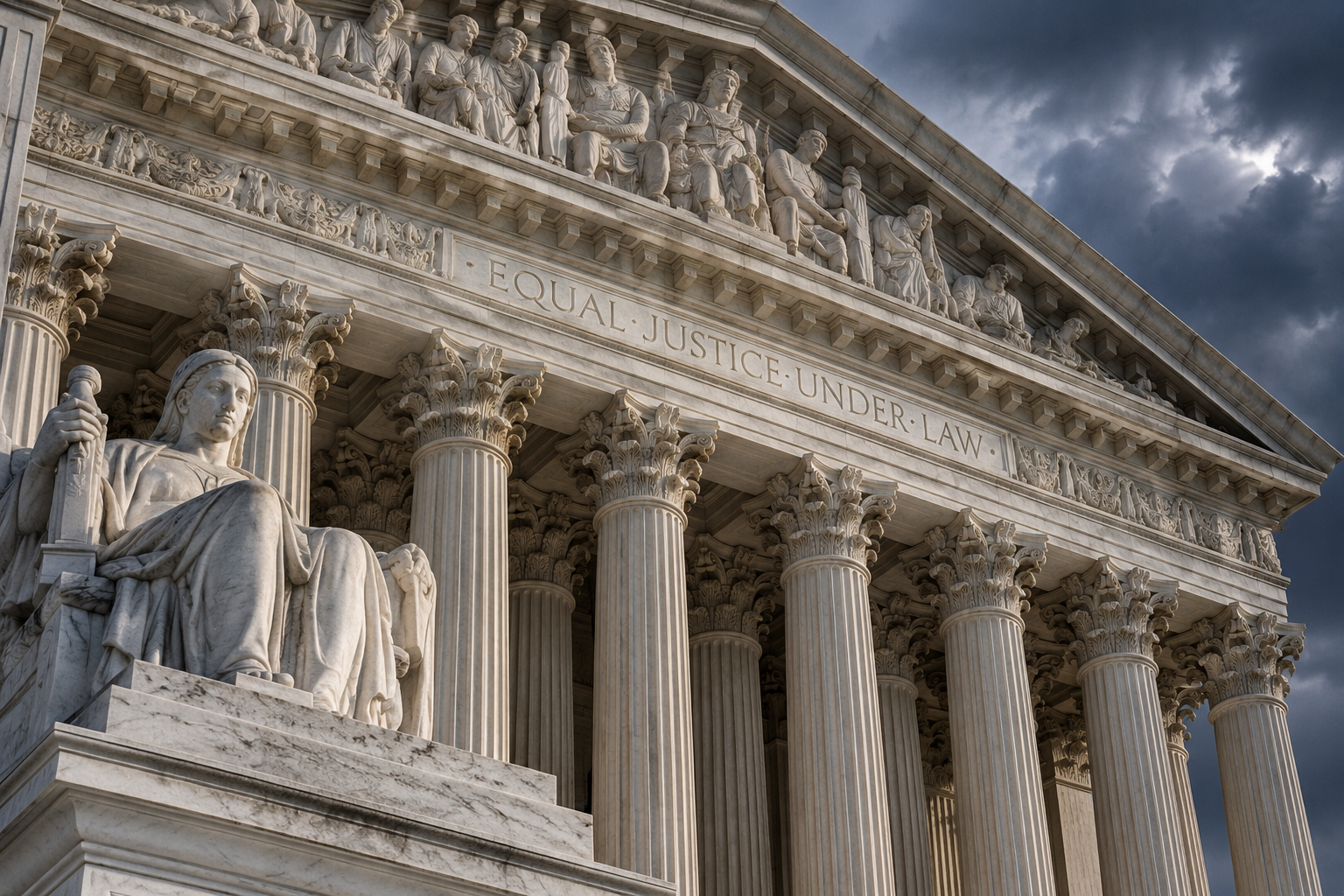
President Donald Trump spent years celebrating the conservative Supreme Court majority he helped create. But after the justices rejected his administration’s attempt to impose new restrictions on mail-in ballots ahead of the 2026 midterm elections, Trump turned his anger toward the very court he helped shape.
In a lengthy social-media post Tuesday, Trump sharply criticized the Supreme Court and appeared to direct his frustration at the three justices he appointed during his first term: Neil Gorsuch, Brett Kavanaugh and Amy Coney Barrett.
“These are not the people I interviewed to serve on the United States Supreme Court, they are merely a shell of their original selves,” Trump wrote.
The criticism came one day after the Supreme Court refused to allow the U.S. Postal Service to begin enforcing controversial new requirements for election mail before the November midterm elections.
THE COURT BLOCKS TRUMP’S MAIL-BALLOT RULES
The dispute centered on new Postal Service requirements adopted following a directive from Trump.
The rules would have required mail ballots to use specially designed envelopes containing an election-mail logo, machine-readable features and a barcode unique to each voter. States also would have been required to submit voter information through a Postal Service portal.
Ballot mail that failed to meet the requirements could have been rejected and returned to state election officials.
State and local officials challenged the changes, arguing that imposing a new nationwide system so close to the election would create significant logistical problems and potentially interfere with voters receiving ballots.
A federal court blocked implementation of the rules.
The Trump administration then asked the Supreme Court to intervene.
On September 14, the Court declined.
In its brief order, the Court said the government was unlikely to succeed on the merits of its challenge and had not demonstrated that emergency relief was justified.
Justice Brett Kavanaugh, one of Trump’s own appointees, wrote separately.
Kavanaugh said there was at least a reasonable possibility that the Postal Service possessed the legal authority to establish such rules. But he concluded that imposing them during the 2026 election would be improper because state and local election officials did not have enough time to implement the changes.
Justices Samuel Alito and Clarence Thomas dissented.
Trump subsequently called Alito and Thomas “legends.”
TRUMP TURNS ON THE COURT HE HELPED BUILD
Trump’s reaction was particularly notable because reshaping the federal judiciary was one of the most consequential achievements of his first presidency.
Trump appointed Neil Gorsuch in 2017, Brett Kavanaugh in 2018 and Amy Coney Barrett in 2020.
Those appointments helped establish the Supreme Court’s 6-3 conservative majority.
But Trump made clear Tuesday that he was deeply unhappy with the Court’s recent decisions.
“This Supreme Court is bullied and cajoled by the Radical Left into making decisions that have set America back at least a hundred years,” Trump wrote.
He went considerably further.
Trump said the justices he had interviewed were now “merely a shell of their original selves” and described the Court as having issued some of the most damaging decisions in American history.
The Court offered no indication that political pressure from Democrats played a role in the mail-ballot ruling. Its written order addressed the administration’s likelihood of succeeding legally and whether the circumstances justified emergency intervention.
NOT THE FIRST TIME TRUMP HAS ATTACKED HIS OWN APPOINTEES
The confrontation was not the first time Trump publicly attacked Supreme Court justices he personally selected.
Earlier in 2026, the Supreme Court struck down Trump’s sweeping global tariffs imposed under emergency powers.
Gorsuch and Barrett joined the majority in that case.
Trump responded by personally criticizing both justices, saying their decisions were an embarrassment to their families.
The president has also criticized the Court over its handling of his attempt to restrict birthright citizenship.
The pattern illustrates an increasingly complicated relationship between Trump and the Supreme Court.
When the Court supports administration policies, Trump has frequently praised its decisions.
When it rejects major portions of his agenda, however, he has increasingly criticized both the institution and individual members of the Court — including justices he personally nominated.
THE JUSTICES DO NOT WORK FOR THE PRESIDENT
The episode also highlights an important feature of the American constitutional system.
Presidents nominate Supreme Court justices, and the Senate decides whether to confirm them.
Once confirmed, however, Supreme Court justices receive lifetime appointments.
They do not work for the president who appointed them, and they are not obligated to rule in accordance with that president’s political agenda.
Trump’s own three appointments demonstrate that distinction.
Gorsuch, Kavanaugh and Barrett have helped move the Supreme Court significantly to the right and have joined decisions supporting major conservative legal positions.
They have also ruled against Trump and his administration in important cases.
Attorney General Todd Blanche said the administration would comply with the mail-ballot decision while defending Trump’s right to criticize the Court.
The Supreme Court Trump helped build remains a 6-3 conservative institution.
But the latest confrontation provides another reminder of something Trump has repeatedly encountered since returning to office:
Appointing a Supreme Court justice does not guarantee how that justice will vote once given a lifetime seat on the nation’s highest court.