President Donald Trump wanted to punish three news organizations for coverage he disliked.
Instead, his decision has produced a much larger confrontation — one that now includes a federal lawsuit, condemnation from press organizations and an extraordinary decision by America's major television networks to suspend their traditional pooled coverage of the president.
And Trump is responding to the growing backlash by attacking the press even harder.
On Monday, Trump insisted that his administration was not attacking press freedom, writing that a free press is something he “cherish[es].” But in the same message, he described what he calls “FAKE NEWS” as corrupt, coordinated, out of control and a threat to national security.
It was a remarkable defense of a controversy Trump himself started.
Trump Started This Fight
There is no mystery about how the confrontation began.
Trump announced Friday that CNN, MS NOW and Politico were being banned from the White House. Journalists from the organizations were subsequently denied access to White House grounds, with reporters saying their credentials had been disabled or confiscated.
Trump has publicly tied his decision to his dissatisfaction with their coverage.
He said Friday that there wasn't one particular report behind the decision, describing his complaint instead as the cumulative result of coverage over the previous several years.
The consequences came quickly.
CNN was scheduled Monday to perform its rotation providing television pool coverage of Trump.
The White House prevented CNN from doing it.
Then something happened that the administration may not have anticipated.
ABC, CBS, NBC and Fox News refused to step in and replace CNN.
The television networks instead suspended normal presidential pool coverage, saying that no replacement pool would be provided after CNN was prevented from fulfilling its assignment.
That left Trump's trip to New York for the United Nations General Assembly without the traditional pooled television camera that normally accompanies a president.
The White House had attempted to exclude one television network.
The result was losing the normal pool participation of the others as well.
Now Trump Is Fighting the Backlash
Rather than retreating from the decision as criticism mounted, Trump escalated his rhetoric Monday.
He claimed that the White House was protecting the free press while simultaneously attacking news organizations he considers illegitimate.
Trump characterized the news media he opposes as a national-security threat, but Reuters reported that he offered no evidence supporting that claim.
That response also highlights the central contradiction in Trump's argument.
The president says he cherishes a free press.
But the controversy exists precisely because his administration excluded specific news organizations after Trump complained about their reporting.
The television networks apparently saw that distinction clearly enough that even Fox News joined CNN, ABC, CBS and NBC in refusing to provide replacement pool coverage.
This is no longer simply Trump versus CNN.
Trump's decision has put his White House in conflict with virtually the entire traditional television pool.
Three News Organizations Are Taking Trump to Court
The consequences are no longer merely political or logistical.
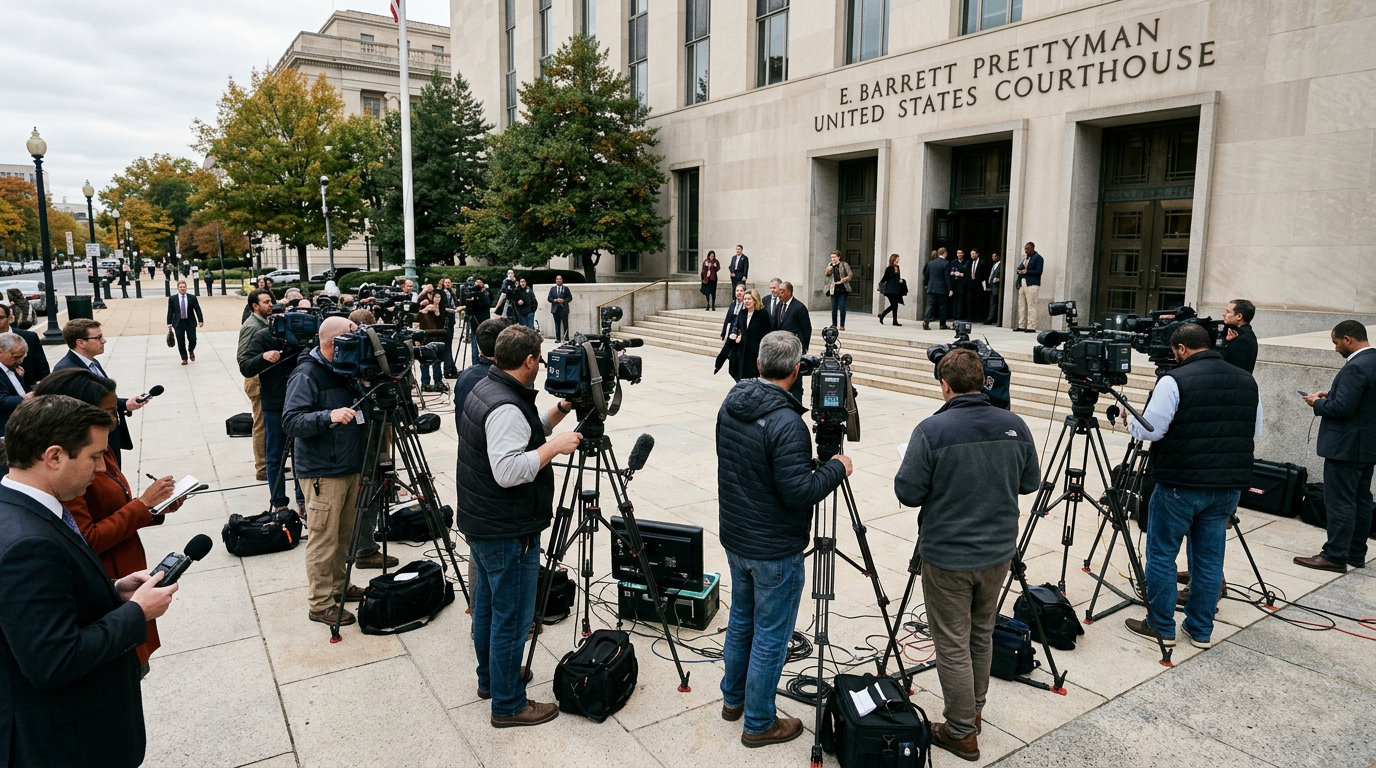
CNN, MS NOW and Politico filed a federal lawsuit Monday against Trump and members of his administration, seeking to restore their access to the White House.
The organizations argue that the administration violated the First Amendment by retaliating against them because of their journalism.
Their lawsuit also raises a due-process argument, saying the organizations' credentials were revoked without adequate notice or an opportunity to challenge the decision.
The news organizations are seeking emergency intervention from a federal court, including a temporary restraining order that could force the administration to restore access while the case proceeds.
The White House will now have to defend Trump's decision in court.
And Trump's own public comments could become important to that dispute.
The organizations argue that the president has openly acknowledged that their coverage motivated the ban. Their complaint points to Trump's descriptions of their reporting as “fake,” “purposely negative,” “one-sided” and other similar characterizations as evidence that the decision was based on editorial viewpoint.
Whether those arguments ultimately prevail is now for the courts to decide.
But there is no dispute over who initiated the ban.
Trump did.
A Decision With Expanding Consequences
What began as another Trump attack on the media has rapidly become something much larger.
Three major news organizations have taken his administration to federal court.
The White House Correspondents' Association has demanded that their access be restored.
ABC, CBS, NBC, CNN and Fox News have united around the television pool dispute.
And Trump's own trip to one of the world's most important diplomatic gatherings proceeded without the traditional pooled television coverage normally available to broadcasters across the country.
Trump can blame CNN.
He can blame Politico.
He can blame MS NOW.
He can attack negative coverage and call critical journalism “fake news.”
But none of those organizations made the original decision that produced this confrontation.
Trump did.
He decided that three news organizations should lose White House access because he objected to their coverage. His administration carried out that decision. Other networks responded by refusing to replace CNN. And the three banned organizations responded by taking the president to court.
Now Trump is facing a wave of negative coverage about a controversy that began with his own action — while responding to that negative coverage with still more attacks on the press.
For a president who has spent years complaining about unfavorable headlines, Trump's attempt to control who gets access to the White House has accomplished something remarkable:
It has created an entirely new round of unfavorable headlines about Donald Trump.