Trump Keeps Telling Americans the Economy Is Great. Voters Aren’t Buying It.
Donald Trump has a growing political problem that no speech, rally or social-media post can easily erase:
Americans are still struggling with the cost of living.
For years, Trump made inflation and affordability central arguments against Democrats. During the 2024 campaign, he repeatedly promised that returning him to the White House would bring prices down and restore economic prosperity.
Now, with the 2026 midterm elections approaching, voters are judging Trump by those promises — and the polling shows widespread dissatisfaction.
A Reuters/Ipsos survey conducted August 28–31 found that 71 percent of Americans disapproved of Trump's handling of the cost of living, while only 22 percent approved.
Even more important politically, 47 percent of registered voters said the cost of living would be the single most important factor determining their vote in the midterm elections.
That means this isn't simply an economic problem.
It's an election problem.
Americans Aren't Feeling the Prosperity Trump Describes
Trump continues to portray the American economy as extraordinarily strong.
But there is an increasingly large gap between the administration's message and what Americans tell pollsters about their own economic circumstances.
A Pew Research Center survey conducted in July found that only 24 percent of Americans rated economic conditions as excellent or good.
Sixty percent said Trump's economic policies had made economic conditions worse.
Perhaps more troubling for the White House, dissatisfaction has begun appearing inside Trump's own political coalition.
Among Republicans and Republican-leaning voters, the percentage saying Trump's economic policies had improved conditions fell from 57 percent in January to 42 percent in July. Meanwhile, the percentage saying his policies had made conditions worse climbed from 18 percent to 28 percent.
Those aren't Democratic activists talking.
Those are Republican and Republican-leaning voters.
Then Came the Iran War
The economic problem has been compounded by the war with Iran.
Disruptions to Middle Eastern oil supplies have contributed to sharply higher gasoline prices, turning an overseas conflict into something Americans encounter every time they pull into a gas station.
By September 20, the nationwide average price of gasoline had reached approximately $4.48 per gallon.
Trump has defended the increased costs as a necessary consequence of the conflict and described higher gasoline prices as an "inexpensive price to pay" in the effort to prevent Iran from obtaining nuclear weapons.
But many Americans don't appear to consider it inexpensive.
A recent Fox News poll found 61 percent of voters describing gasoline prices as a major problem for their household.
For working families already dealing with groceries, housing, insurance and other expenses, another major increase in an unavoidable expense can be difficult to absorb.
The Political Tables Have Turned
There is an additional irony for Republicans.
The economy was once one of Trump's strongest political issues.
Now Democrats have begun eroding that advantage.
An August Reuters/Ipsos survey found Americans preferred Democrats over Republicans on handling the cost of living, 35 percent to 27 percent. Earlier in the year, the parties had been essentially tied.
A September Reuters/Ipsos poll went even further: respondents narrowly selected Democrats over Republicans as better stewards of the economy, 38 percent to 37 percent.
That's an extraordinary reversal for a Republican Party that spent years attacking Democrats over inflation.
Trump won the White House in part by asking Americans whether their lives had become more expensive under Democratic leadership.
Now Americans are asking him the same question.
The Numbers Are Getting Harder to Ignore
A September Marquette Law School national poll illustrates just how severe the problem has become.
Trump's overall job approval stood at 37 percent.
But his numbers were considerably worse on pocketbook issues.
Only 28 percent approved of his handling of the economy.
Only 20 percent approved of his handling of gasoline prices.
And just 19 percent approved of his handling of inflation and the cost of living.
Those numbers don't determine what will happen in November. Elections are decided district by district and state by state, and voters consider many issues besides the economy.
But they demonstrate the size of the challenge confronting Trump and congressional Republicans.
You Can't Tell People Their Grocery Bill Is Wrong
Presidents have always tried to emphasize positive economic statistics.
There may be legitimate economic indicators an administration can point toward — employment, investment, economic growth or other measures.
But household economics are different.
A president can tell voters that the economy is strong.
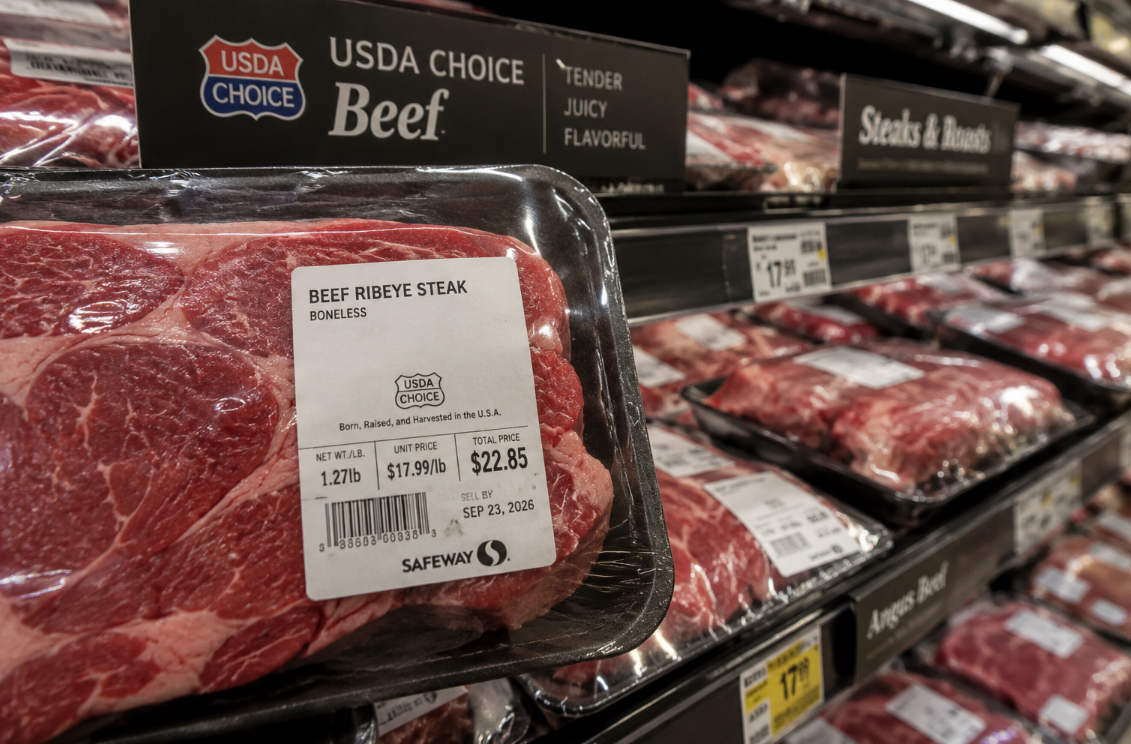
He cannot tell someone that the $120 grocery bill sitting in front of them is actually $80.
He cannot make the numbers disappear from a gas pump.
He cannot erase a rent payment, insurance premium or utility bill with a campaign speech.
That is what makes affordability such a politically dangerous issue.
It is personal.
Americans don't need politicians, economists or television commentators to explain whether everyday life feels affordable.
They experience it themselves.
And as the 2026 midterm elections approach, a growing number of voters appear dissatisfied with what they're experiencing.
Trump spent years telling Americans that presidents should be held responsible when ordinary people struggle to afford everyday life.
Now that argument is being turned back on him.