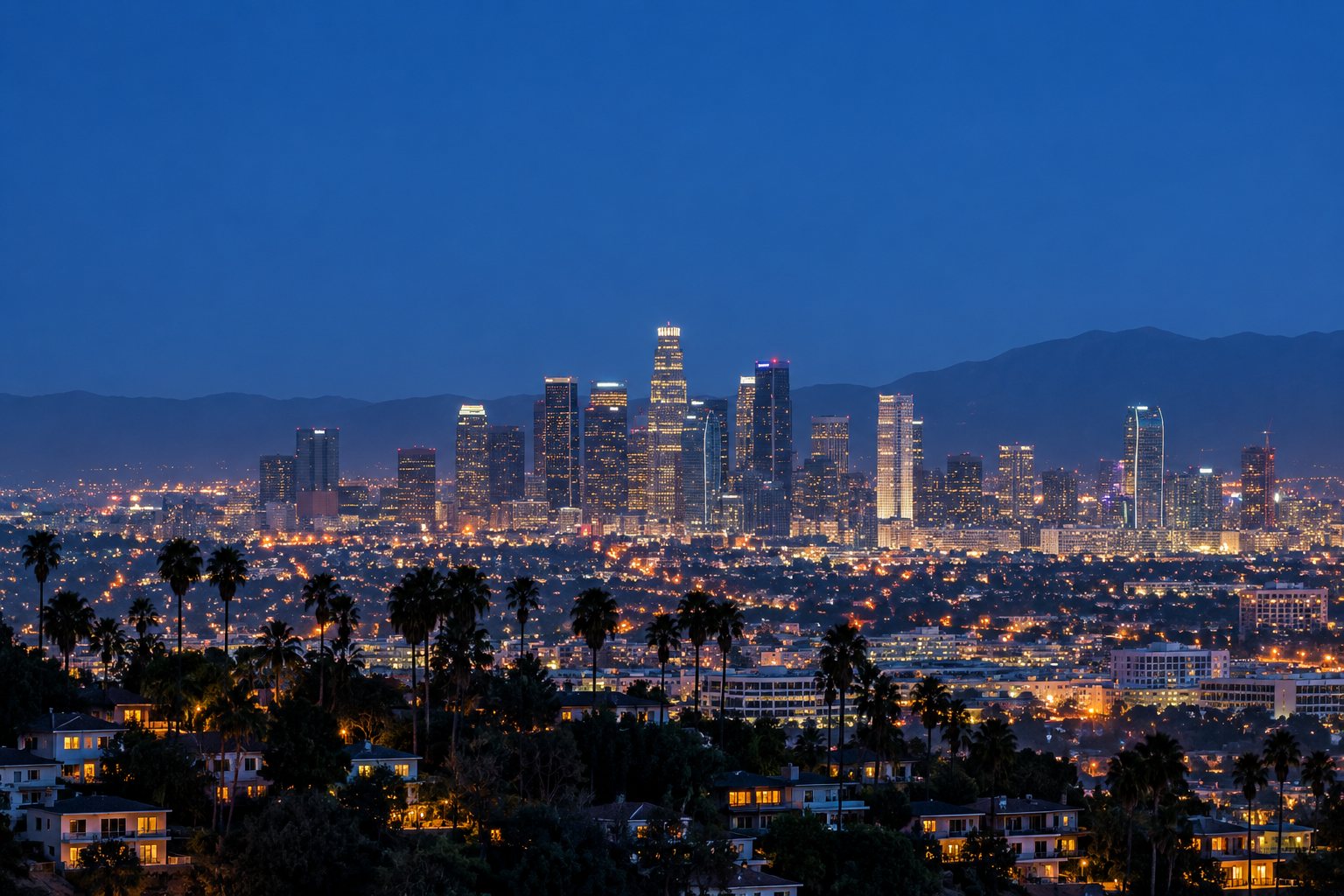
President Donald Trump has ignited a new controversy after invoking the destruction of two major American cities while attempting to defend the costs of the war with Iran.
Speaking Monday night at a political rally in Grand Island, Nebraska, Trump was discussing rising prices and the economic consequences of the conflict when he argued that Americans were paying a relatively small price for national security.
"It's a small price to pay for keeping the world safe, keeping our country safe," Trump told the crowd.
Then came the remark that immediately drew attention.
"They can take out a city," Trump said. "Let them take out Los Angeles. Let them take out San Diego."
Members of the audience could be heard cheering.
Trump continued by describing the economic consequences of the war as "a very small price to pay" and predicting that the conflict would soon be over.
The extraordinary choice of words quickly triggered condemnation from California officials and even criticism from some Republicans.
The White House Says Trump Was Misunderstood
The White House strongly disputed the interpretation that Trump was suggesting Iran should actually attack American cities.
White House Communications Director Steven Cheung said Trump was arguing precisely the opposite: that preventing Iran from obtaining a nuclear weapon was necessary because an Iranian nuclear capability could threaten cities such as Los Angeles and San Diego.
According to the administration, Trump's point was that the economic cost of the war was preferable to allowing Iran to develop the ability to launch a catastrophic attack against the United States.
That explanation provides important context.
It does not, however, change the words Americans heard their president use.
Rather than simply warning that Los Angeles or San Diego could someday become targets of a nuclear-armed Iran, Trump said, "Let them take out Los Angeles. Let them take out San Diego."
Coming from the president of the United States during wartime, those words immediately became the story.
California Officials Respond
California Gov. Gavin Newsom condemned the remarks, calling Trump "deranged and dangerous."
Los Angeles Mayor Karen Bass also responded, arguing that the president's responsibility is to protect American cities rather than use language that could be interpreted as encouraging attacks against them.
The criticism was not confined to Democrats.
Jim Desmond, a Republican congressional candidate and Navy veteran in the San Diego area, publicly rejected Trump's remarks, saying he had served to protect Americans—not to treat American cities as an acceptable cost of war.
The reference to San Diego was particularly striking because the city is one of the most important military communities in the United States.
Naval Base San Diego is the principal homeport of the U.S. Pacific Fleet, and the broader region contains numerous Navy and Marine Corps installations along with tens of thousands of active-duty service members and their families.
A Remark That Shouldn't Require an Explanation
Presidents routinely discuss hypothetical threats against the United States.
They warn about missiles, terrorism, nuclear proliferation and attacks against American cities.
But there is an enormous rhetorical difference between saying an enemy could destroy an American city and saying:
"Let them take out Los Angeles. Let them take out San Diego."
The White House insists Trump's meaning was obvious from the broader context of his remarks.
For many Americans—and particularly residents of the two cities he named—it wasn't.
That is why the administration found itself explaining the president's words the following morning.
At a moment when the United States is engaged in an active conflict with Iran, the president publicly invoked the destruction of two American cities while defending his war policy.
Whether Trump intended the statement as a hypothetical warning, a rhetorical flourish or simply mangled the point he was trying to make, the result was the same: the president of the United States uttered words that sounded like permission for a foreign adversary to destroy millions of Americans.
And the White House was left insisting that Americans shouldn't interpret the president's words the way they sounded.