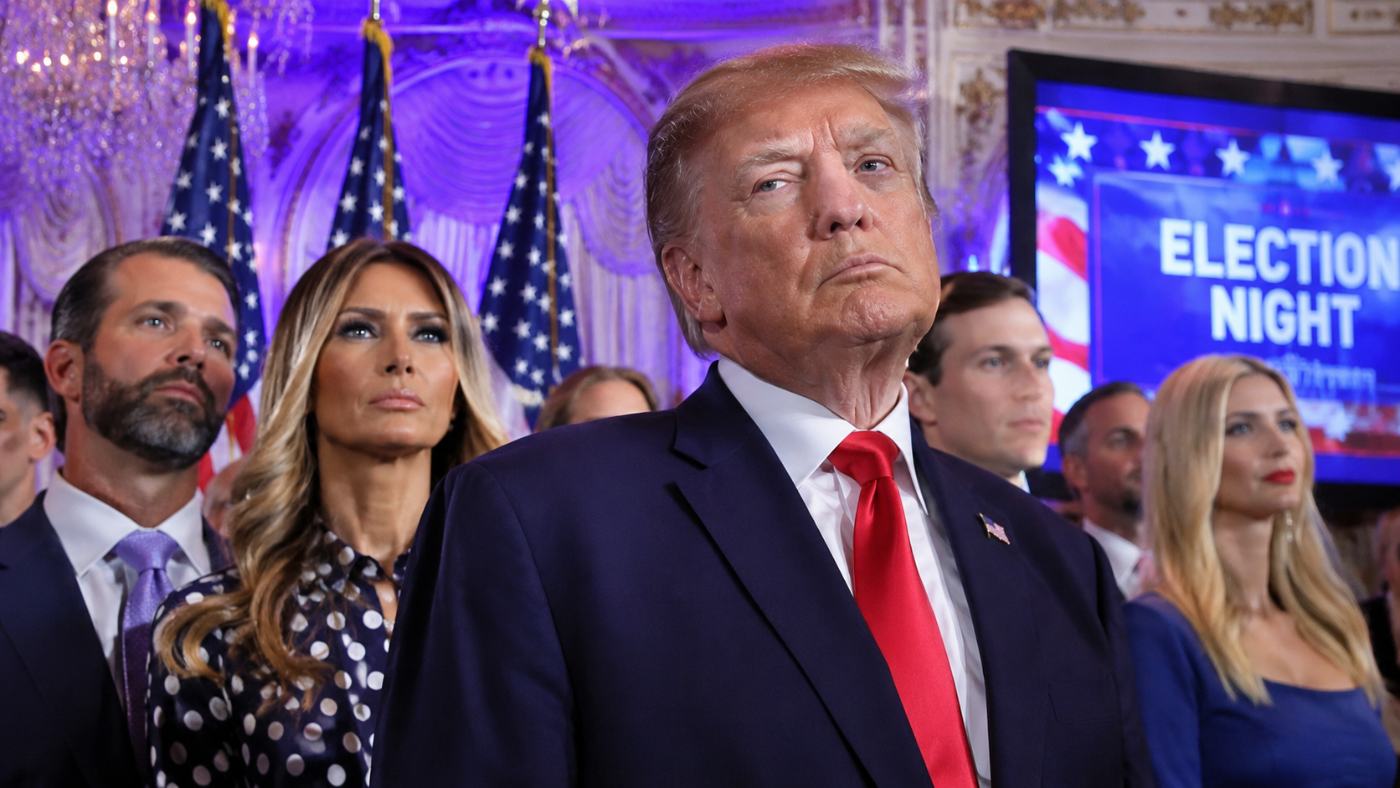
Former President Donald Trump is publicly denying reports that he is furious over disappointing Republican midterm election results, repeatedly insisting that he is not angry while attacking news organizations, defending his endorsements, and blaming others for the party's setbacks.
The denials come two days after Republicans failed to achieve the sweeping electoral victories many party leaders had anticipated, prompting growing criticism of Trump's influence over Republican candidates and campaign strategy.
On Thursday, Trump turned to his Truth Social platform to dispute reports describing his reaction to the election.
“For those many people that are being fed the fake narrative from the corrupt media that I am Angry about the Midterms, don't believe it,” Trump wrote.
He insisted that he had performed well politically, emphasizing that he personally was not a candidate in Tuesday's election.
Trump concluded by describing himself as a “Stable Genius.”
Reports Describe Anger Behind the Scenes
Trump's public statements contradict accounts from people familiar with his private reaction.
CBS News reported Wednesday that a senior source close to Trump described him as privately infuriated by the results and blaming advisers and others for Republican losses.
The New York Times also reported tensions surrounding Trump's endorsement of Mehmet Oz, the Republican Senate candidate defeated by Democrat John Fetterman in Pennsylvania.
Trump rejected reporting that he blamed his wife, Melania Trump, and Fox News host Sean Hannity for encouraging the Oz endorsement.
He defended Oz while criticizing reporters for publishing what he described as fabricated accounts.
The competing accounts have drawn attention to the gap between Trump's public presentation of the election and reports from people around him.
Republican Candidates Fall Short
Tuesday's election delivered several setbacks for candidates who received Trump's endorsement.
Oz lost Pennsylvania's Senate contest, while Republican gubernatorial candidates Tudor Dixon in Michigan and Doug Mastriano in Pennsylvania also suffered defeats.
Other Trump-backed Republicans won, including Ohio Senate candidate J.D. Vance.
Nevertheless, the anticipated Republican wave has failed to materialize, and control of Congress remains unresolved as votes continue to be counted.
Some Republican strategists argue that controversial candidates and Trump's continued emphasis on the disputed 2020 presidential election complicated the party's efforts to attract independent voters.
Others point to abortion, fundraising disparities, campaign organization, and Democratic messaging as additional factors.
Conservative Media Turns Critical
Trump is also confronting criticism from conservative media organizations that have traditionally supported many of his policies.
The New York Post and Wall Street Journal have published commentary questioning his political influence following the midterms.
Fox News has given considerable attention to Florida Governor Ron DeSantis, whose decisive reelection victory contrasts with Republican disappointments elsewhere.
Trump responded by criticizing Fox News and questioning its loyalty.
On Thursday, he also issued a lengthy statement attacking DeSantis, describing him as an average governor and taking credit for helping launch his political career.
The confrontation reflects growing discussion within Republican circles about the party's leadership ahead of the 2024 presidential election.
A Presidential Announcement Approaches
Trump has scheduled a major announcement at Mar-a-Lago for November 15, widely expected to involve another campaign for the White House.
The timing places his political plans under scrutiny as Republicans assess Tuesday's results.
Trump continues to emphasize his successful endorsements and dismiss criticism as dishonest media coverage.
Yet the debate unfolding within his own party concerns more than his personal reaction to an election.
Republican officials, donors, and commentators are increasingly questioning how much influence Trump should exercise over future candidates and campaigns.
For now, the former president insists he is looking toward the future rather than dwelling on the midterms.
His repeated public defenses, however, demonstrate how prominently the election results have entered the debate over his political leadership.