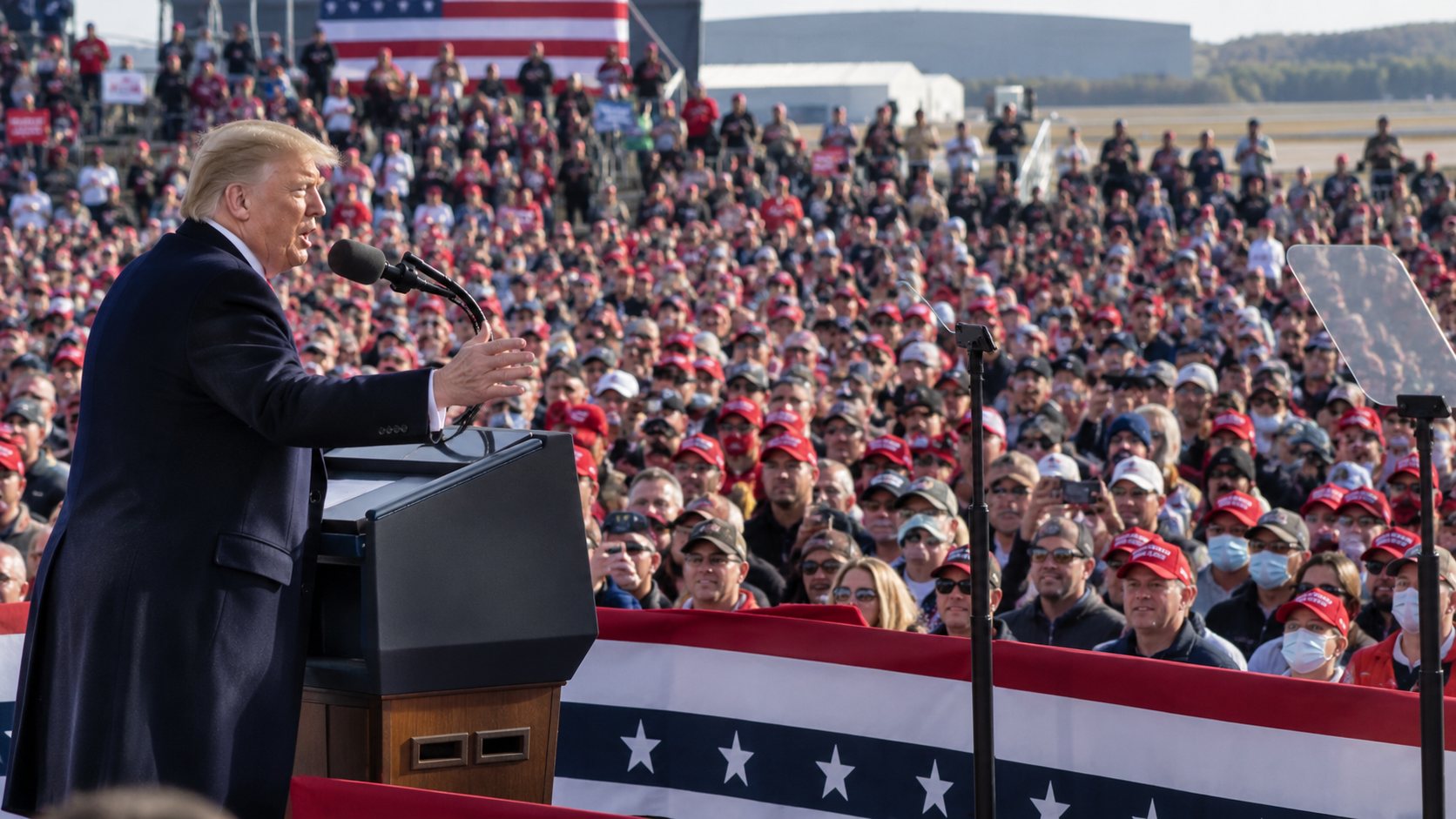
With just two days remaining before the presidential election, President Donald Trump is continuing to hold large campaign rallies across the country despite a rapidly worsening coronavirus outbreak that has already claimed more than 230,000 American lives.
The United States is experiencing another devastating surge in COVID-19 infections, with daily cases reaching record levels and hospitals in several states facing increasing pressure.
According to Reuters, the country reported more than 100,000 new infections on Friday, October 30, setting a single-day record.
Yet Trump is pressing ahead with an aggressive campaign schedule, appearing before thousands of supporters, many of whom are gathered close together without masks.
On Sunday, the president is campaigning across five battleground states: Michigan, Iowa, North Carolina, Georgia, and Florida.
Public health experts have repeatedly warned that large gatherings, particularly those involving people traveling from different communities, can accelerate the spread of the virus.
A new Stanford University study examining 18 Trump rallies estimates that the events may have contributed to more than 30,000 additional COVID-19 infections and potentially hundreds of deaths. Researchers acknowledge that the findings rely on statistical estimates rather than direct contact tracing.
Trump, meanwhile, continues emphasizing economic recovery and the importance of reopening businesses, pointing to strong third-quarter economic growth following the historic collapse earlier this year.
Democratic presidential nominee Joe Biden is taking a sharply different approach, holding smaller, socially distanced events and criticizing the administration's handling of the pandemic.
Biden argues that the country cannot achieve a lasting economic recovery without first bringing the coronavirus under control.
The contrast between the candidates is unmistakable. Trump is emphasizing reopening the economy and restoring normal activity, while Biden is calling for a stronger national response to the public health emergency.
As Americans prepare to vote Tuesday, the pandemic remains one of the defining issues of the election.
For families mourning loved ones, healthcare workers confronting another wave of infections, and millions of Americans struggling financially, the consequences extend far beyond the campaign trail.