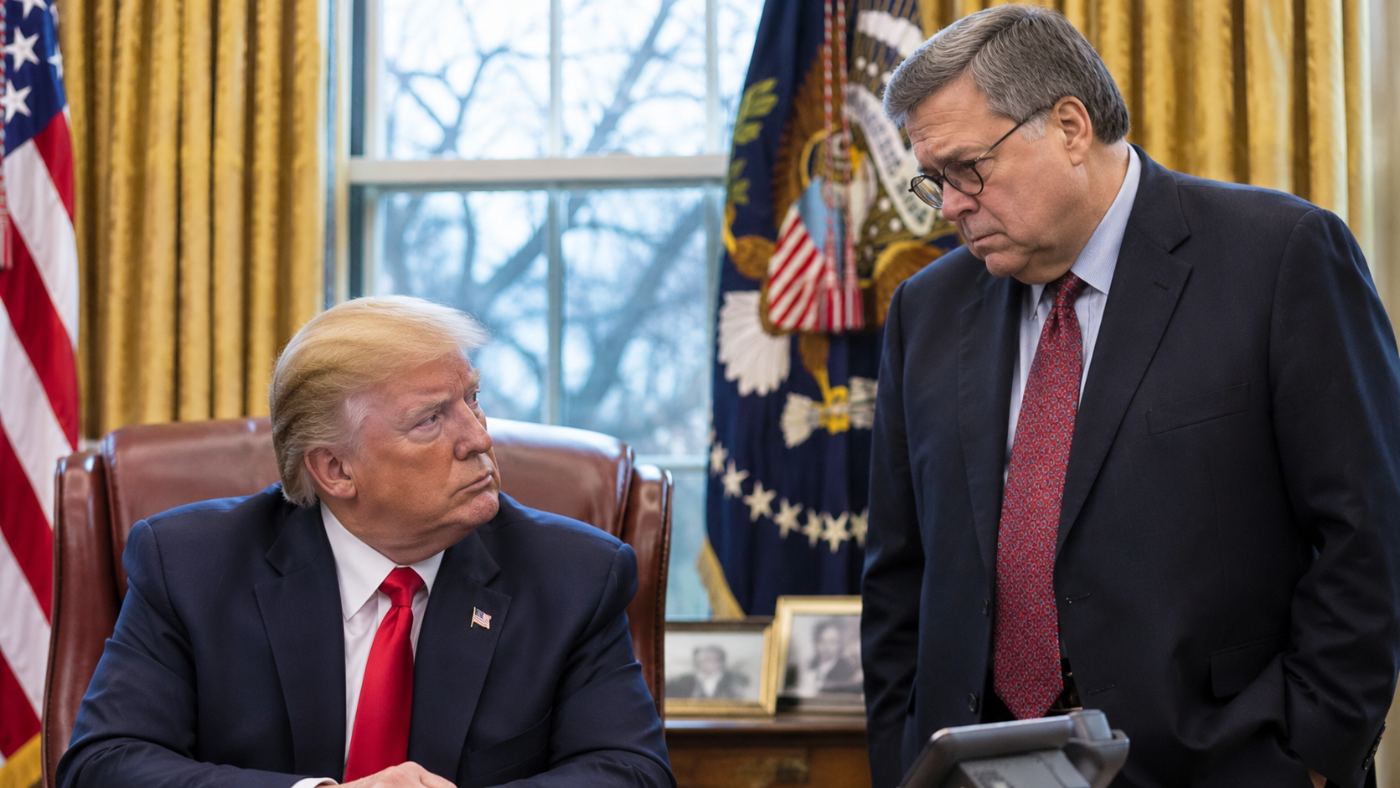
President Donald Trump's relationship with Attorney General William Barr reached a breaking point on December 2, 2020, as reports emerged that Trump was furious with his own Justice Department chief for publicly contradicting allegations of widespread presidential election fraud.
According to contemporary reporting by The Washington Post and ABC News, Trump was privately expressing anger toward Barr and had discussed the possibility of removing him.
The confrontation followed Barr's December 1 acknowledgment that federal investigators had uncovered no evidence of election fraud substantial enough to change Joe Biden's victory.
A Public Contradiction From a Trusted Ally
Barr had been one of Trump's most prominent defenders throughout his presidency.
But his December 1 interview with the Associated Press directly challenged Trump's repeated claims that the election had been stolen.
Barr explained that federal prosecutors and FBI agents had investigated specific allegations without discovering evidence of widespread, outcome-changing fraud.
He also addressed conspiracy theories involving electronic voting machines, explaining that federal investigators had found nothing substantiating claims that voting equipment had been programmed to manipulate election results.
Barr did not claim that every allegation had been investigated or that no irregularities existed. His conclusion was that investigators had not found evidence capable of reversing the election.
An Intense White House Meeting
Later on December 1, Barr visited the White House for previously scheduled meetings.
According to ABC News, Trump requested a meeting with the attorney general after learning of his public comments.
A source briefed on their conversation described the encounter as intense.
Barr reportedly spent approximately two and a half hours at the White House.
Although the precise details of their private discussion were not publicly disclosed, the meeting occurred as tensions between the president and his attorney general were escalating.
Trump Considers Removing Barr
By December 2, The Washington Post reported that Trump remained furious.
A senior administration official indicated that Barr could be fired, while others were reportedly attempting to persuade the president against taking that step.
Trump's frustration extended beyond the election investigation.
He was also angry that U.S. Attorney John Durham had not released findings before the November election concerning the origins of the FBI's 2016 investigation into Trump's campaign.
Barr had privately appointed Durham as special counsel in October, a decision that helped protect the investigation's continuation.
Trump reportedly viewed the absence of a public report before Election Day as another disappointment.
The White House Avoids Answering Questions
During a December 2 press briefing, White House Press Secretary Kayleigh McEnany declined to confirm whether Trump still had confidence in Barr.
Instead, she indicated that any personnel announcement would come from the president.
Meanwhile, Trump's attorneys Rudy Giuliani and Jenna Ellis disputed Barr's assessment, claiming the Justice Department had not adequately investigated their allegations.
Their objections did not establish widespread election fraud.
Trump continued promoting claims about the election despite the findings of his own attorney general.
Barr's Departure Approaches
The dispute foreshadowed Barr's departure from the administration.
On December 14, Trump announced that Barr would leave office before Christmas.
Barr's final day as attorney general was December 23.
His departure followed weeks of disagreement over the election, the Durham investigation, and the Justice Department's handling of politically sensitive matters.
A President at Odds With His Own Justice Department
The December 2 confrontation illustrated the growing divide between Trump's election narrative and the conclusions reached by federal investigators.
Barr had supported numerous controversial administration policies, but his refusal to endorse unsupported claims of outcome-changing election fraud placed him in direct conflict with the president.
The dispute also raised questions about the pressure political leaders can place on federal law enforcement officials.
At the center of the confrontation was a straightforward disagreement: Trump continued insisting the election had been stolen, while his own attorney general said investigators had found no evidence sufficient to change the result.
The December 2 reporting documented how that disagreement threatened to end Barr's tenure at the Justice Department.