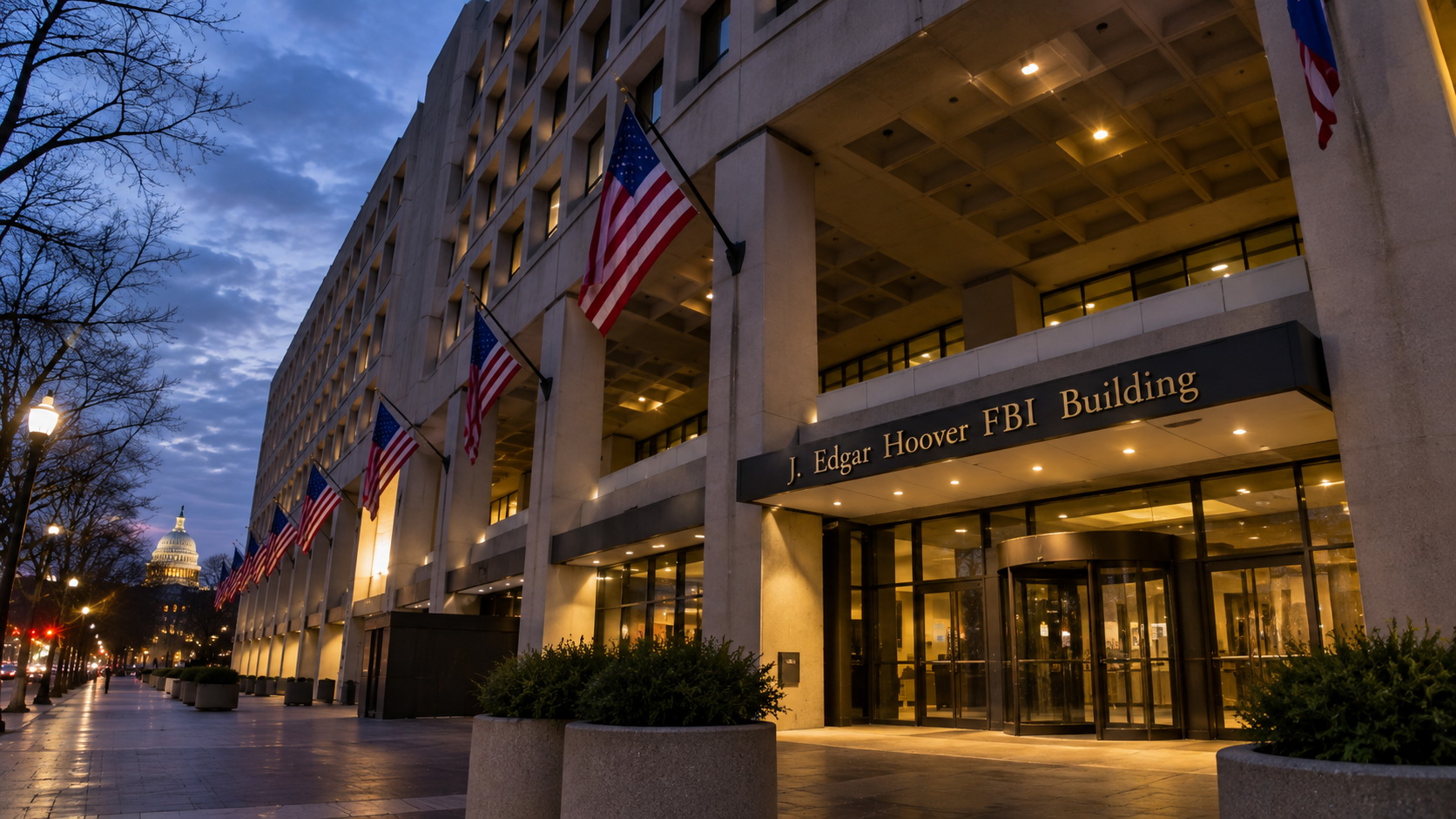
Donald Trump abruptly fired FBI Director James Comey on May 9, 2017, removing the head of the agency while the FBI was investigating Russian interference in the 2016 presidential election and possible links between the Russian government and members of Trump's campaign.
The decision immediately plunged Washington into controversy.
Comey had publicly confirmed less than two months earlier that the FBI was investigating Russia's efforts to interfere in the election, including whether there had been coordination between individuals associated with Trump's campaign and the Russian government.
Now the president whose campaign was part of that investigation had fired the man overseeing the FBI.
Comey Learns He's Been Fired
Comey was in Los Angeles speaking to FBI employees when news of his dismissal began appearing on television.
At roughly the same time, the White House released Trump's letter terminating him.
Trump wrote that Comey was "not able to effectively lead the Bureau."
But one unusual passage immediately attracted attention.
Trump specifically mentioned that Comey had told him on three occasions that he was not personally under investigation.
The firing came with recommendations from Attorney General Jeff Sessions and Deputy Attorney General Rod Rosenstein.
Rosenstein had written a memorandum sharply criticizing Comey's handling of the investigation into Hillary Clinton's use of a private email server.
Initially, the White House publicly emphasized those Justice Department recommendations when explaining why Comey had been dismissed.
That explanation soon became more complicated.
Trump Says He Had Already Decided
Two days later, Trump sat down with NBC's Lester Holt and made clear that the decision had ultimately been his.
Trump said he was going to fire Comey regardless of the Justice Department recommendation.
Then he brought up Russia.
Trump said that when he decided to fire Comey, he was thinking about what he called "this Russia thing with Trump and Russia," which he dismissed as a story created by Democrats to explain their election defeat.
That statement dramatically changed the public discussion surrounding Comey's dismissal.
The question was no longer simply whether Comey had mishandled the Clinton investigation.
The president himself had connected his decision-making process to the Russia controversy.
An Investigation Trump Wanted Behind Him
The FBI investigation had become an increasing source of frustration inside Trump's White House.
Comey had publicly confirmed its existence during congressional testimony on March 20.
The investigation examined Russian interference in the 2016 election and whether there was coordination between the Trump campaign and Russia.
Trump repeatedly denied that his campaign had colluded with Russia and described the controversy as politically motivated.
Years later, Special Counsel Robert Mueller's investigation would report that it did not establish that members of the Trump campaign conspired or coordinated with the Russian government in its election-interference activities.
But Russia's interference itself was real.
Mueller's investigation documented a Russian campaign intended to influence the 2016 presidential election.
And in May 2017, the FBI investigation into those events was still underway when Trump removed its director.
The Firing Didn't End the Investigation
If Trump's goal was to make the Russia controversy disappear, Comey's dismissal had the opposite effect.
Eight days later, Deputy Attorney General Rod Rosenstein appointed former FBI Director Robert Mueller as special counsel.
Mueller was given authority to oversee the investigation into Russian interference, possible links or coordination between Russia and individuals associated with Trump's campaign, and matters arising from that investigation.
Instead of ending the controversy, Comey's firing helped produce an investigation with greater independence from the White House.
Mueller's investigation would continue for nearly two years.
A Defining Moment of Trump's First Year
Presidents have the authority to dismiss FBI directors, and Comey's handling of politically sensitive investigations had drawn criticism from both Republicans and Democrats.
But the timing and circumstances of this firing made it extraordinary.
Trump removed the FBI director while the bureau was conducting an investigation involving his presidential campaign.
The White House initially emphasized recommendations from Justice Department officials.
Trump then publicly said he had already decided to fire Comey regardless of those recommendations and acknowledged that the Russia controversy had been on his mind.
Within days, Washington would be consumed by questions about presidential power, the independence of federal law enforcement and whether Trump's actions constituted an attempt to interfere with an investigation.
And instead of making the Russia investigation disappear, the firing of James Comey helped usher in something much bigger:
the Mueller investigation.
Category: Politics / Courts & Justice
Tags: Donald Trump, James Comey, FBI, Russia Investigation, Robert Mueller, Rod Rosenstein, Jeff Sessions, 2016 Election, Trump Administration, 2017