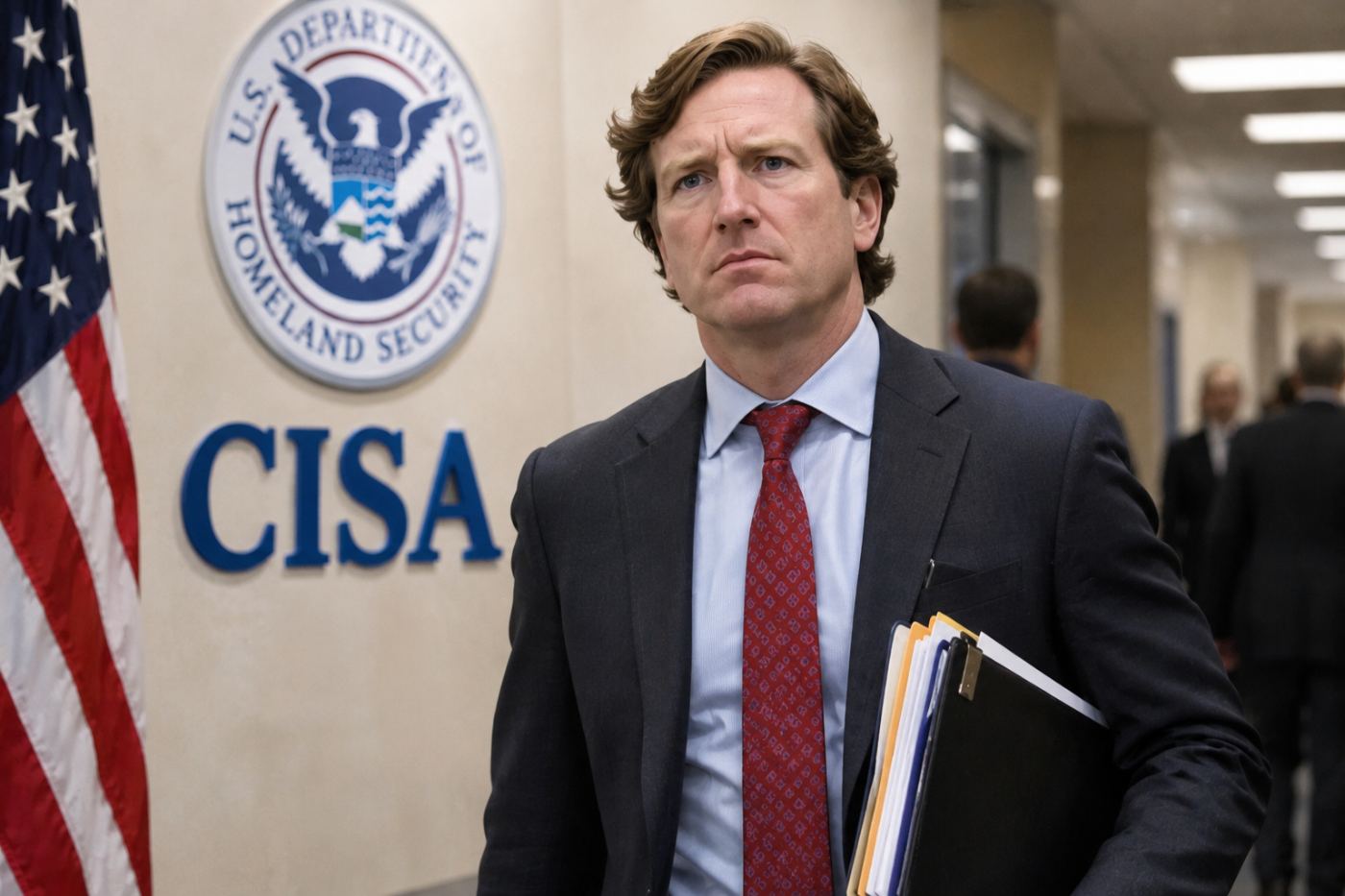
President Donald Trump fired the nation's top election security official Tuesday evening, removing a senior member of his own administration whose offense appeared to be publicly defending the integrity of an election Trump refuses to accept losing.
Christopher Krebs, director of the Department of Homeland Security's Cybersecurity and Infrastructure Security Agency (CISA), was dismissed after his agency helped issue a statement describing the November 3 presidential election as the most secure in American history.
The firing represents another escalation in Trump's campaign to challenge President-elect Joe Biden's victory, even as election officials and cybersecurity experts continue rejecting unsupported allegations of widespread manipulation.
Fired for Contradicting the President
Trump announced Krebs's termination on Twitter, accusing him of making inaccurate statements about election security.
The president repeated allegations involving deceased voters, restricted poll watchers, and voting machines supposedly transferring votes from Trump to Biden.
He provided no substantiated evidence demonstrating that such irregularities changed the election's outcome.
Krebs, a Trump administration appointee, had spent months coordinating with state and local election officials to protect voting infrastructure from cyberattacks, foreign interference, and misinformation.
His agency's conclusions directly contradicted the president's narrative that the election had been stolen.
Rather than produce evidence disproving those conclusions, Trump removed the official responsible for helping establish them.
The Administration's Own Findings
On November 12, election security officials issued a statement declaring the election exceptionally secure.
The statement came from coordinating councils involving federal, state, local, and private-sector election security representatives.
They reported no evidence that voting systems had deleted votes, changed votes, or otherwise been compromised.
That assessment did not mean every individual ballot was beyond scrutiny. It addressed the security and integrity of election systems, not every possible allegation of voter misconduct.
Nevertheless, it directly challenged Trump's repeated suggestions that voting machines had manipulated the presidential result.
Loyalty Versus Election Security
Krebs's dismissal raises a fundamental concern about the independence of federal officials charged with protecting American elections.
CISA was established to strengthen national cybersecurity, including defenses against election interference.
Its responsibility is to assess threats and provide reliable information, regardless of which political party benefits from the findings.
Trump's decision sends a troubling message to other officials: Publicly contradicting the president's election allegations may carry professional consequences.
The president has the authority to dismiss executive branch appointees. But the existence of that authority does not resolve questions about how it is being exercised.
Another Casualty of Trump's Refusal to Concede
Krebs is not the first senior official removed during the turbulent period following the election.
Trump fired Defense Secretary Mark Esper on November 9 and has continued reshaping senior positions within his administration.
Meanwhile, the president's campaign is pursuing legal challenges in several battleground states.
Those efforts have not established widespread fraud sufficient to overturn Biden's projected victory.
Trump nevertheless continues claiming that he won, while refusing to begin a conventional transition to the incoming administration.
The Cost of Telling the Truth
Krebs responded to his dismissal by expressing pride in his agency's work.
His departure removes an experienced cybersecurity official at a moment when public confidence in American elections is being challenged by the president himself.
The consequences extend beyond one government employee.
Federal election security officials must be able to report their findings without fear that politically inconvenient conclusions will cost them their positions.
Trump's firing of Krebs illustrates the tension between presidential loyalty and independent government expertise.
The administration's election security professionals defended the integrity of the vote. Donald Trump responded by firing their director.
The election results remain unchanged. The official who defended them is now out of a job.