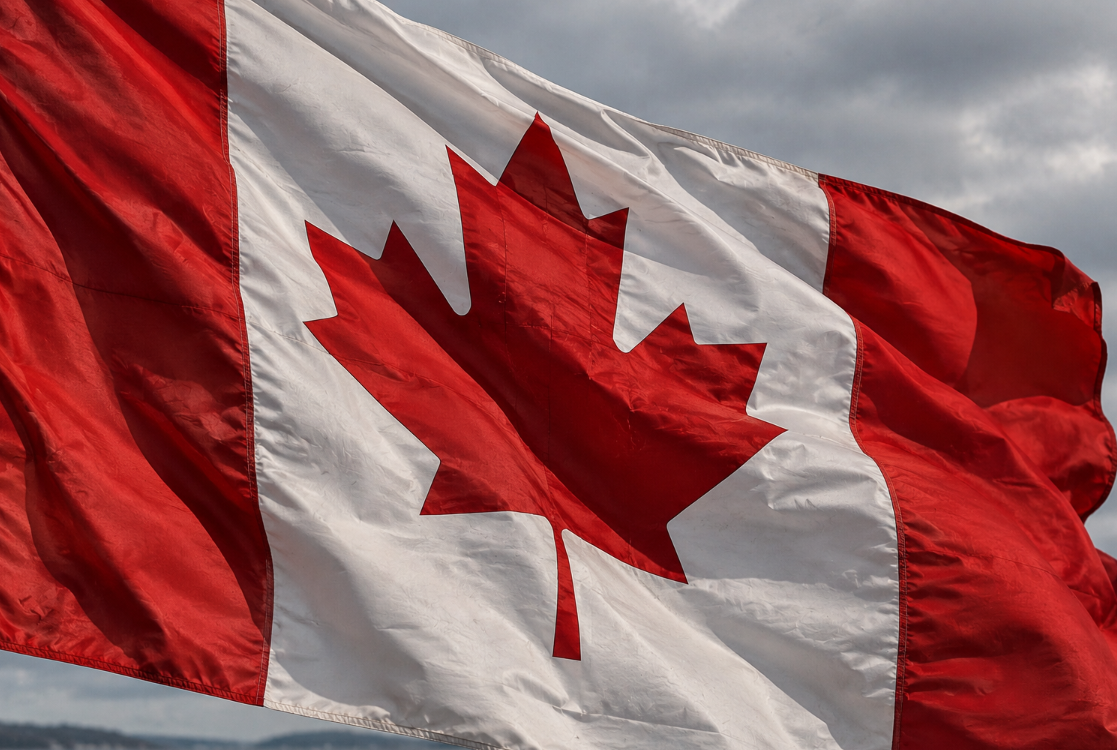
Relations between the United States and Canada have deteriorated sharply as President Donald Trump escalates a trade confrontation with one of America's largest trading partners and oldest allies.
What began as another tariff dispute has expanded into retaliatory tariffs, import bans, threats involving Europe and increasingly hostile rhetoric between Washington and Ottawa.
The latest confrontation follows the collapse of U.S.-Canadian trade negotiations in August. The Trump administration had announced additional 50 percent tariffs on selected Canadian products, including goods in the dairy, automotive and alcohol sectors.
For a brief period, it appeared that an agreement might prevent the tariffs from taking effect. Trump announced on August 18 that the tariffs would be paused for three days because the two countries had reached what he described as a deal pending final paperwork.
Canadian Prime Minister Mark Carney was considerably more cautious, saying only that substantial progress had been made and that important work remained.
Within days, the negotiations collapsed.
Both governments blamed the other for changing the terms of the emerging agreement.
Canada Retaliates
Canada subsequently announced retaliatory tariffs on approximately $20 billion worth of American products.
Those measures took effect September 8 and covered hundreds of U.S. products, including agricultural equipment, dairy products and other goods.
The Trump administration responded the same day.
The White House announced new restrictions on Canadian products, including bans on imports of certain Canadian alcoholic beverages, dairy products and motorcycles. The administration also altered the list of Canadian products facing 50 percent tariffs.
The White House says the measures are necessary because Canada discriminates against American commerce and maintains unfair barriers affecting U.S. exports.
Canada disputes that characterization and says its tariffs are retaliation for American trade measures.
The result is a growing cycle:
The United States imposes tariffs.
Canada retaliates.
Washington responds with additional restrictions.
Businesses on both sides of the border are left trying to determine what comes next.
An Extraordinary Fight With a Major Trading Partner
The scale of the economic relationship makes the dispute particularly consequential.
The United States and Canada exchange hundreds of billions of dollars in goods every year, with deeply integrated industries spanning automobiles, agriculture, energy, manufacturing and consumer products.
The dispute is already creating problems for businesses that depend on cross-border commerce.
American companies selling into Canada have reported canceled orders and weakened demand, while Canadian manufacturers exporting to the United States face tariffs that can dramatically increase the cost of their products.
Some businesses are now reconsidering investments and contracts because they cannot predict what tariffs or restrictions may exist several months from now.
Then Europe Entered the Fight
The confrontation took another turn this week.
Canada has been pursuing closer economic ties with Europe as its relationship with Washington has deteriorated. European officials have discussed the possibility of Canada becoming an associate member of the European Union.
Trump responded publicly on September 16.
He called the prospect of Canada becoming an EU associate member "laughable" and described Canada as a "terrible trade partner."
More significantly, Trump suggested that European support for such an arrangement could potentially be considered a "hostile act" toward the United States.
Trump said the American response would depend on Europe's intentions, but warned that the United States could impose heavy tariffs on European countries or restrict trade in certain sectors.
The dispute therefore threatens to expand beyond Canada.
Canada Looks Toward Europe
Canada, meanwhile, is openly strengthening relationships elsewhere.
On September 20, Carney met French President Emmanuel Macron in Saint-Pierre and Miquelon, the French territory located just off Canada's Atlantic coast.
The two leaders pledged greater cooperation in areas including energy, trade, climate and space.
Macron also expressed support for Canada's efforts to establish a closer relationship with the European Union.
The meeting carried additional symbolism because Trump recently shared an image on social media depicting Canada and several other territories in North America covered by an American flag.
Trump has repeatedly spoken about Canada becoming the 51st U.S. state since returning to the presidency.
Canada has rejected the idea.
A Relationship That Has Changed Dramatically
Disagreements between Washington and Ottawa are nothing new. The two countries have fought over lumber, dairy products, automobiles and other trade issues for decades.
What is unusual is the breadth and tone of the current confrontation.
Tariffs have become import bans. Trade negotiations have become threats of additional retaliation. Canada's efforts to strengthen relationships with Europe have themselves become another source of friction with Washington.
The Trump administration argues that its actions are necessary to force Canada to provide fairer access for American products and protect U.S. workers.
Canada argues that it is defending its economy against American tariffs and trade restrictions.
Whatever the eventual outcome, the relationship between the two countries has entered territory that would have been difficult to imagine only a few years ago.
The United States and Canada remain neighbors and enormous trading partners.
Increasingly, however, they are behaving like countries engaged in an economic confrontation.