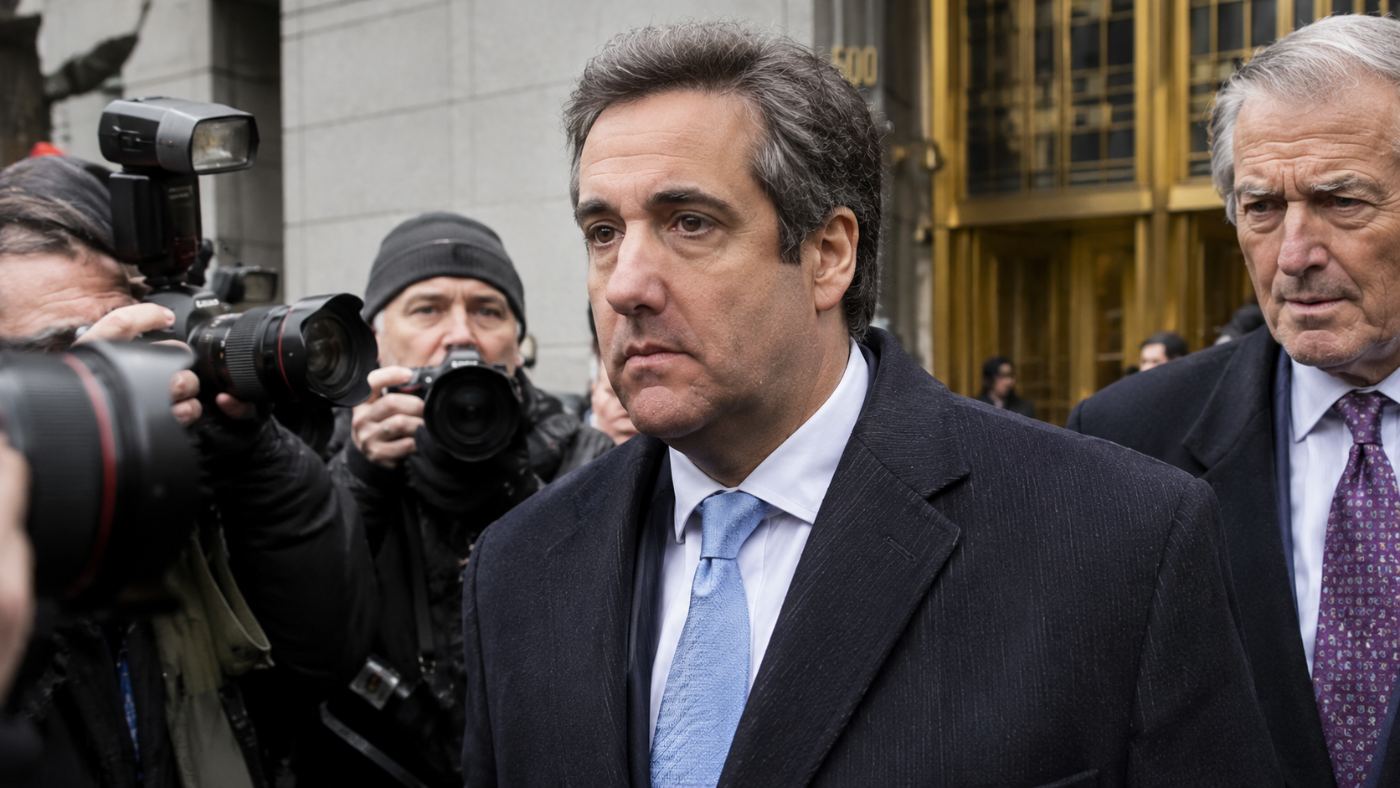
On December 3, 2018, President Donald Trump publicly demanded that his former personal attorney, Michael Cohen, receive a lengthy prison sentence after Cohen pleaded guilty to federal crimes and began cooperating with investigators examining Trump's business dealings and presidential campaign.
The extraordinary attack came through a series of Twitter posts in which Trump accused his longtime confidant of lying to prosecutors to obtain a reduced sentence.
Cohen had recently admitted making false statements to Congress about negotiations involving a proposed Trump Tower development in Moscow.
From Trusted Attorney to Federal Witness
For years, Cohen had served as Trump's personal attorney and political fixer, handling sensitive business and personal matters.
Their relationship deteriorated after federal investigators began examining Cohen's financial activities and his involvement in payments to women who alleged affairs with Trump.
In August 2018, Cohen pleaded guilty to eight federal offenses, including tax evasion, making false statements to a bank, and campaign finance violations.
During his guilty plea, Cohen stated that he had arranged payments intended to influence the 2016 election at the direction of a federal political candidate, referring to Trump.
Trump denied directing Cohen to break the law.
The Moscow Project
On November 29, Cohen entered another guilty plea, admitting that he had lied to Congress about negotiations for a proposed Trump Tower in Moscow.
Cohen had previously claimed that discussions ended in January 2016.
In reality, negotiations continued into June 2016, while Trump was pursuing the Republican presidential nomination.
Cohen acknowledged that his earlier statements were intended to minimize connections between Trump's business interests and Russia during the campaign.
The admission became significant evidence in Special Counsel Robert Mueller's investigation.
Trump Demands Prison Time
After Cohen's attorneys requested leniency because of his cooperation with investigators, Trump responded angrily.
In a December 3 Twitter post, Trump argued that Cohen should receive a "full and complete sentence."
Trump accused his former attorney of inventing stories to obtain favorable treatment and questioned whether Cohen's family members were receiving protection from prosecution.
He also characterized Cohen's financial offenses as unrelated to himself.
That characterization omitted the campaign finance violations and Moscow-related false statements, both of which involved matters connected to Trump.
Trump Praises Another Associate's Refusal to Cooperate
On the same day, Trump praised longtime political adviser Roger Stone after Stone publicly declared that he would not testify against the president.
Trump applauded Stone's loyalty, saying it was encouraging that some people still had courage.
The contrast attracted immediate attention.
While Trump demanded punishment for Cohen, who was cooperating with investigators, he publicly praised Stone for refusing to provide testimony against him.
Some legal commentators and Democratic lawmakers raised concerns that the president's statements could influence witnesses.
Trump maintained that Mueller's investigation was politically motivated.
Mueller Documents the Statements
The December 3 tweets later appeared in Mueller's report, which examined potential obstruction of justice involving the Russia investigation.
The report documented Trump's public criticism of Cohen after his cooperation began, including references to Cohen's family.
Mueller did not establish that the December 3 tweets alone constituted a criminal offense.
However, the statements became part of the investigation's examination of the president's conduct toward witnesses.
Cohen Receives Three Years in Prison
On December 12, 2018, a federal judge sentenced Cohen to three years in prison for his offenses.
Cohen told the court that his loyalty to Trump had contributed to his criminal conduct.
The sentence reflected both the seriousness of his offenses and the cooperation he had provided to investigators.
A Presidential Attack on a Cooperating Witness
The December 3 confrontation exposed the collapse of a relationship that had once been central to Trump's business and political operations.
Cohen had become a federal witness, while Trump publicly challenged his credibility and demanded punishment.
The episode remains part of the historical record of the Mueller investigation and the tensions surrounding witnesses who cooperated with federal authorities.