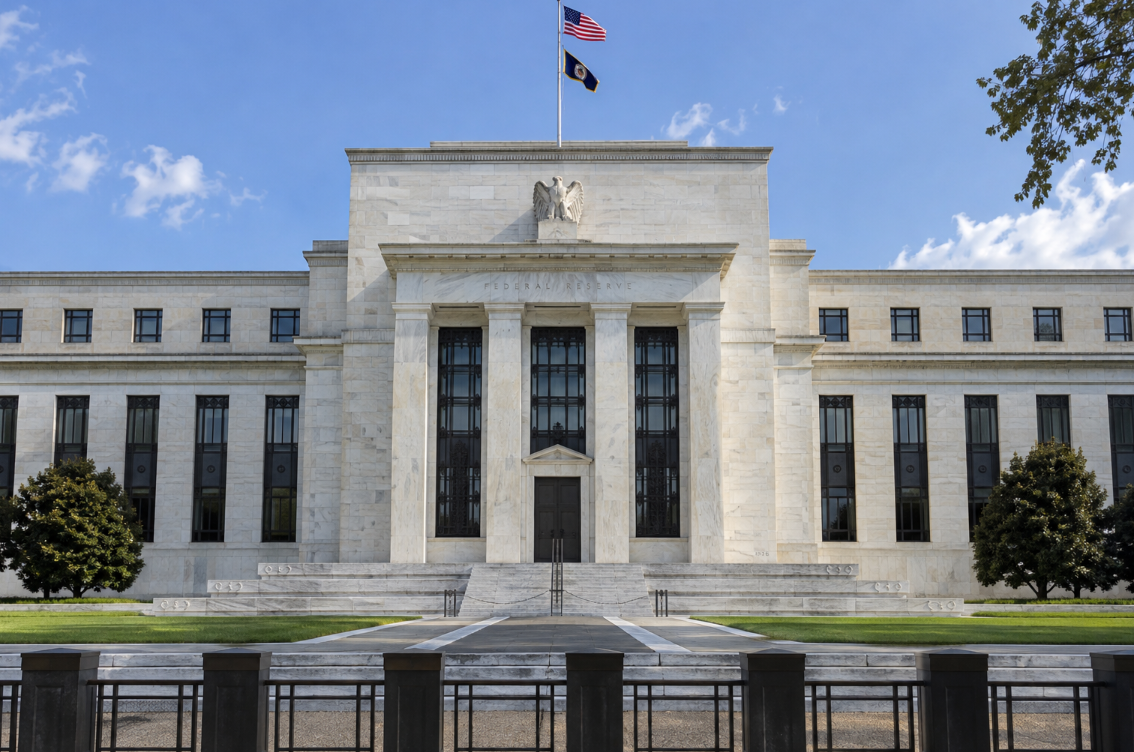
President Donald Trump has made his position on interest rates abundantly clear.
He wants them lower.
Much lower.
But on September 16, the Federal Reserve did exactly the opposite.
The central bank voted unanimously to raise its benchmark interest rate by a quarter percentage point, bringing the federal funds target range to 3.75 percent to 4 percent.
Among those voting for the increase was Federal Reserve Chair Kevin Warsh — the man Trump selected to lead the central bank.
The decision represents a striking collision between Trump's demands for cheaper money and the Federal Reserve's determination to confront persistent inflation.
Trump Wants Rates at 1 Percent or Lower
Trump has repeatedly argued that American interest rates should be dramatically lower.
Following the Fed's decision, he again demanded rates of 1 percent or less, arguing that the United States deserves extremely low borrowing costs because of the strength of its credit.
The Federal Reserve reached a very different conclusion.
Its policymakers voted 12-0 to increase rates.
According to the Fed, inflation remains elevated, and higher interest rates are intended to help bring inflation back toward the central bank's long-term target of 2 percent.
This wasn't a divided Federal Reserve barely approving an increase.
Every voting member supported it.
Trump's Own Fed Chairman Voted for the Increase
That makes Kevin Warsh's role particularly noteworthy.
Trump nominated Warsh to lead the Federal Reserve after repeatedly criticizing the central bank's previous leadership over interest rates.
Yet when confronted with persistent inflation, Warsh joined every other voting member of the Federal Open Market Committee in supporting higher rates.
Warsh has argued that inflationary pressures have broadened beyond energy and imported goods.
The Federal Reserve's own projections underscore the problem.
Fed policymakers now project PCE inflation of approximately 3.7 percent for 2026, well above their 2 percent objective.
The central bank does not currently project inflation returning fully to 2 percent until 2029.
That creates an uncomfortable economic reality for a president demanding dramatically lower interest rates.
Cutting rates can stimulate borrowing and economic activity, but doing so while inflation remains elevated can also risk creating additional inflationary pressure.
The Fed chose inflation control.
The First Rate Increase Since 2023
The September decision is significant for another reason.
It was the Federal Reserve's first interest-rate increase since July 2023.
After years of rate increases designed to combat the inflation surge earlier in the decade, the Fed eventually began cutting rates.
That cycle has now reversed.
The central bank isn't simply refusing Trump's calls for lower rates.
It has begun moving rates in the opposite direction.
And Fed policymakers are signaling that September's increase may not necessarily be the last.
Federal Reserve projections released alongside the decision showed that most policymakers expect additional tightening.
Why the Fed Says It Raised Rates
The Federal Reserve pointed to an economy that remains relatively strong.
Economic activity continues to expand at what the Fed describes as a solid pace.
Domestic spending has remained resilient.
Capital investment is robust.
Employment growth has kept pace with growth in the workforce.
But inflation remains too high.
That combination creates a difficult problem for the central bank.
Higher interest rates can reduce demand by making borrowing more expensive. Mortgages, business loans, credit cards and other forms of credit can become more costly as monetary policy tightens.
That can slow economic activity.
But slowing demand is also one of the principal tools the Federal Reserve has for controlling inflation.
The Iran War Complicates the Picture
Energy prices have added another complication.
Oil prices have surged amid the continuing conflict involving the United States and Iran and disruptions affecting Middle Eastern energy supplies and transportation.
Brent crude has recently traded above $100 a barrel.
More expensive oil can contribute to inflation because petroleum affects far more than gasoline.
It influences transportation, shipping, aviation, manufacturing and the cost of moving goods throughout the economy.
Minneapolis Federal Reserve President Neel Kashkari said Sunday that inflation remains too high across the economy and emphasized that the problem extends beyond oil prices alone.
That leaves the Federal Reserve confronting inflation at precisely the moment Trump wants substantially cheaper borrowing.
Independence Means the President Doesn't Get the Final Say
The confrontation also highlights something fundamental about the American economic system.
The president does not set interest rates.
The Federal Reserve was deliberately structured to make monetary-policy decisions independently from day-to-day political control.
Presidents can appoint Federal Reserve officials, subject to Senate confirmation, but those officials do not take instructions from the White House when deciding interest-rate policy.
That independence can create political conflict.
Trump has made clear that he believes interest rates should be considerably lower.
Warsh and the rest of the Federal Open Market Committee have now made equally clear that they believe inflation currently requires the opposite response.
A Difficult Economic Contradiction
The consequences ultimately reach American consumers.
Higher interest rates can increase borrowing costs.
Elevated oil prices can increase transportation and energy expenses.
Inflation continues to erode purchasing power.
And mortgage rates have recently climbed toward 7 percent.
Trump has repeatedly promised Americans lower costs and has publicly pushed for dramatically lower interest rates.
But the Federal Reserve faces a different mandate.
It is responsible for pursuing maximum employment and price stability — not delivering the interest-rate policy preferred by a president.
On September 16, Trump's own Federal Reserve chairman faced that choice.
He voted to raise rates.