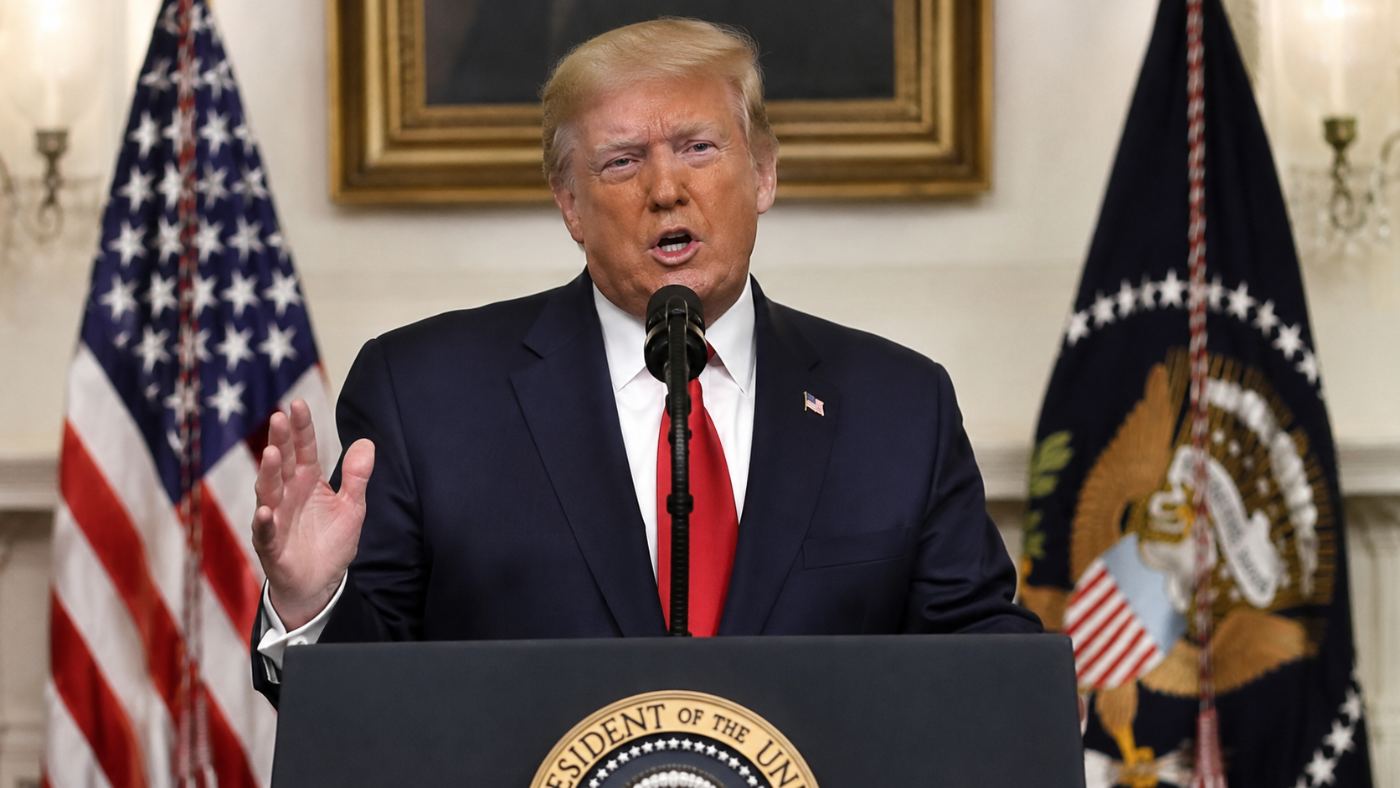
On December 2, 2020, President Donald Trump released a 46-minute prerecorded speech from the White House, repeating allegations that widespread voter fraud had stolen the presidential election from him.
The address came nearly a month after Joe Biden defeated Trump and just one day after Attorney General William Barr publicly acknowledged that federal investigators had found no evidence of fraud sufficient to change the election outcome.
Despite that finding, Trump continued insisting that he had won.
Trump's Most Important Speech?
Speaking from the White House Diplomatic Reception Room, Trump described the address as potentially the most important speech of his presidency.
For approximately 46 minutes, he presented allegations involving mail-in ballots, electronic voting machines, election officials, and vote counting in several battleground states.
Trump claimed that millions of illegal votes had been counted and suggested that the results in states won by Biden should be overturned.
He specifically targeted Pennsylvania, Michigan, Wisconsin, Georgia, Arizona, and Nevada.
His accusations were not supported by credible evidence establishing widespread, outcome-changing fraud.
His Own Attorney General Had Already Disagreed
The timing of Trump's speech was particularly significant.
On December 1, Attorney General William Barr told the Associated Press that the Justice Department had not uncovered fraud capable of changing the election results.
Barr had been one of Trump's most prominent defenders throughout his presidency.
His assessment directly contradicted the central argument Trump continued presenting to the American public.
Rather than acknowledging the Justice Department's findings, Trump expanded his accusations in the prerecorded address.
False Claims About Voting Machines
Among Trump's allegations were claims that Dominion Voting Systems equipment had improperly transferred votes from him to Biden.
He also suggested that voting technology could be manipulated to produce fraudulent results.
Federal election security officials had already described the November election as the most secure in American history.
State election officials, including Republicans, rejected allegations that voting machines had systematically altered results.
Recounts and audits did not substantiate Trump's claims.
Courts Rejected the Allegations
Trump's campaign and political allies pursued numerous legal challenges following the election.
Judges repeatedly rejected efforts to overturn results when attorneys failed to present sufficient evidence supporting their allegations.
In Pennsylvania, a federal judge dismissed a Trump campaign lawsuit that sought to prevent certification of the state's election results.
The court criticized the absence of factual evidence necessary to justify such extraordinary relief.
Nevertheless, Trump continued presenting disputed allegations as established facts.
Demanding That Election Results Be Overturned
Perhaps the most consequential portion of the address involved Trump's proposed remedy.
He argued that results in several battleground states should be overturned because of alleged illegal voting.
Trump also expressed hope that the Supreme Court would intervene.
By that point, Biden's victories had survived multiple legal challenges and recounts.
Biden ultimately received 306 electoral votes to Trump's 232 and won the popular vote by more than seven million ballots.
The Road to January 6
The December 2 speech became part of Trump's continuing campaign to challenge the election outcome.
Over the following weeks, Trump pressured state officials, supported efforts to contest electoral votes, and urged supporters to gather in Washington on January 6, 2021.
That day, a mob attacked the United States Capitol as Congress met to certify Biden's victory.
The speech alone did not cause the attack, but it contributed to the broader public campaign promoting the false narrative that the election had been stolen.
A Presidential Address Built on Unsupported Allegations
The December 2 address remains a significant historical record of Trump's response to electoral defeat.
Rather than presenting verified evidence that could change the result, the president used an official White House setting to repeat accusations rejected by election administrators, courts, and his own Justice Department.
His allegations would continue shaping American politics long after he left office.
December 2, 2020, stands as a defining moment in Trump's effort to challenge the legitimacy of an election he had lost.