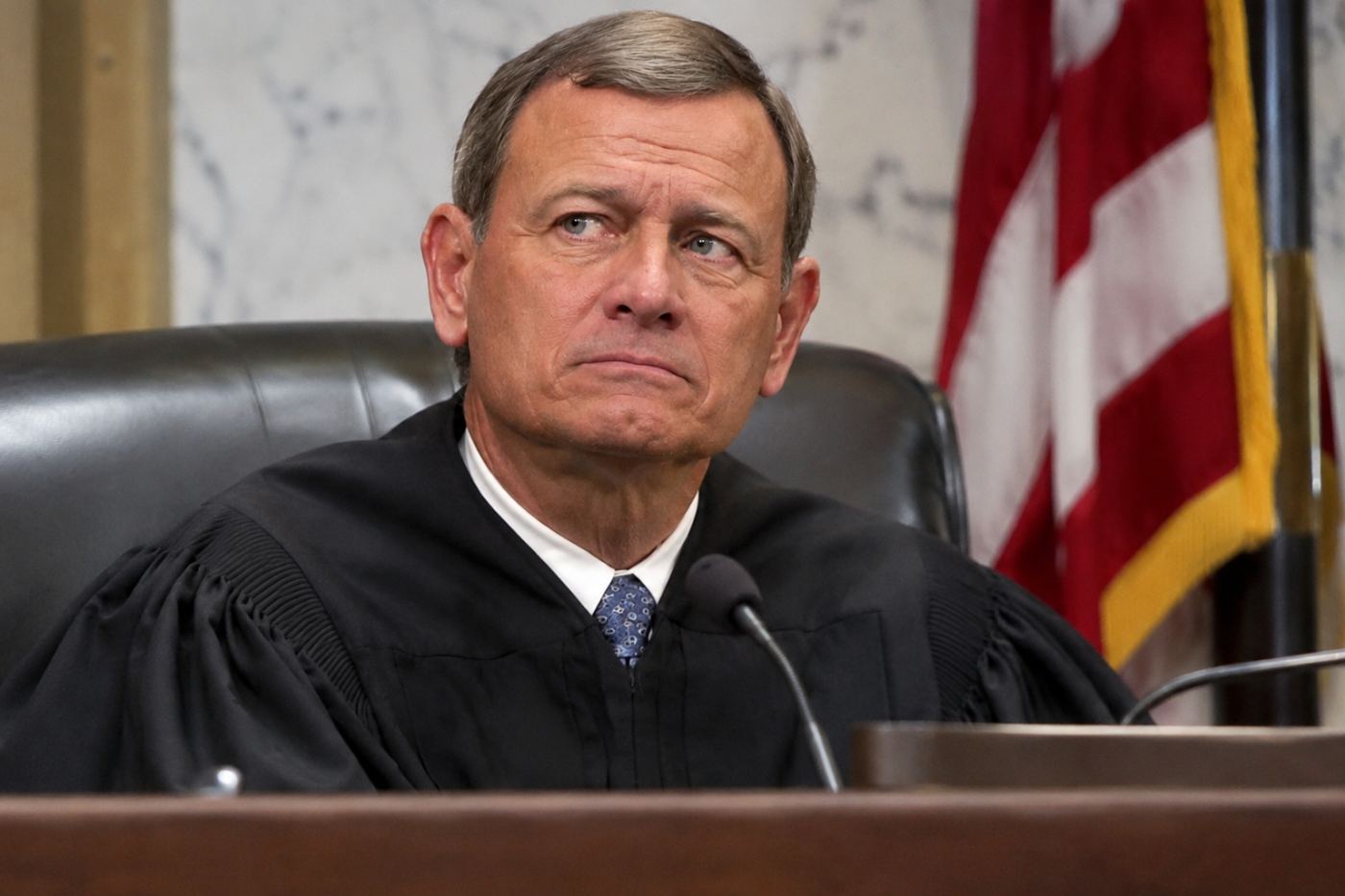
Even a rare public rebuke from the chief justice of the United States Supreme Court wasn't enough to stop Donald Trump's attacks on the federal judiciary.
On Thanksgiving Day, November 22, 2018, Trump renewed his criticism of federal judges after Chief Justice John Roberts publicly defended judicial independence and rejected the president's characterization of judges as political operatives.
Rather than retreat, Trump escalated his confrontation with the courts, accusing the Ninth Circuit of undermining border security and interfering with law enforcement.
The dispute raised fundamental questions about presidential power, judicial independence, and the constitutional authority of federal courts to review executive actions.
A Federal Judge Blocks Trump's Asylum Restrictions
The controversy began when U.S. District Judge Jon Tigar temporarily blocked a Trump administration policy that would have denied asylum eligibility to migrants who entered the United States outside official ports of entry.
The administration argued that the restrictions were necessary to address unauthorized border crossings and protect national security.
But federal immigration law generally permitted people physically present in the United States to apply for asylum regardless of how they entered the country.
Tigar concluded that the administration's restrictions conflicted with those statutory protections.
The ruling temporarily prevented the government from enforcing the new asylum limitations while the legal challenge proceeded.
Trump responded by attacking the judge personally.
He called Tigar an Obama judge, emphasizing that the jurist had been appointed by former President Barack Obama.
He also criticized the Ninth Circuit, even though Tigar's ruling came from a federal district court within that circuit.
Chief Justice Roberts Breaks His Silence
On November 21, Roberts issued an unusually direct public response.
The chief justice rejected Trump's suggestion that federal judges should be identified primarily by the presidents who appointed them.
Roberts emphasized that the judiciary consisted of judges dedicated to applying the law fairly, regardless of political affiliation.
He also defended the independence of the federal courts as a fundamental American institution.
The statement was extraordinary because chief justices rarely engage in direct public disagreements with sitting presidents.
Roberts, appointed by Republican President George W. Bush, was defending the judiciary against criticism from a president of his own party.
His message reflected a central constitutional principle: Federal judges are expected to decide cases according to law, not political loyalty.
Trump Attacks Again on Thanksgiving
On November 22, Trump responded with another series of social media attacks.
He described the Ninth Circuit as a disaster and accused its judges of interfering with national security.
He claimed the circuit had an exceptionally high reversal rate and suggested that judges were effectively legislating immigration policy.
Trump also warned that judicial interference could lead to chaos, injuries, and deaths.
The president repeated his criticism during Thanksgiving remarks to reporters, arguing that the courts were preventing military personnel and law enforcement officers from doing their jobs.
He said he respected Roberts personally but continued insisting that the Ninth Circuit was out of control.
The comments demonstrated that the chief justice's warning had not persuaded Trump to moderate his attacks.
Trump's Claims About the Courts Were Misleading
Trump repeatedly argued that the Ninth Circuit was overturned more frequently than any other federal appeals court.
His statements relied on selective statistics concerning cases reviewed by the Supreme Court.
Those figures did not establish that the Ninth Circuit was uniquely lawless or that its judges were deliberately ruling against his administration.
Supreme Court reversal statistics cover a small, selected portion of appellate decisions rather than every case decided by a circuit.
Trump's claim that his administration automatically lost cases filed within the Ninth Circuit was also an exaggeration.
Federal courts across the country had ruled both for and against administration policies.
The president's criticism reflected his frustration with adverse rulings, but unfavorable judicial decisions do not, by themselves, establish political bias.
The Constitution Gives Courts an Independent Role
The disagreement exposed competing interpretations of presidential authority.
Trump argued that elected officials responsible for national security needed greater freedom to implement immigration restrictions.
His administration maintained that judges were interfering with legitimate executive decisions.
Roberts defended the judiciary's constitutional responsibility to review government actions independently.
Federal courts have the authority to determine whether executive policies comply with federal statutes and the Constitution.
That authority applies regardless of whether a president believes a policy is necessary, popular, or politically justified.
Judicial review does not guarantee that every ruling is correct. Decisions can be challenged through the appeals process.
But the constitutional system does not permit presidents to disregard judicial authority simply because they disagree with a ruling.
A Conflict Larger Than Immigration
The November confrontation was not Trump's first public dispute with federal judges.
During his presidency, he had criticized courts that blocked portions of his immigration policies and questioned the impartiality of individual judges.
His Thanksgiving attacks continued that pattern.
Critics warned that portraying judges as political enemies could weaken public confidence in an independent judiciary.
Trump's defenders maintained that presidents were entitled to criticize judicial decisions and challenge rulings they believed were legally incorrect.
Both propositions can coexist: Presidents have the right to criticize courts, and judges have the constitutional responsibility to rule independently of presidential pressure.
The central controversy concerned Trump's repeated suggestion that judges appointed by political opponents were inherently suspect.
Thanksgiving Day and a Constitutional Confrontation
November 22, 2018, became another significant moment in Trump's relationship with the federal judiciary.
The previous day, the chief justice had publicly defended the independence of American courts.
On Thanksgiving, Trump responded by intensifying his criticism.
The dispute illustrated a recurring tension throughout his presidency: the administration's desire to implement its policies against the judiciary's responsibility to determine whether those policies complied with existing law.
Roberts defended the institutional independence of the courts.
Trump continued attacking judges whose rulings obstructed his immigration agenda.
The episode demonstrated how a dispute over asylum policy had developed into a public confrontation between the president and the leader of the federal judiciary.