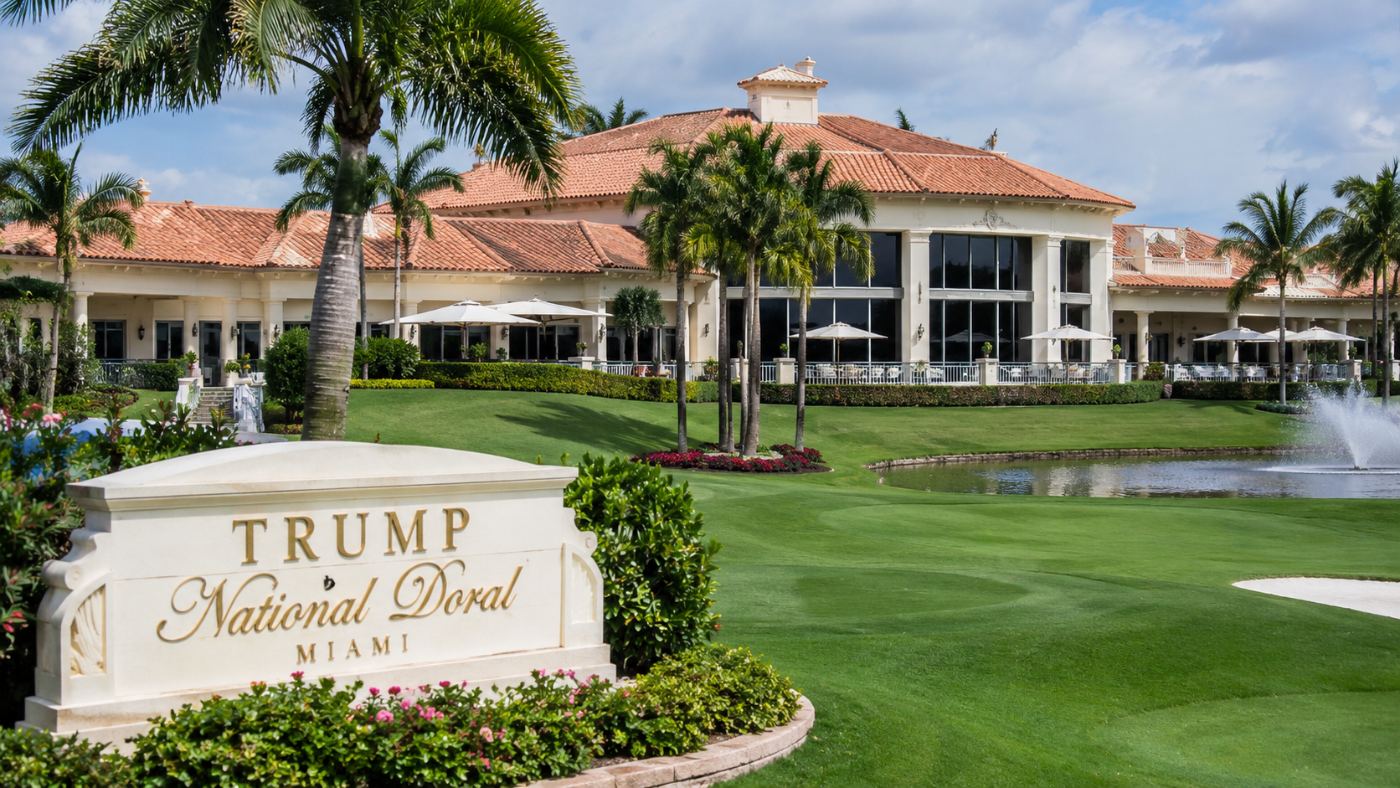
Donald Trump had already been forced to abandon his controversial plan to host the 2020 G7 summit at his own luxury golf resort. But on November 24, 2019, the president was still complaining about the decision—and attacking those who questioned whether he should use the presidency to benefit his private business.
In a Sunday morning Twitter message, Trump renewed his defense of Trump National Doral Miami, claiming the resort would have saved American taxpayers at least $35 million.
He also insulted critics who believed the arrangement could financially benefit him.
The controversy exposed a recurring ethical problem of Trump's presidency: the difficulty of separating his responsibilities as president from his financial interests as a businessman.
A Presidential Summit at the President's Hotel
The Group of Seven brings together leaders of major industrialized democracies to discuss international economic policy, security, and diplomatic cooperation.
In October 2019, the White House announced that the following year's summit would take place at Trump National Doral Miami, a sprawling golf resort owned by the president's business organization.
The decision immediately raised questions about conflicts of interest.
Hosting the international gathering would have brought foreign delegations, government officials, security personnel, journalists, and other visitors to a property associated with Trump's private financial interests.
Even if the resort charged only its operating costs, the event could have provided valuable publicity and prestige.
Critics argued that a sitting president should not direct a major international government event toward a business from which he could personally benefit.
Republicans Join the Backlash
The criticism was not limited to Democrats.
Several Republican lawmakers expressed discomfort with the arrangement, creating an unusual bipartisan backlash.
The controversy arrived while Trump was already facing an impeachment investigation concerning his dealings with Ukraine.
For Republicans defending the president on Capitol Hill, the decision created another political problem.
On October 19, Trump abruptly reversed course and announced that Doral would no longer host the summit.
Rather than acknowledging the ethical concerns, he blamed political opponents and the news media for the controversy.
Trump Revives the Dispute on November 24
More than a month after abandoning the plan, Trump returned to the subject.
On November 24, he promoted his resort after it received recognition from Golf.com.
He lamented the lost opportunity to host the G7 and claimed that offering the property at cost would have saved taxpayers at least $35 million.
He also dismissed critics as foolish for believing he stood to gain financially.
But the president offered no publicly verified accounting demonstrating that the summit would have produced the savings he claimed.
Nor did his argument address the potential promotional value of hosting world leaders at a resort carrying his name.
A government event can benefit a private business through publicity, prestige, and future commercial opportunities, even without producing an immediate operating profit.
The Conflict Trump Refused to Acknowledge
Trump's defenders argued that Doral offered excellent accommodations, extensive meeting facilities, convenient airport access, and sufficient space for security operations.
Those considerations were relevant to selecting a summit venue.
But the central controversy was not whether Doral was capable of hosting the event.
It was whether the president should have placed his own business in consideration for a major government contract.
The Constitution contains provisions intended to guard against certain financial benefits flowing to federal officials from foreign governments and the federal government itself.
Ethics watchdogs questioned whether the proposed arrangement could implicate those protections.
No court ultimately ruled that the canceled Doral summit violated the Constitution.
Nevertheless, the appearance of self-dealing was substantial enough to generate objections from members of Trump's own party.
A Resort That Could Have Benefited
Trump National Doral was not merely a property bearing the president's name.
It was part of his business empire.
Reporting by The Washington Post had previously described financial difficulties at the resort, including declining revenue.
Hosting an internationally televised summit could have delivered extraordinary exposure to the property.
The event would have placed the resort before a worldwide audience of political leaders, business figures, and journalists.
Trump insisted that the arrangement would have been financially advantageous for taxpayers rather than himself.
But his critics argued that the president's private ownership made an independent assessment of those claims essential.
The Presidency Is Not a Marketing Opportunity
The episode illustrated the ethical difficulties created when a president maintains substantial ownership interests in private businesses.
Government decisions are supposed to serve the public interest.
When the president owns a business that stands to benefit from a government decision, questions arise about whether public authority is being exercised impartially.
Trump's decision to promote Doral as a summit venue blurred that distinction.
His November 24 complaints demonstrated that he continued to view the abandoned arrangement as an unfairly rejected business opportunity rather than a potential conflict of interest.
November 24: Trump Still Defends the Deal
By November 24, the proposed summit at Doral had been canceled.
No G7 meeting had taken place there, and the government had not proceeded with the disputed arrangement.
But Trump continued defending the original decision and attacking its critics.
His claim of $35 million in potential savings remained unsubstantiated by a publicly available comparison.
His insistence that he would not have profited failed to resolve concerns about indirect financial benefits.
And the bipartisan criticism demonstrated that the objections were not simply a partisan attack.
The controversy ultimately revealed a fundamental tension in Trump's presidency.
He wanted Americans to accept that directing an international summit to his privately owned resort was an act of generosity.
Critics saw a president attempting to use the prestige and resources of public office in a way that could benefit his business.
On November 24, 2019, Trump was still defending that decision.
The proposed summit was gone, but the questions about his judgment, financial interests, and willingness to separate public office from private business remained.