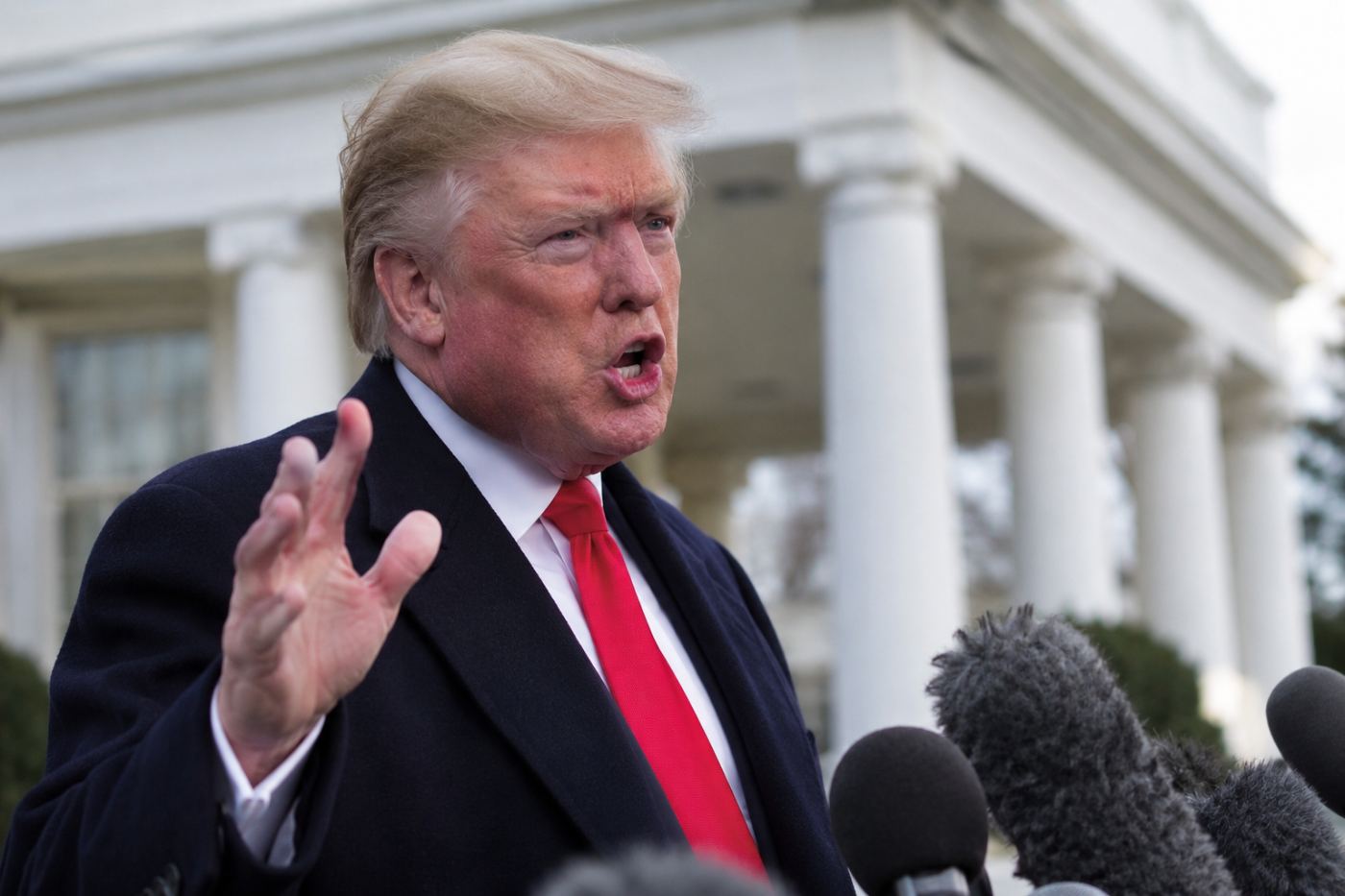
President Donald Trump responded to the criminal conviction of his longtime political adviser Roger Stone on Friday by attacking a familiar list of political enemies, questioning why they had not been prosecuted, and suggesting that the American justice system applies different standards to his supporters.
Stone was convicted on all seven federal charges, including obstruction of Congress, five counts of making false statements, and witness tampering.
Rather than address the evidence that persuaded a federal jury to convict his longtime associate, Trump turned his attention to Hillary Clinton, former FBI officials, intelligence leaders, and investigators who have scrutinized his administration.
A Guilty Verdict Becomes a Political Attack
Within minutes of the verdict, Trump took to Twitter to challenge what he characterized as unequal treatment.
His message named Hillary Clinton, former FBI Director James Comey, former CIA Director John Brennan, former intelligence chief James Clapper, House Intelligence Committee Chairman Adam Schiff, and several others.
Trump even included former Special Counsel Robert Mueller, whose investigation led to Stone's prosecution.
The president questioned whether those individuals had lied and why they had not faced similar consequences.
He described the situation as an extraordinary double standard.
The accusations offered no evidence establishing that the individuals he named had committed crimes equivalent to Stone's offenses.
The Evidence Trump Would Rather Discuss Around
Stone's conviction followed a federal trial in which prosecutors presented documentary evidence and testimony demonstrating that he had misled Congress about his efforts to obtain information concerning WikiLeaks during the 2016 presidential campaign.
Prosecutors also established that Stone attempted to influence witness Randy Credico, whose testimony threatened to contradict Stone's account.
The jury returned guilty verdicts on every charge.
These were not allegations made by Trump's political opponents during a campaign rally. They were findings reached by a federal jury following a criminal trial.
Yet Trump's response concentrated on people who were not defendants in Stone's case.
The President's Double-Standard Argument
Trump has repeatedly portrayed investigations involving his associates as politically motivated.
His supporters argue that federal law enforcement has subjected members of Trump's political circle to unusually aggressive scrutiny while treating prominent Democrats more favorably.
But the president's comparison overlooks an important distinction.
Stone was prosecuted on specific criminal charges, and prosecutors presented evidence supporting those charges before a jury.
Disagreements with the conduct of Hillary Clinton, James Comey, or other political figures do not establish that those individuals committed comparable crimes.
Nor do allegations against other people invalidate a jury's verdict.
Another Convicted Trump Associate
Stone's conviction adds to the legal difficulties surrounding individuals connected to Trump's 2016 presidential campaign.
Former campaign chairman Paul Manafort and former national security adviser Michael Flynn are among the prominent Trump associates who have faced criminal convictions or guilty pleas.
The president has consistently challenged the legitimacy of investigations into his political operation.
Friday's response demonstrates that even a unanimous criminal verdict against a longtime confidant has done little to change that position.
Loyalty and the Rule of Law
Trump has not announced plans to pardon Stone, who remains free pending sentencing scheduled for February.
Nevertheless, his public defense raises questions about how the president views criminal accountability when it involves someone from his own political circle.
A president has every right to criticize prosecutions and question the fairness of the justice system.
But allegations of political bias do not erase evidence presented in court.
Stone's conviction concerns his own conduct, regardless of whether Trump believes other individuals deserve investigation.
Roger Stone was convicted by a federal jury. Donald Trump's immediate response was to demand answers about everyone except Roger Stone.