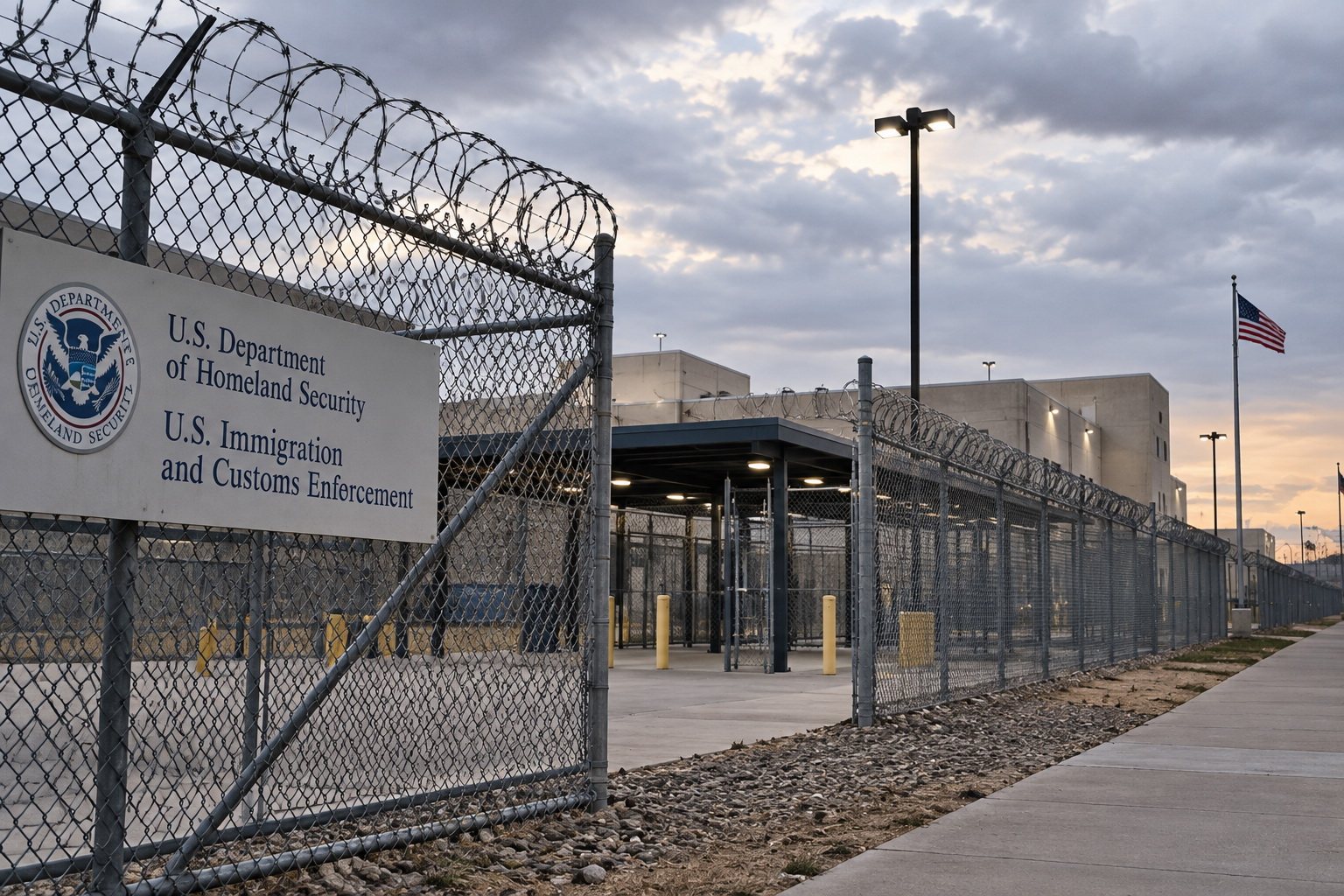
President Donald Trump defended his administration's controversial immigration policies during Thursday night's final presidential debate, even as new court documents reveal that the parents of 545 migrant children separated at the U.S.-Mexico border still cannot be located.
Confronted with questions about the families torn apart under his administration's policies, Trump repeatedly shifted attention to former President Barack Obama rather than explain how the children would be reunited with their parents.
The exchange produced one of the debate's most emotional moments, highlighting a humanitarian crisis that remains unresolved more than two years after the administration officially ended its widespread family separation policy.
545 Children Still Waiting for Their Families
According to a court filing submitted Tuesday by the American Civil Liberties Union and the Justice Department, lawyers working to reunite separated families have been unable to reach the parents of 545 children.
Many of the separations occurred in 2017, before the administration publicly announced its expanded zero-tolerance immigration policy in 2018.
Approximately two-thirds of the missing parents are believed to have been deported to Central America, making efforts to locate them particularly difficult.
The children themselves are not necessarily missing. Many have been released into the care of sponsors or relatives in the United States.
The problem is that their parents remain unreachable, leaving families separated without a clear path toward reunification.
Trump: 'Who Built the Cages?'
Debate moderator Kristen Welker asked Trump directly how his administration intended to reunite the families.
Rather than provide a detailed explanation, Trump argued that children were being brought across the border by smugglers and criminal organizations.
He then repeatedly demanded that Democratic nominee Joe Biden explain who constructed the detention facilities used to hold migrant children.
"Who built the cages, Joe?" Trump asked.
Some detention facilities were indeed constructed or used during the Obama administration. However, it was the Trump administration that implemented the 2018 zero-tolerance policy, which systematically separated thousands of children from parents prosecuted for crossing the border.
The distinction is significant: the existence of detention facilities does not explain the administration's decision to separate families or its failure to maintain adequate records for reunification.
'They Are So Well Taken Care Of'
When Welker pressed Trump again about the children who had not been reunited with their parents, the president defended the conditions in which migrant children were being held.
"They are so well taken care of," Trump said, adding that the facilities were clean.
His response did not directly address the central issue: hundreds of parents remain unreachable years after their children were taken from them.
Biden sharply criticized the administration's actions.
He described children being separated from their parents and condemned the government's inability to reunite them.
"It's criminal. It's criminal," Biden said.
The former vice president argued that the policy violated fundamental American values and inflicted lasting harm on vulnerable families.
A Policy That Separated Thousands
In April 2018, the Trump administration announced its zero-tolerance approach to unauthorized border crossings.
Under the policy, adults crossing the border without authorization were referred for criminal prosecution, frequently resulting in children being separated from their parents and placed in federal custody.
The administration defended the approach as a deterrent against illegal immigration.
Following widespread public outrage and legal challenges, Trump signed an executive order in June 2018 intended to end the routine separation of families.
A federal judge subsequently ordered the government to reunite separated parents and children.
But the process has been complicated by inadequate recordkeeping, deportations, and the difficulty of locating parents who were sent back to their home countries.
The 545 cases identified this week involve families separated under an earlier program, exposing how far back the administration's family separation practices extended.
Lawyers Continue Searching for Parents
The ACLU and other organizations are attempting to locate the parents, including through efforts in Central America.
Their work has been complicated by the coronavirus pandemic, which has restricted travel and made in-person searches more difficult.
Advocates say the government's failure to maintain reliable contact information has created enormous obstacles.
Some parents were deported without their children, while others may not know where their children were taken or how to begin the reunification process.
Child welfare experts have repeatedly warned that forced separation from parents can cause serious psychological harm, particularly for young children.
The Human Cost Behind the Numbers
Trump has made immigration enforcement a defining feature of his presidency, frequently portraying stricter border policies as necessary for national security.
But Thursday's debate exposed an unresolved consequence of those policies.
For 545 children, lawyers still cannot reach the parents from whom they were separated.
For the parents, many of whom were deported, the search for their children continues across international borders.
The president was asked how those families would be reunited.
Instead of offering a clear answer, he returned to arguments about detention facilities built under a previous administration.
The question facing the Trump administration is not simply who built the facilities where migrant children were held.
It is how a government that separated thousands of families intends to reunite those it has still been unable to put back together.