President Donald Trump is openly defending his efforts to encourage foreign governments to investigate former Vice President Joe Biden, escalating the controversy at the center of a rapidly expanding House impeachment inquiry.
What began with revelations about a private July telephone call between Trump and Ukrainian President Volodymyr Zelensky has now moved into public view.
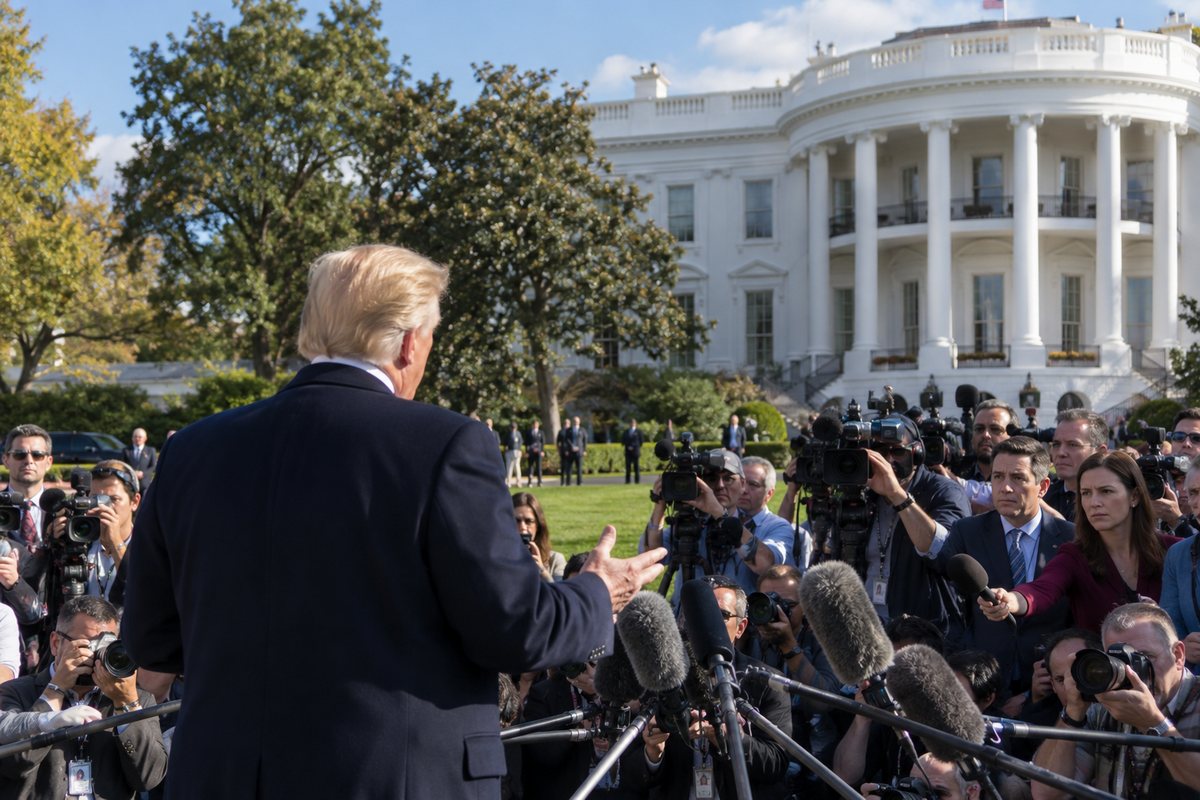
On Thursday, Trump stood outside the White House and openly said Ukraine should investigate Biden and his son Hunter.
Then he went further.
“China should start an investigation into the Bidens,” Trump told reporters.
Trump said he had not directly asked Chinese President Xi Jinping to conduct such an investigation but added that it was something American officials could consider.
The comments were extraordinary because Biden is not merely a former vice president.
He is also one of the leading Democratic candidates seeking the nomination to challenge Trump in the 2020 presidential election.
Trump is therefore publicly encouraging foreign governments to investigate a potential opponent while simultaneously facing an impeachment inquiry over allegations that he used the power of the presidency to seek similar assistance from Ukraine.
The Ukraine Call
At the center of the impeachment inquiry is Trump's July 25 telephone conversation with Zelensky.
According to a White House memorandum describing the call, Trump asked Zelensky to investigate matters involving Biden and his son Hunter.
Hunter Biden previously served on the board of Burisma, a Ukrainian energy company, while his father was vice president.
Trump and his allies have alleged that Joe Biden improperly pressured Ukraine to remove a prosecutor in order to protect his son.
There has been no evidence establishing that Biden sought the prosecutor's removal to protect Hunter Biden.
The United States and other Western governments had pushed for the prosecutor's removal because they believed he was failing to adequately pursue corruption cases.
Trump nevertheless continues to argue that Ukraine should investigate the Bidens.
The issue became more serious after it was revealed that the Trump administration had temporarily withheld hundreds of millions of dollars in congressionally approved military assistance to Ukraine before the July call.
Ukraine relies heavily on American military assistance in its confrontation with Russian-backed forces.
Trump denies that the military assistance was withheld to pressure Ukraine into investigating Biden.
Diplomatic Text Messages Raise New Questions
Newly released text messages involving American diplomats have added another layer to the controversy.
The messages were provided to congressional investigators by Kurt Volker, who recently resigned as the U.S. special envoy to Ukraine.
They show American officials discussing efforts to persuade the Ukrainian government to announce investigations sought by Trump and his personal attorney, Rudy Giuliani.
Volker and Gordon Sondland, the U.S. ambassador to the European Union, discussed language that Ukrainian officials could use when publicly announcing investigations involving the 2016 presidential election and Burisma.
In one exchange, Sondland wrote that Trump “really wants the deliverable.”
The messages also show concern from William Taylor, America's top diplomat in Ukraine.
Taylor asked his colleagues whether American security assistance and a White House meeting between Trump and Zelensky were being conditioned on Ukraine agreeing to conduct investigations.
Weeks later, Taylor expressed his concern more directly.
“I think it's crazy to withhold security assistance for help with a political campaign,” he wrote.
Sondland rejected that characterization.
He responded that Trump had been “crystal clear” that there were no quid pro quos and suggested that the diplomats stop discussing the matter by text.
The exchanges do not by themselves resolve whether Trump personally ordered military assistance withheld in exchange for an investigation.
But they demonstrate that senior American diplomats were discussing the possibility that U.S. policy toward Ukraine had become entangled with investigations carrying obvious domestic political consequences.
Trump Takes the Request Public
Instead of retreating from the controversy, Trump has increasingly defended the underlying idea that foreign governments should investigate Biden.
His call for China to investigate the Bidens is particularly notable.
Unlike the Ukraine request revealed through the whistleblower complaint and White House memorandum, Trump's request involving China was made publicly in front of television cameras.
Trump is currently engaged in a major trade confrontation with Beijing, giving the Chinese government enormous interests in decisions made by his administration.
The president argues that seeking investigations into possible corruption is entirely appropriate regardless of whether the person involved is a political opponent.
Democrats argue that the president is using the authority and influence of the United States government to encourage foreign countries to damage a potential election opponent.
A Question of Presidential Power
The dispute now reaches beyond whether Biden or his son exercised poor judgment.
Congress is examining a much larger constitutional question:
Can a president use American foreign policy to encourage another country to investigate a domestic political rival?
Presidents routinely ask foreign governments to cooperate with legitimate American criminal investigations.
But critics argue that this situation is fundamentally different because Trump is personally seeking investigations involving someone who could oppose him in the next presidential election.
Federal election law generally prohibits campaigns from soliciting or accepting things of value from foreign nationals in connection with American elections.
Whether Trump's conduct constitutes a violation of election law is disputed, and impeachment does not require Congress to establish that a specific criminal statute was violated.
The Constitution gives the House authority to impeach presidents for “Treason, Bribery, or other high Crimes and Misdemeanors.”
The impeachment inquiry will therefore focus heavily on whether Trump abused the powers of his office for personal political benefit.
Giuliani's Role Under Scrutiny
Trump's personal attorney Rudy Giuliani has also become a central figure in the inquiry.
Giuliani does not hold an official government position.
Nevertheless, he has been deeply involved in efforts to persuade Ukrainian officials to investigate matters involving Biden and the 2016 election.
The newly released diplomatic messages show Volker communicating with Giuliani while American diplomats worked with Ukrainian officials.
That arrangement raises another question for investigators: why was the president's personal attorney playing such an influential role in American relations with a strategically important foreign government?
Ukraine receives substantial American assistance and remains locked in a conflict with Russia.
Ordinarily, American policy toward the country would be handled through the State Department, National Security Council and other government agencies.
Instead, the messages show career and political diplomats navigating a parallel effort involving the president's private attorney.
Republicans Face an Increasingly Difficult Debate
Trump's public request that China investigate Biden has left Republican lawmakers confronting a controversy that is no longer based solely on disputed accounts of private conversations.
The president made the request himself, publicly.
Some Republicans have defended Trump's argument that possible corruption should be investigated regardless of who is involved.
Others have expressed discomfort with asking foreign governments to investigate American political figures.
The debate is likely to become more difficult as House investigators obtain documents and testimony from officials involved in Ukraine policy.
The newly released text messages already provide investigators with a contemporaneous record of what diplomats were discussing while the administration was dealing with Zelensky's government.
An Impeachment Inquiry Accelerates
House Speaker Nancy Pelosi announced the formal impeachment inquiry on September 24.
Less than two weeks later, the investigation is rapidly expanding.
Congress now has the whistleblower complaint, the White House memorandum of Trump's July 25 call, testimony from Volker and a collection of diplomatic text messages documenting discussions about the investigations Trump wanted Ukraine to pursue.
And Trump has now publicly called upon another foreign government — China — to investigate the same political opponent.
The president insists he has done nothing wrong and describes the impeachment inquiry as another partisan attempt to remove him from office.
Democrats say the evidence raises a fundamental question about the limits of presidential power.
That question is becoming increasingly difficult to separate from the coming presidential election.
Joe Biden may become Trump's opponent in 2020.
Trump is now openly saying foreign governments should investigate him.
And Congress is trying to determine whether the president used the powers of the United States government to make that happen.
Source: Associated Press, U.S. House committee materials and released diplomatic text messages.