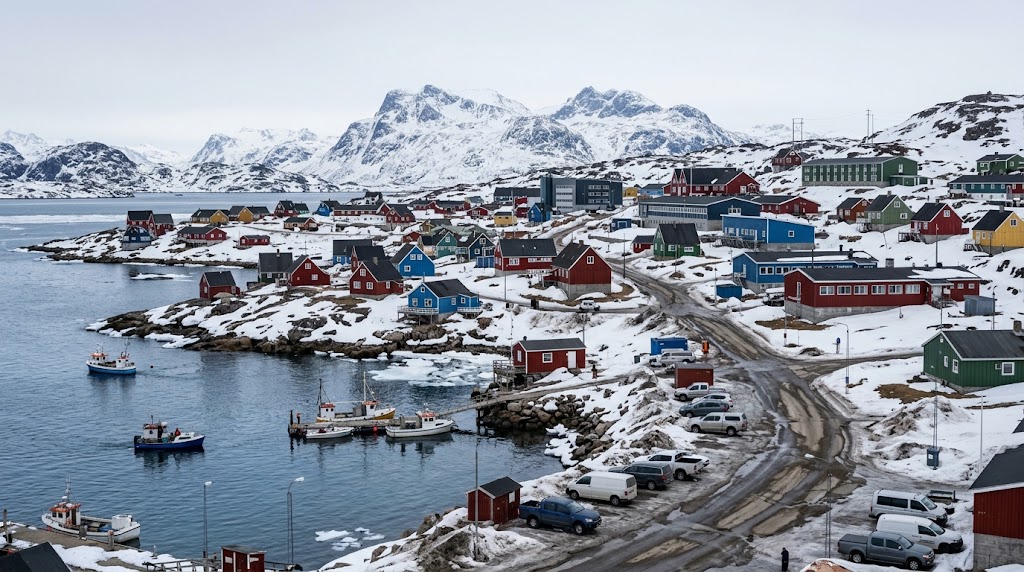
After months of demanding control of Greenland — and at times refusing to rule out using military force to obtain it — President Donald Trump announced what he portrayed as a sweeping agreement giving the United States permanent security authority over the strategically important Arctic island.
There is just one major distinction.
The United States isn't getting Greenland.
Greenland remains part of the Kingdom of Denmark.
Its sovereignty is not being transferred to Washington.
And based on the details publicly available so far, some of the military access Trump is celebrating resembles authority the United States has possessed in one form or another for decades.
Trump Announces a “Dream Come True”
Trump announced the agreement on September 18, declaring that the United States had reached an arrangement with Denmark and Greenland giving Washington what he called “permanent control over security” and other American security needs on the island.
He described the arrangement as permanent and said the United States would be able to prevent adversaries from establishing military bases or making sensitive investments in Greenland.
The administration also said the agreement would allow an expanded American military presence.
Trump portrayed the outcome as the resolution of the national-security concerns he had repeatedly raised about the Arctic.
But Denmark and Greenland described the situation more cautiously.
Greenland's prime minister, Jens-Frederik Nielsen, said the parties were nearing the conclusion of an agreement.
Denmark said parliamentary action would still be required before the arrangement could take effect.
And the complete agreement had not yet been publicly released.
Greenland Is Still Greenland's
One thing appears clear from statements by Denmark and Greenland:
Trump did not obtain ownership of Greenland.
Danish Prime Minister Mette Frederiksen said the agreement recognizes the sovereignty and territorial integrity of the Kingdom of Denmark as well as Greenlanders' right to self-determination.
That is significant because Trump's ambitions had previously gone considerably further.
Trump repeatedly talked about acquiring Greenland for the United States.
Earlier in 2026, he said American ownership was necessary and argued that a lease or treaty wouldn't provide the same benefits.
He also repeatedly declined to rule out military force while pursuing control of territory belonging to a NATO ally.
The emerging agreement represents something very different.
The United States gains or reinforces security rights.
Denmark retains sovereignty.
Greenlanders retain their right to determine their political future.
America Already Had Extensive Military Rights in Greenland
There is another complication surrounding Trump's announcement.
The United States has maintained a military presence in Greenland for generations.
A 1951 defense agreement between the United States and Denmark already provided extensive American military access to the island.
The agreement was updated in 2004.
Today, the United States operates Pituffik Space Base in northwestern Greenland, an important installation used for missile warning, missile defense and space surveillance.
That history has led foreign-policy and international-law experts to question exactly how transformative the new agreement will prove to be.
Some experts interviewed by PolitiFact said that, based on the limited information currently available, portions of the agreement appear to formalize or expand arrangements that already existed.
The complete text will be necessary to determine exactly what has changed.
There Could Still Be Important Changes
That doesn't mean the agreement is meaningless.
Several potentially significant provisions have been described by American officials.
The agreement reportedly guarantees long-term American military access, prohibits bases belonging to countries outside NATO and establishes mechanisms intended to prevent potentially sensitive Russian and Chinese investments.
Greenland's direct participation is also important.
Earlier defense arrangements were principally agreements between Washington and Copenhagen.
Having Greenland itself formally participate could strengthen the durability of American military access even if Greenland eventually chooses independence from Denmark.
Those could represent meaningful changes.
But they are considerably different from transferring Greenland to the United States.
From “Ownership” to Security Agreement
The difference becomes especially striking when compared with Trump's earlier position.
Trump had previously argued that American ownership of Greenland was necessary.
Denmark repeatedly responded that Greenland was not for sale.
Greenland's leaders likewise insisted that decisions about the island's future belonged to Greenlanders.
The dispute became serious enough to strain relations between NATO allies.
Trump threatened tariffs against European countries opposing his Greenland ambitions and repeatedly left open the possibility of using force.
Now the apparent resolution leaves the basic sovereignty question unchanged.
Greenland remains Greenlandic territory within the Kingdom of Denmark.
The United States gets expanded or strengthened security arrangements.
And an escalating dispute between NATO allies may be coming to an end without the territorial acquisition Trump had previously demanded.
What We Still Don't Know
There is an important reason not to draw final conclusions yet.
The full agreement has not been publicly released.
Trump's description of “permanent control” is considerably broader than the language being used by Danish and Greenlandic leaders.
The agreement is expected to be formally signed during the United Nations General Assembly, and Denmark and Greenland have indicated that additional governmental approval is required.
Until the actual text is available, questions remain about precisely what authority Washington will receive, how investment restrictions will operate and whether the agreement meaningfully expands American rights beyond existing defense arrangements.
Trump is presenting the agreement as a major strategic achievement.
Denmark and Greenland are presenting it as an agreement that strengthens collective Arctic security while preserving their sovereignty and Greenland's right to self-determination.
Both descriptions can be tested more thoroughly once the agreement itself becomes public.
But one fact is already apparent:
After months of talk about acquiring Greenland, the emerging agreement does not make Greenland part of the United States.
It leaves the island where it was all along.