President Donald Trump has struck a controversial diesel fuel agreement with Russian President Vladimir Putin, easing American sanctions on Russian energy exports while simultaneously pressuring Ukraine to stop attacking the oil refineries helping finance Russia's invasion.
The arrangement represents a remarkable reversal of American policy. For more than four years, the United States and its European allies have sought to weaken Russia's ability to finance its war through energy sales. Now, with American fuel prices soaring and the midterm elections approaching, Trump is helping reopen a market for Russian petroleum products.
For Ukrainian President Volodymyr Zelenskyy, the message is unmistakable: Washington is increasingly prioritizing cheaper fuel over the economic pressure Ukraine has worked to impose on its invader.
Trump Announces a Deal With Putin
On October 9, Trump announced that he had reached an agreement with Putin to release substantial quantities of Russian diesel into American and international markets.
According to Trump's announcement, Russia would immediately supply more than 300,000 tons of diesel, followed by another 500,000 tons in November and an additional one million tons afterward.
The agreement includes relief from certain American sanctions imposed on Russian energy following Moscow's full-scale invasion of Ukraine in February 2022.
Trump defended the arrangement as a necessary response to rising fuel costs, which have become an increasingly serious political liability for his administration.
But the economic benefits for American consumers remain uncertain.
Energy analysts interviewed by the Associated Press questioned whether the Russian shipments would meaningfully reduce fuel prices. Much of the diesel would simply be redirected through existing global markets rather than represent a substantial increase in worldwide production.
Russia, meanwhile, stands to benefit from renewed access to buyers and additional revenue.
Ukraine Is Attacking Russia's War Economy
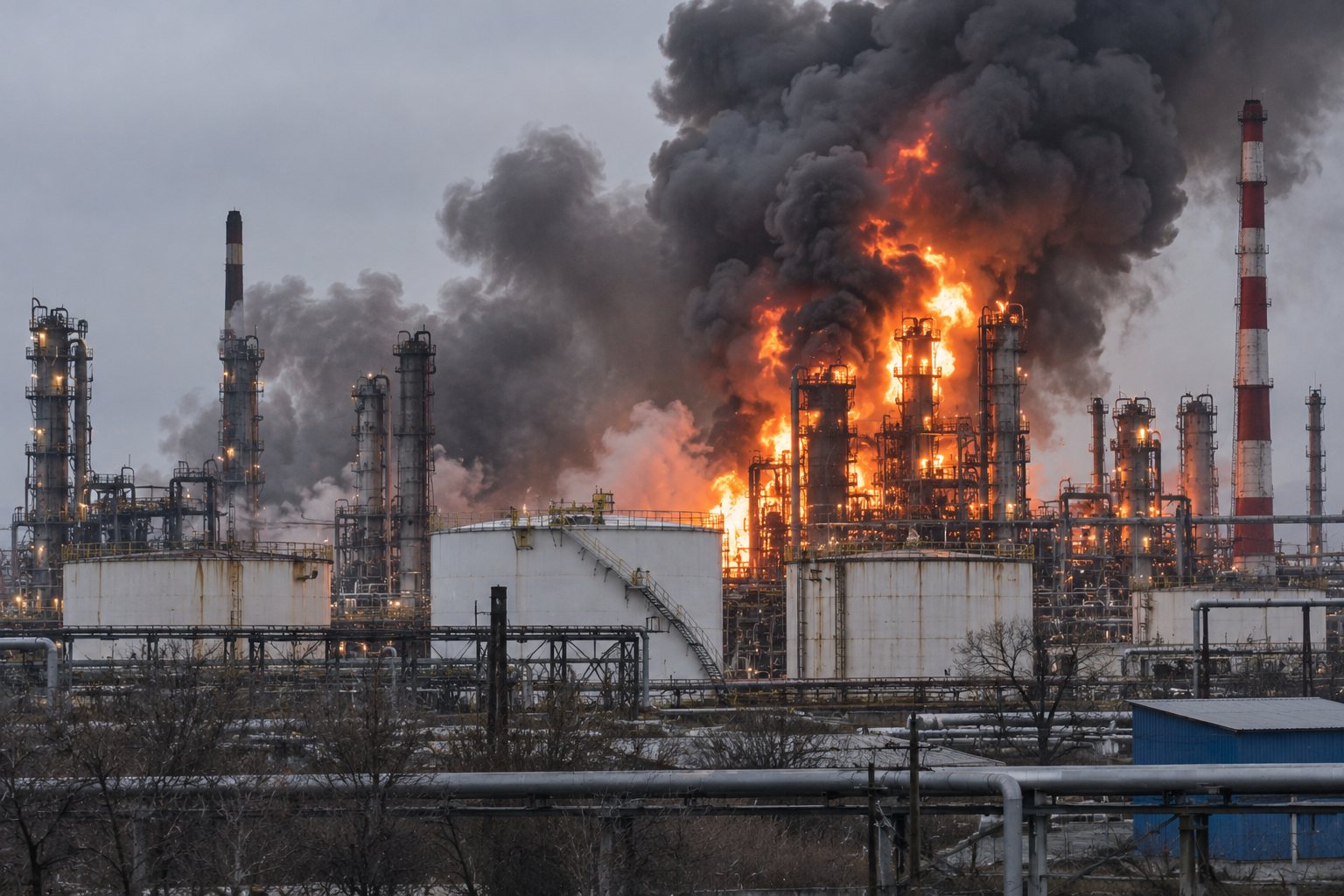
Ukraine has spent months conducting increasingly effective drone attacks against Russian oil refineries and energy infrastructure.
These attacks serve a strategic purpose.
Russia depends heavily on petroleum revenues to support its economy, government operations, and military campaign. Damaging refineries disrupts fuel production, creates domestic shortages, and increases the economic cost of continuing the invasion.
Ukraine cannot match Russia's military resources directly, making attacks against economically important infrastructure a significant component of its defensive strategy.
But those successful attacks have also contributed to tighter international diesel supplies.
Trump has repeatedly complained that Ukrainian strikes are driving up fuel prices, even as his administration's war with Iran has disrupted energy markets and contributed to higher costs around the world.
Rather than concentrating exclusively on the country that launched the invasion, Trump has increasingly demanded that Ukraine stop targeting Russian refineries.
Washington Threatens Its Own Ally
According to reporting by the Financial Times, American representatives warned Ukrainian negotiators during meetings in Miami that continued attacks on Russian refineries could jeopardize vital U.S. intelligence assistance.
The discussions involved Trump advisers Steve Witkoff and Jared Kushner.
Axios also reported the alleged intelligence threat, although an American official disputed that such a threat had been made.
The distinction matters because American intelligence support helps Ukraine identify threats, defend its territory, and conduct military operations.
Withholding that assistance could significantly weaken Ukraine's ability to resist Russian forces.
Zelenskyy reportedly offered a reciprocal arrangement: Ukraine would stop attacking Russian refineries if Moscow stopped attacking Ukrainian power plants.
According to Axios, Trump wanted Ukraine to halt its refinery strikes without requiring an equivalent Russian concession.
That would effectively ask the invaded country to surrender an important military advantage while its attacker continued targeting its civilian infrastructure.
Russia Continues Bombing Ukrainian Cities
The timing of Trump's agreement became even more disturbing on October 10.
Just one day after the announcement, Russian forces struck the Ukrainian city of Zaporizhzhia, killing 20 people, including three children, according to Reuters.
The attack destroyed residential buildings and injured numerous civilians.
Zelenskyy condemned Washington's decision to ease Russian diesel sanctions, arguing that reducing pressure on Moscow would only encourage further aggression.
There is no established evidence that the diesel agreement directly caused the Zaporizhzhia attack. Russia had already been conducting deadly strikes against Ukrainian cities for years.
Nevertheless, the contrast was striking.
While the United States was negotiating new economic opportunities with Putin, Russian missiles were continuing to kill Ukrainian civilians.
The Political Problem Trump Created
The agreement also exposes a broader contradiction in Trump's energy policy.
American fuel prices have risen sharply during 2026, driven partly by the ongoing war with Iran and disruptions to global petroleum supplies.
The Strait of Hormuz, through which approximately one-fifth of the world's oil normally passes, has been central to those disruptions.
Trump has nevertheless increasingly blamed Ukraine's attacks on Russian refineries and refinery closures in Democratic-led American states for high gasoline prices.
There is a legitimate economic connection between damaged Russian refineries and global diesel prices. Energy experts have acknowledged that Ukrainian strikes have tightened supplies.
But that does not erase the consequences of the Iran war or explain why Ukraine should be expected to protect the economic infrastructure of a country actively invading it.
The administration now faces a political dilemma: protecting Russian energy production may provide some relief to global fuel markets, but doing so also undermines efforts to weaken Putin's ability to sustain his war.
Who Benefits From This Agreement?
Trump has presented the deal as a victory for American consumers.
Whether Americans actually see meaningful savings remains an open question.
What is much clearer is that Russia gains an opportunity to sell additional petroleum products while receiving relief from economic restrictions designed to punish its aggression.
Ukraine, meanwhile, faces pressure to abandon a strategy that has successfully damaged Russia's energy sector.
The administration's approach raises an uncomfortable question about American foreign policy.
Why should Ukraine be expected to protect Russian oil refineries while Russia continues destroying Ukrainian homes, power stations, and cities?
The United States has spent decades arguing that economic sanctions are an important tool for confronting aggressive governments. Yet the Trump administration is now easing restrictions on Russia while threatening consequences against the country defending itself from Russian aggression.
The result is an extraordinary reversal: Putin receives economic relief, Ukraine receives new demands, and American consumers are left waiting to see whether the arrangement actually lowers their fuel bills.
For a president who repeatedly promised to end the war in Ukraine, helping Russia sell more fuel while pressuring Ukraine to stop damaging Russian refineries is a deeply questionable path toward peace.