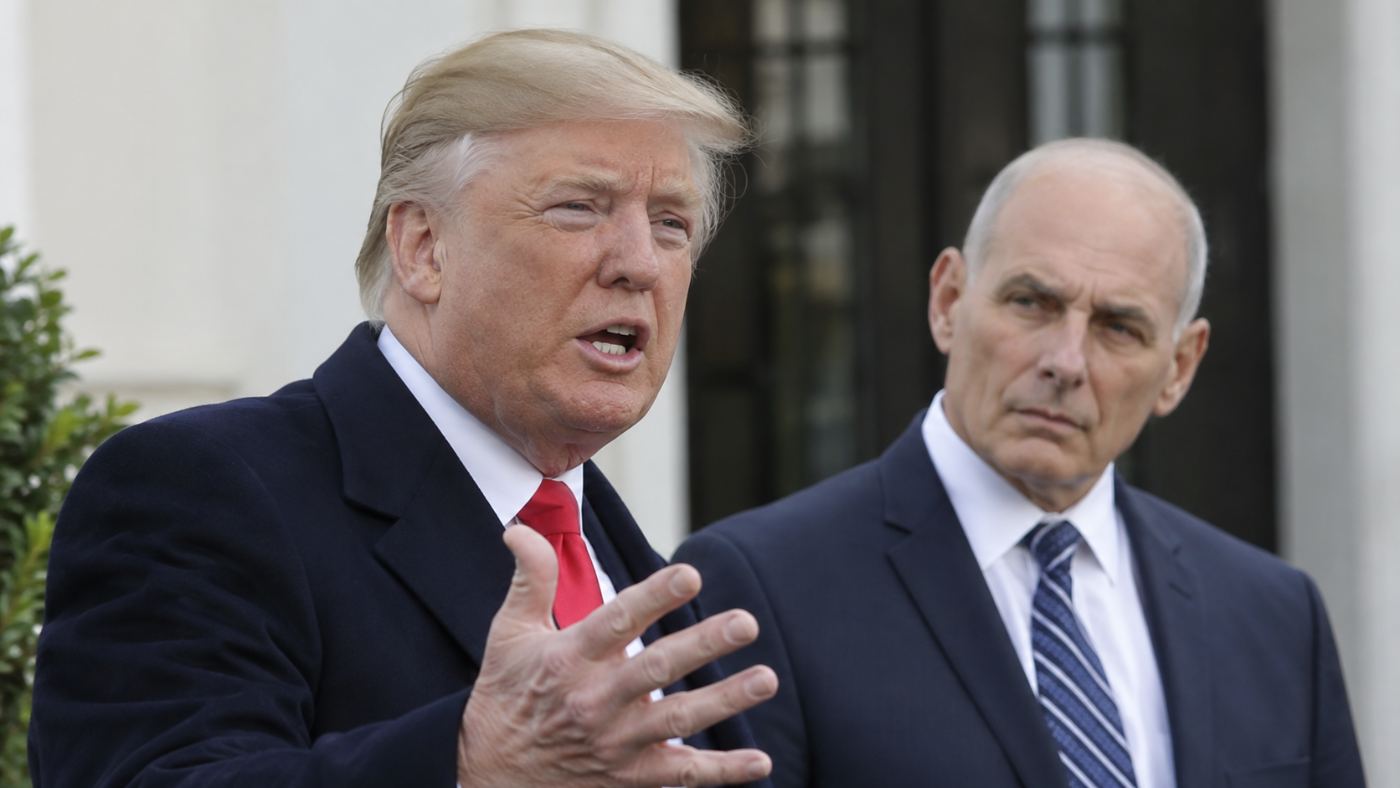
On December 8, 2018, President Donald Trump confirmed that White House Chief of Staff John Kelly would leave his position, ending a turbulent tenure marked by internal power struggles, disagreements with the president, and repeated efforts to bring discipline to an administration plagued by personnel turnover.
Kelly, a retired four-star Marine general, had been recruited to restore order after Trump's first chief of staff, Reince Priebus, departed just six months into the administration.
Seventeen months later, Kelly was preparing to leave as well.
Trump Announces Another Departure
Speaking to reporters on the White House South Lawn before traveling to the Army-Navy football game, Trump announced that Kelly would depart around the end of the year.
The president publicly praised Kelly and expressed appreciation for his service.
However, the announcement followed months of reporting that their working relationship had deteriorated.
According to contemporary news accounts, Trump and Kelly had repeatedly clashed over personnel decisions, access to the president, and the administration's management.
CNN reported that the two men had recently stopped speaking to one another.
The departure confirmed that the arrangement intended to stabilize Trump's White House had broken down.
The General Who Tried to Impose Discipline
Kelly arrived in July 2017 with a reputation for military discipline and organizational leadership.
He attempted to establish a formal chain of command, limit unscheduled access to the Oval Office, and require staff members to follow established procedures.
Those changes initially helped organize an administration struggling with competing advisers and internal rivalries.
But Trump frequently bypassed the structure Kelly attempted to establish.
Reports described the president consulting advisers outside official channels and making decisions without involving his chief of staff.
Kelly's influence gradually diminished as disagreements intensified.
His own tenure also attracted controversy, including criticism of his handling of the Rob Porter domestic abuse allegations.
Another Leadership Change Without a Clear Replacement
Trump's announcement exposed another problem: the White House had not finalized who would replace Kelly.
Vice President Mike Pence's chief of staff, Nick Ayers, was considered the leading candidate.
But negotiations over how long Ayers would serve remained unresolved.
Trump acknowledged that his next chief of staff might initially serve in an acting capacity.
The uncertainty was particularly significant because Democrats were preparing to take control of the House of Representatives in January 2019.
The administration faced the prospect of increased congressional investigations while Special Counsel Robert Mueller continued examining Russian interference in the 2016 election.
Trump's Preferred Replacement Declines
The following day, December 9, Ayers confirmed that he would not become White House chief of staff.
Reports indicated that Trump wanted a commitment extending through the 2020 election, while Ayers was unwilling to make that commitment.
The president was forced to continue searching for a replacement.
Mick Mulvaney, then director of the Office of Management and Budget, was eventually selected to serve as acting chief of staff.
Kelly remained until early January 2019.
A White House Struggling With Stability
Kelly's departure was part of a broader pattern of senior personnel changes during Trump's first two years.
Attorney General Jeff Sessions had been forced out just one month earlier. Other prominent officials had resigned, been dismissed, or experienced public disagreements with the president.
Supporters of Trump argued that replacing senior officials was his prerogative and could help the administration pursue its priorities.
Critics maintained that the repeated departures weakened institutional continuity and complicated government operations.
December 8, 2018, marked the end of another attempted White House reset. The retired Marine general brought in to establish discipline was leaving after repeated disagreements with Trump, while the administration still lacked a confirmed successor to manage the president's staff.