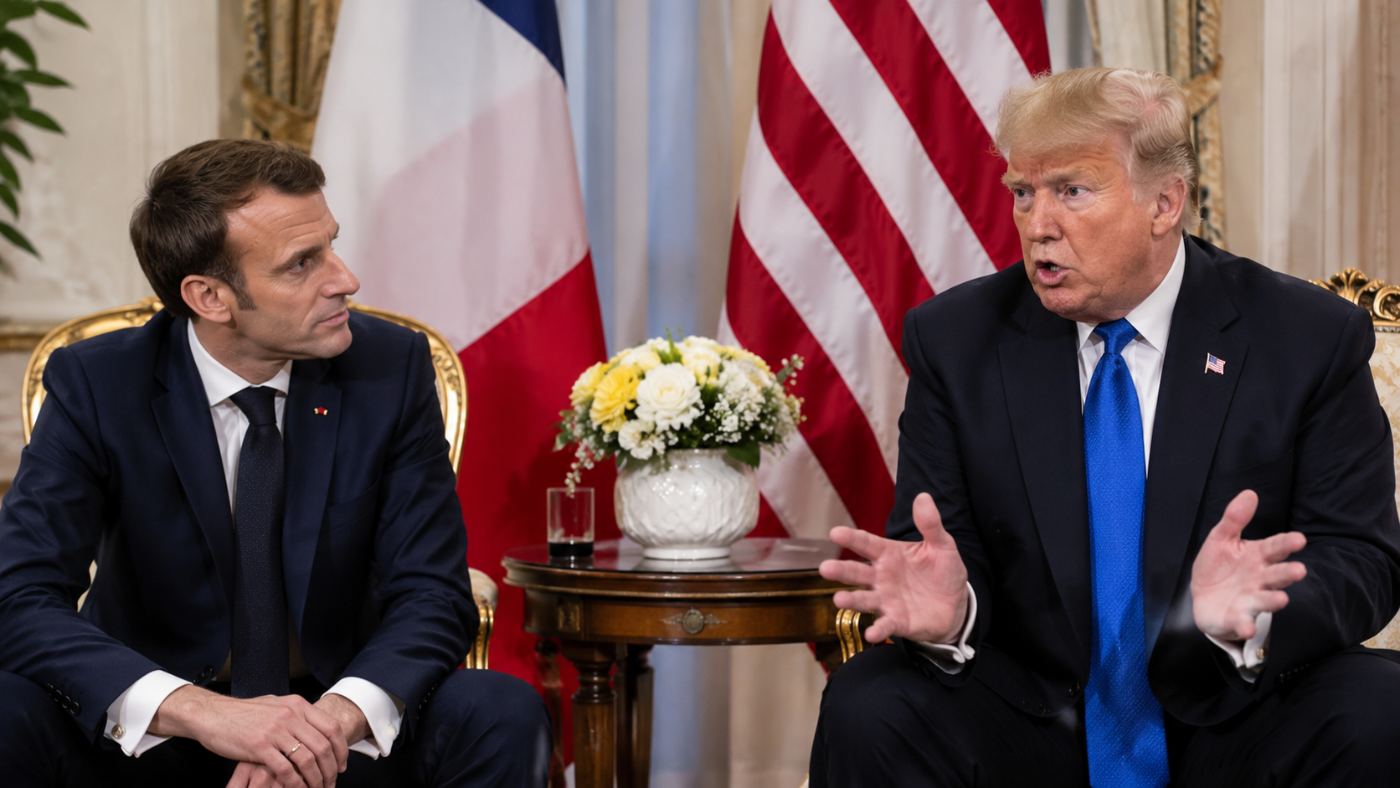
President Donald Trump publicly clashed with French President Emmanuel Macron on December 3, 2019, as world leaders gathered in London to commemorate NATO's 70th anniversary.
The confrontation exposed disagreements over military spending, Turkey's actions in Syria, international trade, and the future of the transatlantic alliance.
Trump criticized Macron for suggesting that NATO was experiencing "brain death," while the French president defended his assessment of the alliance's strategic problems.
Trump Attacks Macron's NATO Criticism
The controversy began weeks earlier when Macron told The Economist that NATO was suffering from a lack of strategic coordination, particularly because of uncertainty surrounding American leadership.
Macron questioned whether European countries could continue relying on Washington without developing greater military independence.
Speaking alongside NATO Secretary-General Jens Stoltenberg in London, Trump condemned the remarks as insulting and disrespectful.
Trump described Macron's characterization as a "very, very nasty statement" and argued that France depended heavily on NATO for its security.
The criticism was notable because Trump himself had previously called NATO obsolete and repeatedly questioned whether European allies were contributing enough to their collective defense.
Macron Refuses to Back Down
Later that day, Trump and Macron appeared together before reporters at Winfield House, the American ambassador's residence in London.
Macron stood by his earlier comments.
He argued that NATO needed more than increased military spending. The alliance also required a coherent strategy and meaningful consultation among its members.
Macron pointed to disagreements over Syria and Turkey as evidence that NATO's political coordination needed improvement.
Trump emphasized his administration's efforts to encourage European countries to increase defense expenditures.
Syria and Turkey Become Flashpoints
The disagreement intensified when the conversation turned to Turkey's military operations in northern Syria.
Trump defended his relationship with Turkish President Recep Tayyip Erdoğan and his decision to withdraw American troops from positions along the Syrian border.
Macron expressed concerns about Turkey's actions and their consequences for Kurdish forces that had fought alongside Western countries against ISIS.
The French president also questioned Turkey's purchase of Russian S-400 missile systems, which raised serious concerns about compatibility with NATO defense systems.
The exchange highlighted different approaches to regional security and relations with Ankara.
Disagreement Over ISIS
Trump also suggested that France should accept responsibility for French nationals captured while fighting for ISIS.
Macron responded that the larger security challenge involved the thousands of ISIS fighters still operating in the region.
Trump characterized Macron's response as evasive.
Their disagreement illustrated continuing uncertainty over how NATO members should coordinate counterterrorism operations following the territorial defeat of ISIS in Syria.
Trade Tensions Add to the Dispute
The leaders also faced disagreements over trade.
The Trump administration had threatened tariffs on French products in response to France's proposed digital services tax, which affected major American technology companies.
French officials argued that large multinational corporations should pay taxes where they generated revenue.
The administration maintained that the measure unfairly targeted American businesses.
Although both presidents expressed hope for a negotiated settlement, the dispute added another source of tension to their meeting.
An Alliance Under Pressure
NATO Secretary-General Stoltenberg emphasized that disagreements among allies were not unusual and that the organization continued cooperating on collective defense.
He also welcomed increased military spending by European members and Canada.
Nevertheless, the December 3 exchanges demonstrated that the alliance faced disagreements extending beyond financial contributions.
Questions about American commitments, European strategic independence, Turkey's conduct, and the future of NATO remained unresolved.
A Public Display of Transatlantic Divisions
The confrontation between Trump and Macron became one of the most widely discussed moments of NATO's anniversary gathering.
Trump defended the alliance against Macron's criticism while continuing to demand greater European military spending.
Macron maintained that military budgets alone could not resolve disagreements about NATO's direction.
December 3, 2019, remains a revealing example of the diplomatic tensions between the United States and European allies during Trump's first presidency.