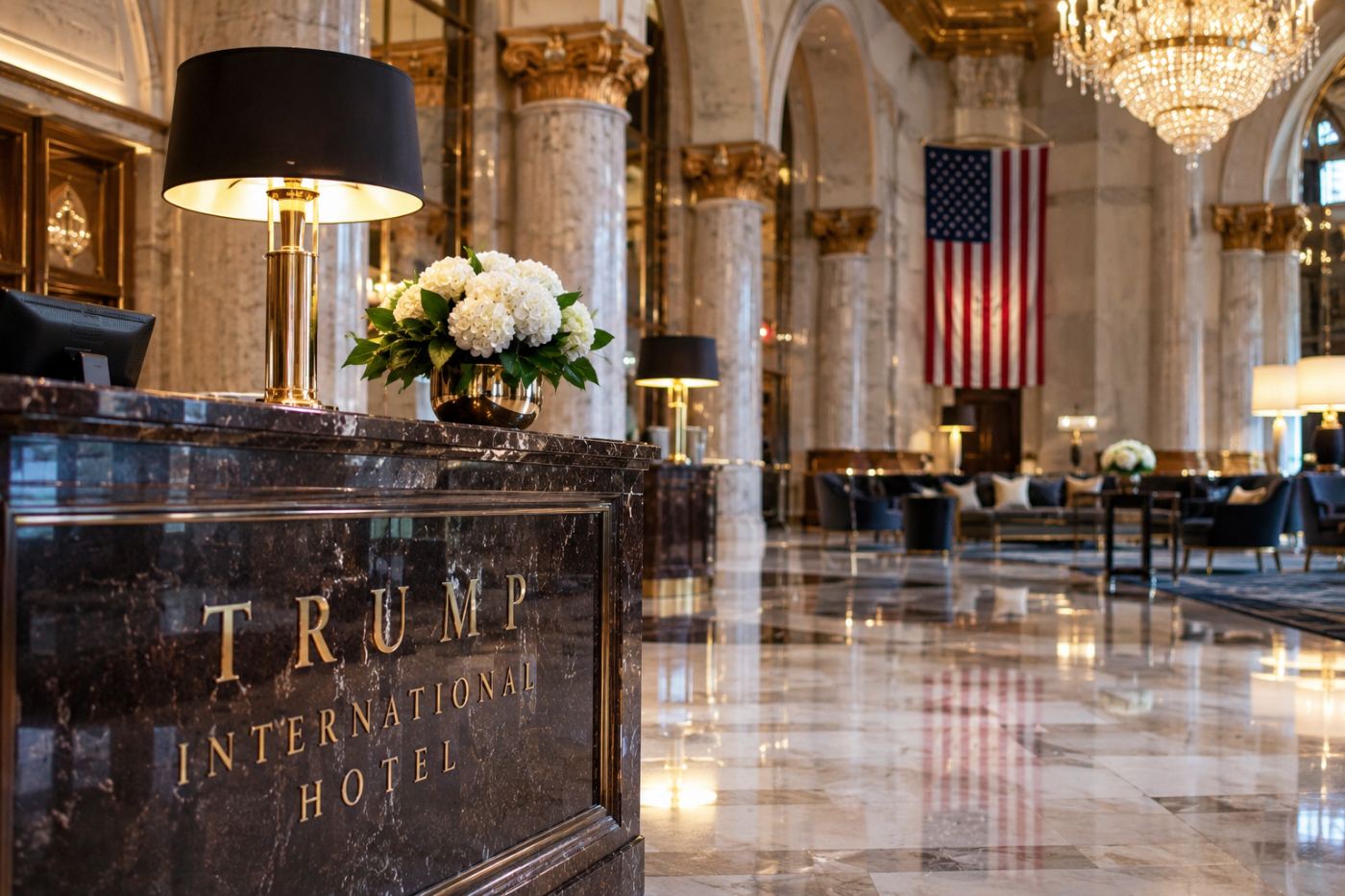
Donald Trump had just won the presidential election, but questions were already mounting about how he intended to separate the presidency from his sprawling international business empire.
On November 22, 2016, during an interview with The New York Times, the president-elect offered a sweeping defense of his position.
"The law's totally on my side, meaning, the president can't have a conflict of interest."
The statement immediately attracted scrutiny from legal scholars and government ethics experts, who warned that Trump's interpretation confused an exemption from certain federal statutes with freedom from ethical and constitutional obligations.
A Business Empire Meets the Presidency
Unlike recent presidents who had taken steps to separate themselves from private financial interests, Trump entered the transition owning an international collection of hotels, golf courses, real estate developments, and licensing agreements.
His businesses operated across numerous countries, creating potential conflicts involving foreign governments, commercial partners, and American foreign policy.
Trump acknowledged that his presidency could make his business interests more valuable.
He specifically discussed his newly opened Washington hotel, suggesting that its association with the incoming president could increase its appeal.
The concern was straightforward: Foreign governments and private businesses might seek to influence presidential decisions by spending money at properties associated with the president.
What the Law Actually Says
Trump's claim contained an important legal distinction.
The president and vice president are exempt from the principal federal criminal conflict-of-interest statute, 18 U.S.C. Section 208, which generally restricts other executive branch officials from participating in government decisions affecting their personal finances.
But that exemption does not mean presidents are incapable of having conflicts of interest.
Nor does it exempt them from every applicable law.
The Constitution's Foreign Emoluments Clause restricts federal officeholders from accepting certain benefits from foreign governments without congressional consent.
Federal bribery laws and financial disclosure requirements also impose obligations relevant to presidential conduct.
Ethics specialists warned that Trump's global financial interests could create conflicts even when a particular transaction did not violate the main federal conflict-of-interest statute.
The Hotel Problem
Trump's newly opened hotel in Washington, D.C., became an immediate focus of concern.
Located in the federally owned Old Post Office building, the hotel was operated under a lease with the federal government.
Foreign diplomats reportedly expressed interest in staying there, raising questions about whether their spending could benefit Trump's businesses while their governments sought favorable treatment from his administration.
Trump acknowledged that the presidency could increase the hotel's value.
Critics questioned whether the president could objectively oversee an administration responsible for decisions affecting properties from which he continued to benefit financially.
Trump Proposes Keeping It in the Family
During the interview, Trump suggested that his adult children would operate the company while he served as president.
He also indicated that selling his real estate holdings would be difficult.
But transferring day-to-day management to family members would not necessarily eliminate conflicts if Trump retained ownership and continued benefiting financially.
Government ethics experts distinguished such an arrangement from selling conflicting assets or placing investments in a genuinely independent blind trust.
Trump maintained that his business interests were secondary to his responsibilities as president and said he wanted to avoid conflicts.
The unresolved question was whether his proposed separation would accomplish that objective.
Early Warning Signs
Concerns were already emerging during the presidential transition.
Trump had met with business partners from India, while his daughter Ivanka participated in some interactions involving foreign leaders.
Reports also indicated that Trump had discussed opposition to offshore wind farms with British politician Nigel Farage, an issue connected to Trump's Scottish golf interests.
These episodes did not, by themselves, establish criminal wrongdoing.
They did illustrate why ethics specialists wanted clear boundaries between presidential responsibilities and private business interests.
The Difference Between Legal Exemptions and Public Trust
Trump's November 22 remarks became an early flashpoint in the debate over presidential ethics.
His defenders correctly observed that presidents are exempt from certain conflict-of-interest restrictions applicable to other federal employees.
Critics argued that the exemption made voluntary safeguards especially important because the president exercises enormous authority over matters capable of affecting personal wealth.
The controversy was not simply about whether Trump could legally retain his businesses.
It concerned whether Americans could trust that presidential decisions would be made for public purposes rather than private financial advantage.
On November 22, 2016, before taking the oath of office, Trump had already placed that question at the center of his incoming administration.