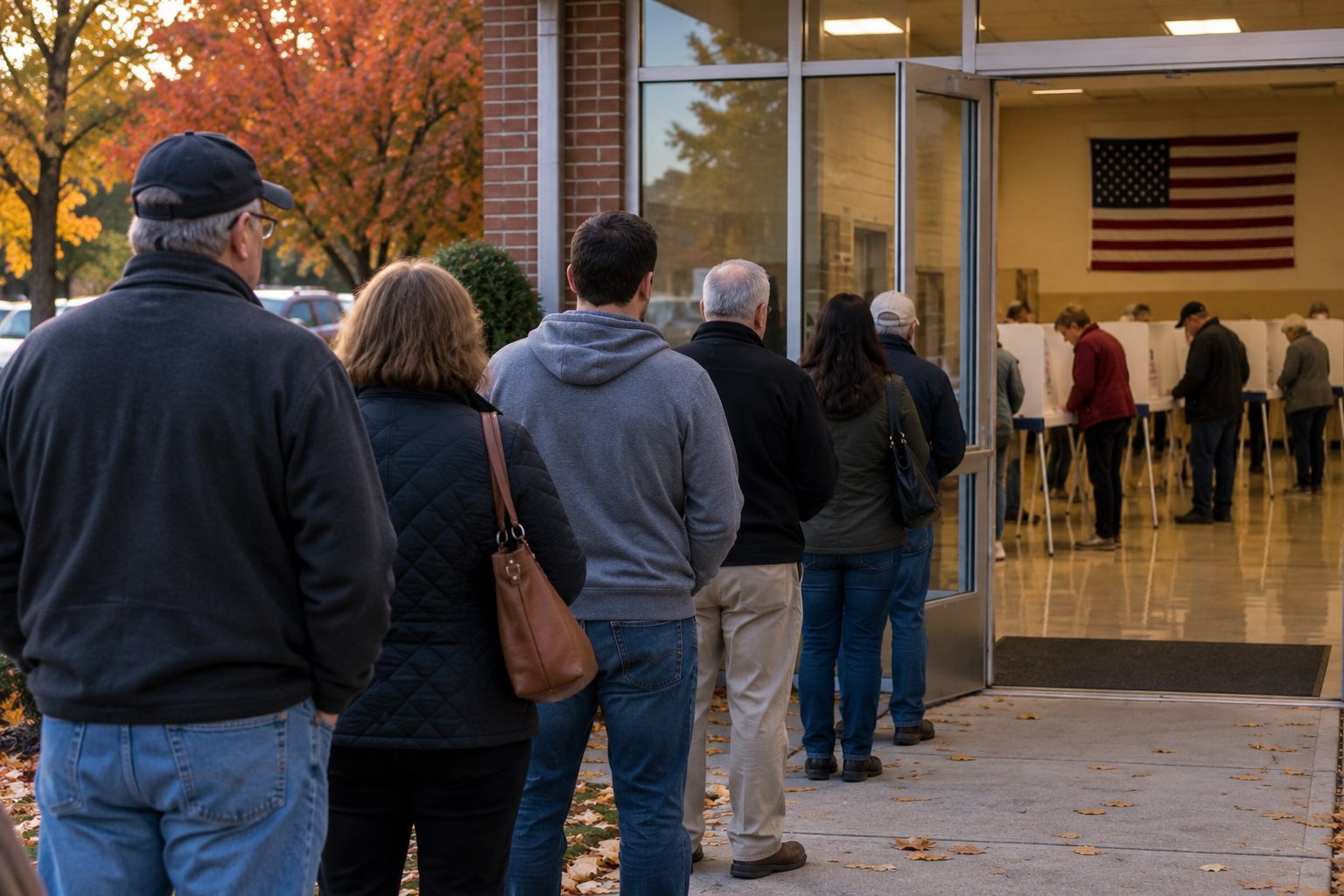
Three weeks before the 2016 presidential election, Republican nominee Donald Trump intensified his accusations that the American voting system was being manipulated, claiming that widespread voter fraud was already taking place despite producing no evidence to substantiate the allegation.
On October 17, Trump published a social media message declaring that large-scale voter fraud was occurring before Election Day and questioning why Republican leaders refused to acknowledge it.
His accusations directly contradicted the assessments of election administrators, voting-rights researchers, and officials from both political parties.
The significance of Trump's remarks extended far beyond the 2016 campaign.
They established a pattern that would become central to his political career: questioning the legitimacy of elections, alleging widespread wrongdoing without supporting evidence, and portraying unfavorable results as proof that the system itself was corrupt.
Four years later, that pattern would reappear on a much larger scale when Trump refused to accept his defeat in the 2020 presidential election.
But on October 17, 2016, the warning signs were already unmistakable.
Trump Announces Widespread Fraud Without Producing Evidence
On the morning of October 17, Trump posted a message on Twitter claiming that large-scale voter fraud was taking place.
He questioned why Republican leaders were denying what he insisted was happening.
The accusation was extraordinary.
The presidential election had not yet occurred, and Trump provided no documentation establishing that a coordinated effort to cast fraudulent ballots was underway.
He did not identify a nationwide network of fraudulent voters, produce evidence of manipulated vote totals, or demonstrate that election officials were participating in a conspiracy.
Instead, he presented the allegation as an established fact.
The previous day, Trump had also claimed that the election was being rigged through media coverage and activity at polling places.
His rhetoric blurred several fundamentally different issues: perceived media bias, concerns about election administration, isolated violations of election law, and the far more serious accusation that an American presidential election was being deliberately stolen.
Those claims were not interchangeable.
Unfavorable news coverage does not constitute voter fraud. Administrative mistakes do not establish a conspiracy. And isolated illegal votes do not demonstrate that an election's outcome has been manipulated.
Trump offered no evidence connecting those separate concerns into the nationwide fraud operation he was describing.
Even Republican Leaders Rejected the Allegations
Trump's accusations created an uncomfortable situation for members of his own party.
Indiana Governor Mike Pence, Trump's running mate, had said that the Republican ticket would accept the election results.
Campaign manager Kellyanne Conway had also attempted to explain that Trump's references to a rigged election concerned perceived media bias rather than widespread voter fraud.
Trump's October 17 statement directly complicated those explanations by explicitly alleging large-scale illegal voting.
Republican election officials were among those who rejected suggestions that the voting process was broadly compromised.
Many of the state and local officials responsible for administering the election were themselves Republicans.
Their responsibilities included maintaining voter registration records, preparing polling places, supervising voting equipment, counting ballots, and certifying results.
Trump's accusations therefore implicated not only Democratic officials but also election administrators from his own party.
The contradiction was difficult to overlook.
Trump was asking Americans to believe that a massive election fraud operation existed while offering no verifiable evidence and while officials responsible for the process rejected his characterization.
The Evidence Showed Voter Fraud Was Extremely Rare
By October 2016, researchers had already spent years examining claims of voter impersonation and other forms of election fraud.
Their findings consistently contradicted allegations that fraudulent voting occurred on a scale capable of determining national election outcomes.
A widely cited 2014 investigation by political scientist Justin Levitt identified just 31 credible incidents of voter impersonation among more than one billion ballots cast between 2000 and 2014.
The figure did not mean that every election was flawless or that no other forms of election misconduct occurred.
It demonstrated how exceptionally rare the specific practice of someone impersonating another voter was.
Research by the Brennan Center for Justice similarly found that allegations of widespread voter fraud were unsupported by the available evidence.
Other studies found that supposed examples of fraudulent voting frequently involved clerical errors, misunderstandings, or inaccurate records rather than deliberate attempts to cast illegal ballots.
The distinction matters.
Election fraud is a real offense, and isolated cases have occurred in American elections.
But isolated violations are not evidence of the massive, coordinated conspiracy Trump alleged.
There was no credible evidence in October 2016 that widespread fraudulent voting was threatening to determine the presidential election.
A False Claim Can Still Have Real Consequences
Election administrators warned that Trump's rhetoric could damage public confidence in the voting process.
American elections depend on voters accepting that ballots are counted according to established rules, that disputes are resolved through lawful procedures, and that losing candidates recognize legitimate results.
The system allows recounts, audits, legal challenges, and investigations when credible evidence warrants them.
But declaring an election fraudulent without evidence is fundamentally different from identifying a specific irregularity and requesting an investigation.
Trump's statements encouraged supporters to distrust the process before voting had even finished.
That created the possibility that an unfavorable result would be rejected not because fraud had been demonstrated, but because voters had repeatedly been told to expect it.
The consequences could extend beyond a single election.
When citizens come to believe that ballots are routinely manipulated, confidence in election officials, courts, and democratic institutions can deteriorate.
Such damage is particularly difficult to reverse when accusations continue even after investigations fail to substantiate them.
Trump Encourages Supporters to Watch Polling Places
During the final weeks of the campaign, Trump urged supporters to monitor polling places for suspected fraud.
He singled out cities including Philadelphia, where large numbers of Democratic voters lived.
Election observers can play a legitimate role in American elections when they operate under applicable laws and procedures.
However, voting-rights organizations warned that unofficial monitoring efforts could lead to voter intimidation, particularly in communities already facing barriers to participation.
The concern was not that observing an election was inherently improper.
It was that supporters convinced a massive conspiracy existed might confront lawful voters or election workers without evidence of wrongdoing.
Federal and state laws prohibit voter intimidation.
Election officials therefore faced the challenge of maintaining transparency while protecting the rights of eligible citizens to vote without harassment.
Trump's allegations increased those concerns at a particularly sensitive moment in the electoral process.
The Claims Continued Even After Trump Won
The November 8, 2016, election produced a result that should have resolved any immediate concern Trump had about being denied the presidency.
He won the Electoral College and became president-elect.
Hillary Clinton won the national popular vote by nearly 2.9 million votes.
Rather than simply accepting the certified results, Trump subsequently claimed that millions of people had voted illegally and that those supposed fraudulent ballots explained his popular-vote defeat.
Again, he did not provide credible evidence supporting the allegation.
The claim shifted the controversy from a hypothetical stolen election to an assertion that millions of fraudulent votes had actually been counted.
Research examining noncitizen voting found no support for the scale of illegal voting Trump alleged.
In 2017, his administration established the Presidential Advisory Commission on Election Integrity to investigate election-related concerns.
The commission was dissolved in January 2018 without producing evidence substantiating Trump's claims that millions of illegal votes had been cast.
The allegations had helped launch a federal investigation, but the evidence needed to support them never materialized.
The Same Pattern Returned in 2020
The historical importance of October 17, 2016, became clearer after the 2020 presidential election.
Before that election, Trump again warned that the voting process would be vulnerable to widespread fraud, this time placing particular emphasis on mail ballots.
After losing to Joe Biden, he claimed the election had been stolen.
Trump and his allies filed numerous lawsuits challenging election procedures and results.
Courts repeatedly rejected efforts to overturn the outcome, often citing inadequate evidence, procedural defects, or unsupported legal arguments.
Recounts and audits in closely contested states did not uncover fraud sufficient to reverse Biden's victory.
Republican election officials in states including Georgia publicly rejected claims that widespread fraud had changed the result.
Trump's own attorney general, William Barr, stated in December 2020 that the Justice Department had not uncovered fraud on a scale that could have affected the presidential election's outcome.
Federal election security officials also reported that there was no evidence voting systems had changed or deleted votes.
The evidence did not support Trump's allegations.
Nevertheless, he continued to insist that he had won.
From Election Denial to January 6
The consequences of the 2020 allegations became especially visible on January 6, 2021.
After weeks of promoting claims that the election had been stolen, Trump addressed supporters in Washington as Congress prepared to certify Biden's victory.
A mob subsequently attacked the U.S. Capitol, forcing lawmakers to evacuate or shelter and delaying the certification process.
The violence injured police officers, threatened public officials, and disrupted a constitutional proceeding.
Trump's efforts to overturn the election later became the subject of criminal investigations and congressional scrutiny.
The January 6 attack was not an inevitable consequence of his 2016 statements.
But the earlier rhetoric established a recognizable political pattern: claiming fraud before an election, rejecting contrary evidence, and challenging the legitimacy of an unfavorable outcome.
What began as campaign messaging in 2016 became part of a much larger confrontation over the peaceful transfer of presidential power in 2020 and 2021.
Election Fraud Exists, but Trump's Claims Were Not Supported
One of the most important distinctions in evaluating Trump's allegations is the difference between isolated election crimes and widespread fraud capable of changing an election result.
Individual cases of double voting, fraudulent registration, absentee-ballot misconduct, and other election offenses have occurred.
Those cases can and should be investigated and prosecuted.
Their existence does not establish that presidential elections are systematically rigged.
Nor does an administrative error automatically constitute fraud.
Fraud requires evidence of intentional wrongdoing.
An inaccurate voter record, a delayed ballot count, or a disputed election procedure may warrant examination, but none independently proves a coordinated scheme to steal votes.
Trump repeatedly made claims far broader than the available evidence supported.
His allegations were not simply that election systems could be improved or that isolated misconduct should be prosecuted.
He asserted that widespread fraud was occurring and that election results could not be trusted.
The evidence did not substantiate those claims.
A Decade-Long Pattern of Election Distrust
Looking back from 2026, Trump's October 17, 2016, statements stand out as an early, clearly documented example of a political message he would repeat for years.
He alleged massive wrongdoing without demonstrating that it existed.
When members of his own party questioned the claims, he challenged their judgment.
When researchers and election officials presented evidence contradicting the allegations, he continued making them.
After winning the 2016 Electoral College, he claimed millions of illegal votes had deprived him of the popular-vote victory.
After losing the 2020 election, he alleged a stolen presidency despite court rulings, recounts, audits, and statements from officials that failed to support his account.
The pattern illustrates the difference between legitimate election oversight and repeated accusations unsupported by evidence.
Election security deserves scrutiny. Fraud allegations deserve investigation when supported by facts. Government officials should be held accountable for mistakes or misconduct.
But the same evidentiary standards must apply to everyone, including presidential candidates and sitting presidents.
A claim does not become true because it is repeated, because millions of people believe it, or because it is made by someone holding public office.
October 17, 2016: An Early Warning
On October 17, 2016, Donald Trump told Americans that large-scale voter fraud was taking place.
He did not provide evidence establishing the allegation.
Election officials and researchers rejected the suggestion that widespread fraudulent voting was occurring.
The episode might have remained an ordinary campaign controversy if the same claims had not resurfaced repeatedly in the years that followed.
Instead, it became part of the historical record of Trump's challenges to American election legitimacy.
The central fact remains unchanged: Isolated election crimes have occurred, but Trump did not substantiate his claims of widespread fraud capable of stealing the 2016 or 2020 presidential elections.
The events of October 17, 2016, illustrate how unsupported accusations about voting can become a lasting political narrative, even when the evidence consistently fails to support them.