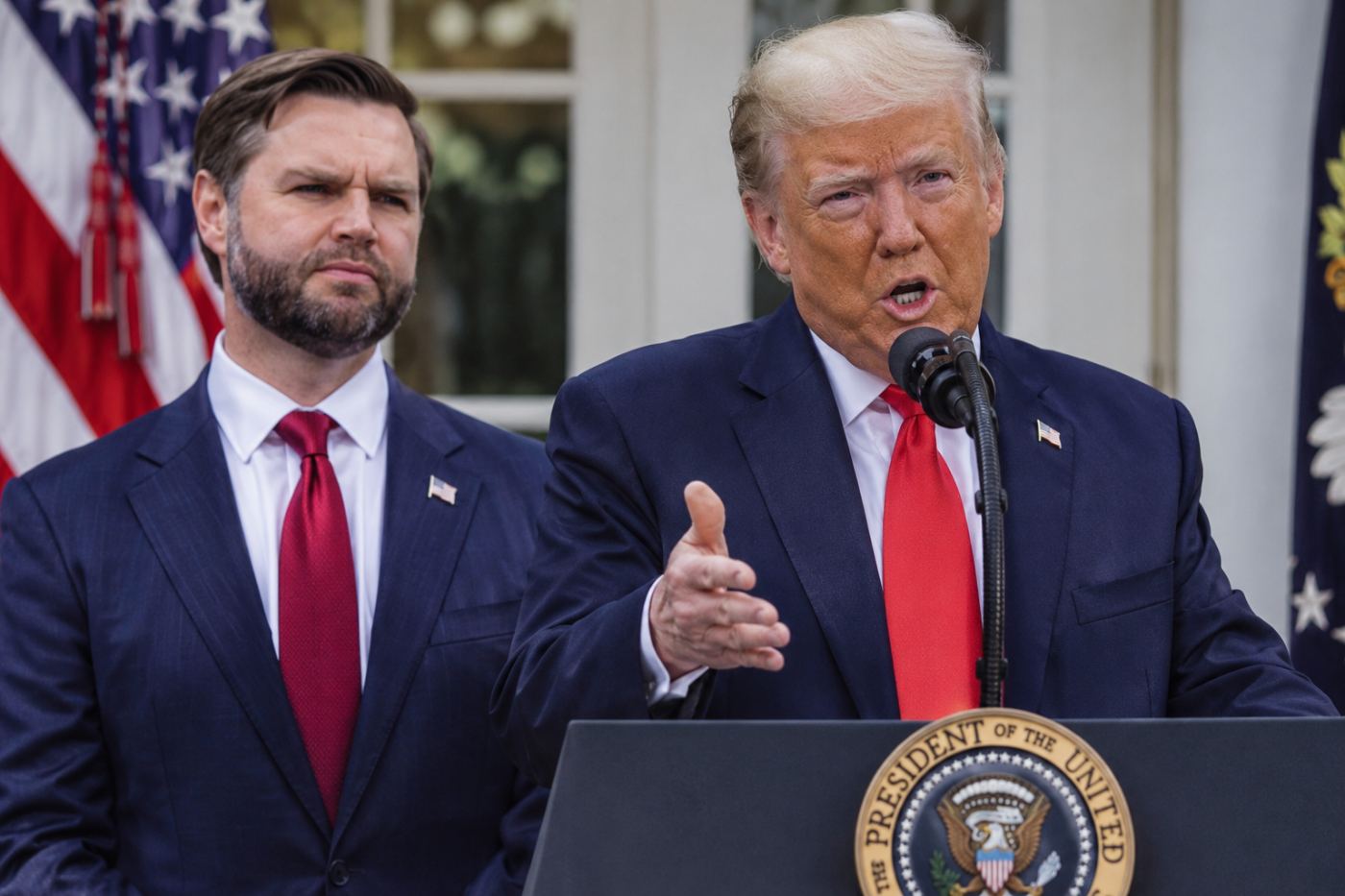
Just one day after Republicans suffered sweeping defeats in the 2026 midterm elections, President Donald Trump raised fresh questions about the political future of his own vice president.
Speaking with reporters Wednesday, Trump declined to commit to supporting JD Vance in the 2028 presidential election and suggested that Vance might not even become a candidate.
The remarks came as Republicans began assessing the consequences of losing control of both chambers of Congress, with disagreements emerging over the causes of the party's electoral losses.
Asked whether he had spoken with Vance about the 2028 election, Trump offered little indication that the vice president's political future was settled.
"Maybe he won't run, I don't know who's gonna run," Trump said.
The statement was notable because Vance has spent much of his vice presidency establishing himself as a prominent national Republican figure and potential successor to Trump.
Yet the president's comments suggested that the Republican nomination remains an open question.
The exchange followed a lengthy public assessment by Vance of the party's disappointing election results.
Vance had identified the war with Iran and its economic consequences as important factors in the Republican losses.
Trump, however, defended his handling of the conflict.
When questioned about Vance's remarks, the president insisted that his administration had prevented Iran from obtaining a nuclear weapon and maintained that he would not have handled the war differently.
The exchange highlighted a developing disagreement over how Republicans should explain the election results.
Vance's comments focused attention on the political consequences of the conflict and rising prices, while Trump continued defending the decisions that led to those conditions.
The uncertainty surrounding Vance's presidential ambitions did not begin Wednesday.
In an October interview with journalist Mark Halperin, Vance acknowledged that he had not discussed a potential presidential endorsement with Trump.
Although he expressed confidence that the president would eventually support him if he ran, Vance admitted he could not guarantee that outcome.
Trump subsequently confirmed that the two had not discussed an endorsement.
The president has also publicly entertained the possibility of other Republican candidates, including Secretary of State Marco Rubio.
That uncertainty contrasts with earlier private discussions.
According to August reporting by The Washington Post, Trump told a group of donors that Republicans needed to elect Vance in 2028.
However, several advisers cautioned that the president had not necessarily made a final decision about his preferred successor.
The Republican Party now faces a considerably different political environment following Tuesday's election.
Democratic victories have changed the balance of power in Washington and prompted questions about the party's leadership, campaign strategy, and relationship with Trump.
For Vance, those developments introduce additional complications.
As vice president, he remains closely associated with the administration's policies, including its handling of the economy and the Iran conflict.
At the same time, any potential presidential campaign would require him to establish an independent political identity.
Trump's unwillingness to offer an endorsement leaves that process unresolved.
Vance himself has not announced a presidential campaign and has repeatedly said he remains focused on his current responsibilities.
His decision not to commit to running is therefore not necessarily evidence of a political rupture between the president and vice president.
Nevertheless, Wednesday's remarks demonstrated that Trump's support cannot yet be taken for granted.
For years, Trump has exercised extraordinary influence over Republican candidates through his endorsements and personal popularity within the party.
The approaching 2028 election will test how that influence translates into a presidential succession.
Whether Vance ultimately enters the race remains uncertain.
What is clear is that, even after a difficult election for his party, Trump is not ready to publicly designate the person who will carry his political movement into the next presidential contest.
And for JD Vance, the absence of that commitment leaves one of the most important questions about his political future unanswered.