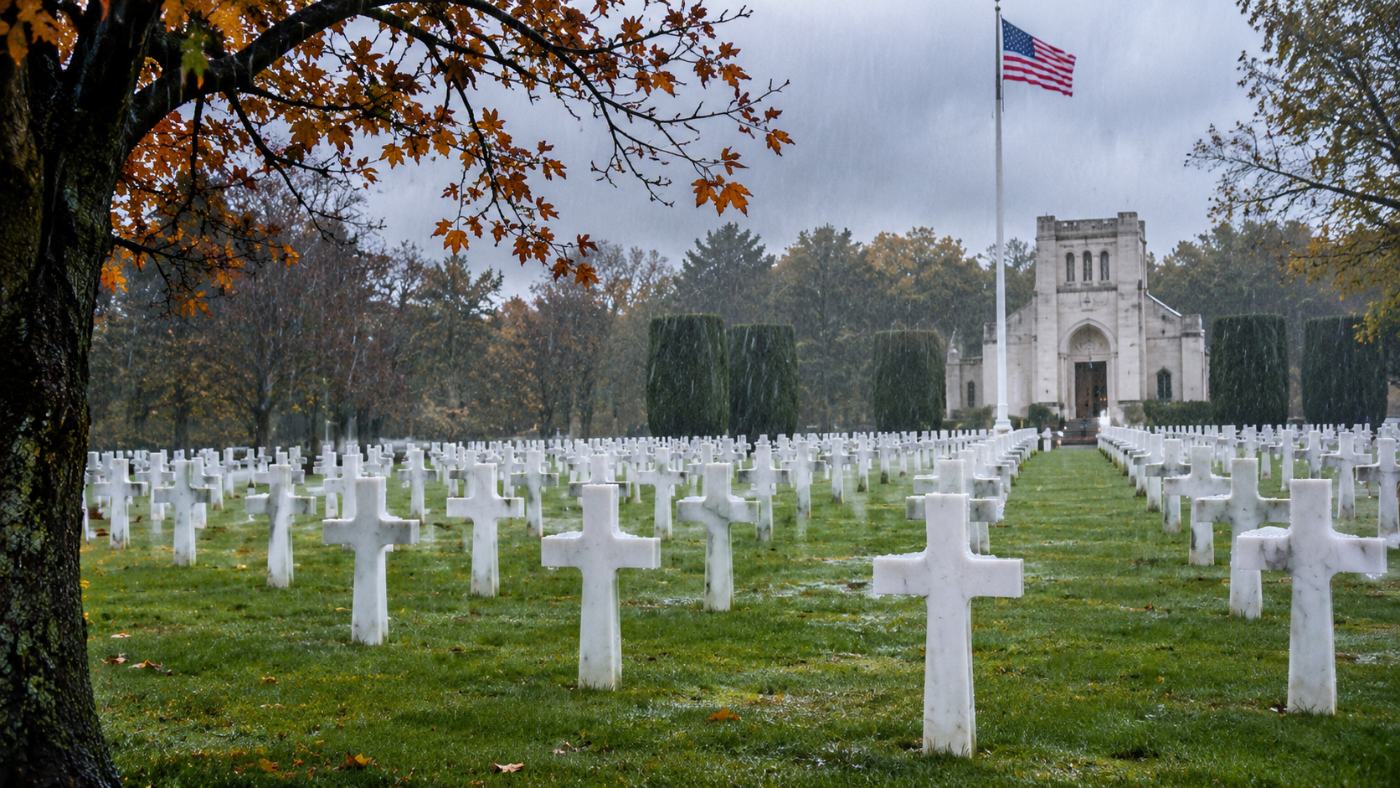
President Donald Trump is facing widespread criticism after canceling a scheduled visit to an American military cemetery in France, where thousands of U.S. servicemen are buried, because bad weather prevented his helicopter from flying.
The cancellation comes as world leaders gather in France to commemorate the 100th anniversary of the armistice that ended World War I.
Trump had been scheduled to visit the Aisne-Marne American Cemetery and Memorial, approximately 60 miles northeast of Paris, to lay a wreath and observe a moment of silence honoring American troops killed during the war.
Instead, the president remained at the U.S. ambassador's residence in Paris, leaving two senior military leaders to represent the United States.
A Sacred Place in Marine Corps History
The cemetery stands beside Belleau Wood, the site of one of the most celebrated battles in Marine Corps history.
In June 1918, American Marines fought German forces in a brutal engagement that helped stop a German offensive threatening Paris. The battle became a defining moment for the Marine Corps and helped establish its reputation for determination under fire.
More than 2,200 American servicemen are buried at Aisne-Marne, and the names of more than 1,000 missing Americans are commemorated there.
The significance of the location makes Trump's absence particularly controversial.
White House Chief of Staff John Kelly, a retired four-star Marine general, and General Joseph Dunford, chairman of the Joint Chiefs of Staff and also a Marine, attended the ceremony in his place.
Both men have longstanding connections to the military institution whose sacrifices the cemetery commemorates.
White House Blames Weather and Logistics
The White House says poor weather conditions made helicopter transportation unsafe.
Paris experienced low clouds and intermittent rain Saturday, preventing Marine One from making the scheduled journey.
Presidential helicopter operations are subject to strict safety requirements, and decisions about whether flights can proceed involve military and security personnel.
However, critics are questioning why the administration did not arrange alternative ground transportation.
The cemetery is accessible by road, raising questions about whether a motorcade could have been organized.
The White House has cited scheduling and logistical difficulties caused by the weather, but has not publicly provided a detailed explanation of why a ground alternative was not used.
Critics Question the President's Priorities
The cancellation has prompted criticism from former government officials, veterans' advocates, and political commentators.
Former Obama administration deputy national security adviser Ben Rhodes argued that presidential trips normally include contingency plans for bad weather.
David Frum, a former speechwriter for President George W. Bush, also criticized the decision, questioning how a president could travel to France for the centennial commemorations without personally honoring American soldiers at the cemetery.
The controversy comes as other international leaders continue participating in World War I remembrance activities despite the rain.
Trump is scheduled to attend ceremonies in Paris Sunday and deliver remarks at the Suresnes American Cemetery outside the capital.
Those planned appearances have not prevented criticism of Saturday's cancellation.
A Ceremony Without the Commander in Chief
For American military families and veterans, Belleau Wood represents an enduring symbol of sacrifice.
The Marines who fought there endured machine-gun fire, artillery bombardments, and devastating casualties during weeks of combat.
Their service helped shape the identity of the modern Marine Corps.
Saturday's ceremony proceeded with American military representation, but without the president who had traveled to France to commemorate the war's conclusion.
As the centennial observances continue, the controversy has raised a pointed question about presidential responsibilities: whether logistical difficulties should have prevented the commander in chief from personally honoring Americans who died in service to their country.