Donald Trump's campaign was still attempting to challenge the results of the presidential election, but on November 24, its announcement of supposed legislative hearings ran into an unexpected obstacle: Republican leaders in Arizona said they had not authorized one.
The Trump campaign announced plans for public hearings in several battleground states, claiming that Republican legislators would examine allegations of election irregularities.
But Arizona's Republican legislative leadership quickly disputed the impression that an official legislative hearing had been scheduled.
The disagreement exposed a significant problem with Trump's post-election strategy. His campaign was seeking to involve state legislatures in challenging Joe Biden's victory, even as Republican officials in those states declined to endorse parts of the effort.
Trump Turns to Republican State Legislatures
By November 24, Trump had suffered repeated setbacks in his attempts to challenge the election results.
Courts had rejected major lawsuits, and states including Georgia and Michigan had certified Biden's victories.
Pennsylvania and Nevada were also completing certification procedures.
With legal avenues narrowing, Trump and his allies increasingly focused attention on Republican-controlled state legislatures.
The strategy involved presenting allegations of election irregularities to lawmakers and encouraging them to question the results.
Some Trump allies also advocated having legislatures intervene in the selection of presidential electors.
Such an intervention would have represented an extraordinary departure from the results of the popular vote conducted under existing state election laws.
The Campaign Announces Hearings
On November 24, the Trump campaign announced plans for hearings involving lawmakers in Pennsylvania, Arizona, and Michigan.
The announcement described opportunities to present testimony concerning alleged voting irregularities.
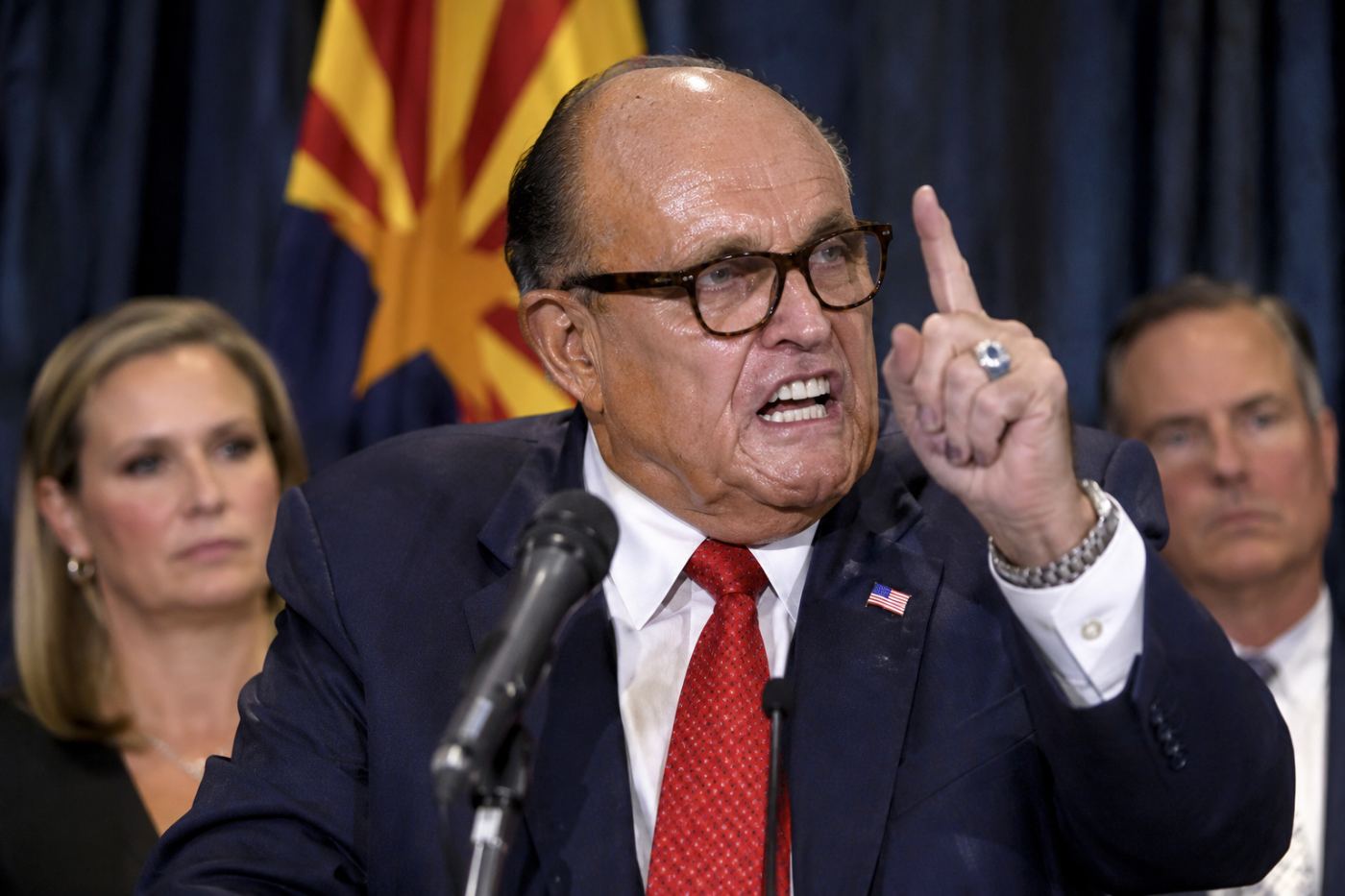
Trump attorney Rudy Giuliani was among the figures promoting the effort.
The campaign presented the hearings as an opportunity for legislators to examine evidence that it claimed would call the election results into question.
However, the announcement did not mean that the legislatures themselves had formally approved the proceedings.
That distinction quickly became important in Arizona.
Arizona Republicans Push Back
Arizona Republican legislative leaders disputed the suggestion that an official hearing had been authorized.
House Speaker Rusty Bowers and Senate President Karen Fann indicated that no formal legislative hearing had been approved through the ordinary legislative process.
The campaign's proposed event was not the same as an officially convened hearing of the Arizona Legislature.
Individual lawmakers could organize meetings or invite witnesses, but those gatherings did not automatically carry the authority of a legislative committee.
The distinction mattered because the Trump campaign was presenting its election challenges as part of a broader effort involving state lawmakers.
Arizona's leadership made clear that the campaign's announcement should not be confused with official legislative action.
Biden's Arizona Victory Was Narrow but Clear
Arizona had been one of the closest states in the presidential election.
Biden defeated Trump by 10,457 votes, becoming the first Democratic presidential candidate to carry Arizona since Bill Clinton in 1996.
Trump and his allies challenged aspects of the state's election administration, including ballot processing and voting procedures.
But the allegations had not established fraud sufficient to overturn Biden's lead.
Arizona's official statewide certification was scheduled for November 30.
The campaign's effort to organize legislative presentations came while election officials were continuing the established certification process.
Allegations Are Not Evidence
The proposed hearings were intended to publicize claims about voting irregularities.
Trump's campaign and its allies argued that election officials had mishandled ballots and that the results warranted further investigation.
Election officials, however, repeatedly distinguished between allegations and verified evidence.
The campaign had not demonstrated widespread fraud sufficient to reverse the election outcome.
Nor did the announcement of a legislative hearing establish that the allegations were credible.
The disagreement in Arizona illustrated another important distinction: a political campaign's description of an event does not determine whether that event has official government authority.
The Pressure on Republican Officials
Trump's post-election efforts placed Republican officeholders in a difficult position.
Some supported further investigation of alleged irregularities.
Others maintained that election results had to be determined according to existing law and verified vote totals.
In Arizona, Republican legislative leaders resisted treating the campaign's proposed gathering as an official legislative proceeding.
Their response did not necessarily mean they opposed every inquiry into election administration.
It meant that the campaign had not secured the formal authorization its announcement appeared to imply.
What Happened Next
On November 30, several Arizona Republican lawmakers participated in a public meeting with Giuliani and other Trump allies at a Phoenix hotel.
The gathering featured allegations about the election but was not an official hearing of the Arizona Legislature.
That same day, Arizona certified Biden's victory.
The contrast was significant.
Trump's allies continued presenting arguments challenging the election while the state's election officials completed the legal process confirming its outcome.
The meeting did not reverse Arizona's results or establish that Biden's victory was fraudulent.
November 24: A Campaign Announcement Meets Reality
The November 24 controversy demonstrated how Trump's campaign was attempting to extend its election challenge beyond the courtroom.
By announcing legislative hearings, the campaign sought to bring allegations of election irregularities before Republican lawmakers in battleground states.
But in Arizona, the distinction between a campaign-organized event and an officially authorized legislative hearing became immediately apparent.
Republican leaders disputed the campaign's characterization, while the state continued moving toward certification.
The episode illustrated the limits of a political campaign's ability to enlist government institutions in its efforts to challenge an election.
Trump and his allies could organize meetings, present allegations, and request investigations.
They could not simply announce an official legislative hearing into existence.
On November 24, 2020, Arizona's Republican leadership made that distinction clear.