Four days after Hamas carried out its devastating surprise attack on Israel, Donald Trump stood before supporters in Florida and turned his attention to another armed group threatening Israel.
Hezbollah.
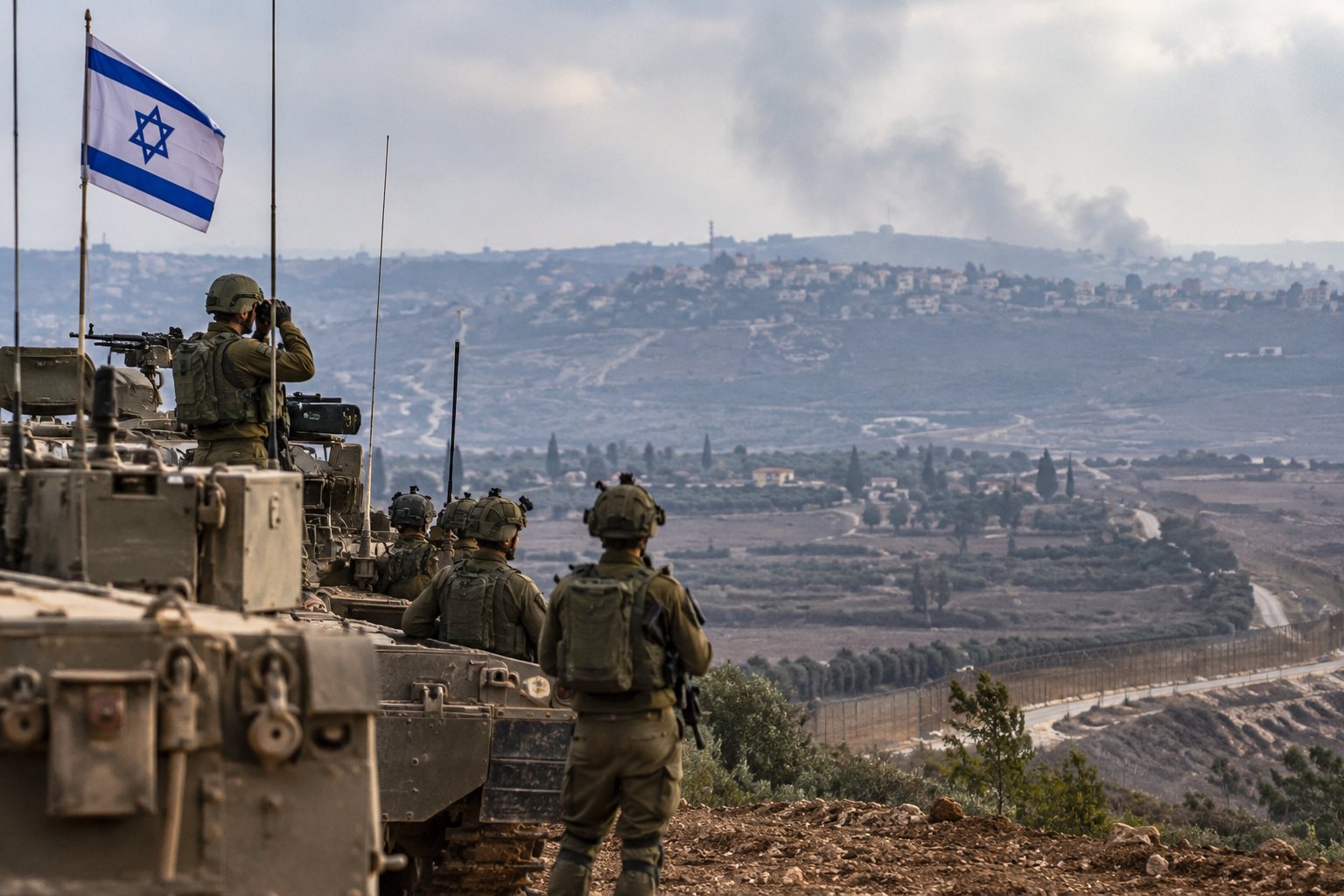
The Iran-backed Lebanese organization was already exchanging fire with Israeli forces along Israel's northern border, raising fears that the rapidly expanding war could open a second front.
Trump's description of Hezbollah:
“Very smart.”
The former president didn't stop there.
During an October 11 appearance in West Palm Beach, Trump criticized Israeli leadership, attacked Israel's defense minister and complained about Israeli Prime Minister Benjamin Netanyahu.
The remarks came at an extraordinary moment.
Israel was still counting its dead from the October 7 Hamas attack. Families were learning that loved ones had been killed or taken hostage. Israeli reservists were mobilizing. Gaza was being bombarded. American officials were attempting to prevent the conflict from spreading across the Middle East.
And Hezbollah represented one of the most dangerous possibilities for escalation.
“Hezbollah Is Very Smart”
Trump's remarks came during a lengthy speech to Club 47 supporters in West Palm Beach.
He was discussing warnings that Hezbollah could attack Israel from Lebanon and open a second front in the war.
Trump criticized American and Israeli officials for publicly discussing Israel's vulnerability in the north.
Then he said:
“You know, Hezbollah is very smart. They're all very smart.”
Trump immediately acknowledged that comments like that generated criticism.
He compared the reaction to previous occasions when he had described Chinese President Xi Jinping as intelligent.
Trump's argument was essentially that recognizing an enemy's intelligence was different from supporting that enemy.
But the timing ensured the remark would explode politically.
Hezbollah wasn't a theoretical adversary.
It was an Iran-backed organization designated by the United States as a foreign terrorist organization, positioned directly across Israel's northern border.
And it was already exchanging fire with Israeli forces.
Four Days After October 7
On the morning of October 7, Hamas militants launched a massive surprise attack from Gaza into southern Israel.
Gunmen crossed the border and attacked communities, military installations and a music festival.
About 1,200 people were killed in Israel, according to subsequent Israeli figures, and roughly 250 people were taken hostage into Gaza.
It was the deadliest single day for Israel since the country's founding.
Israel declared war.
Within days, hundreds of thousands of Israeli reservists were being mobilized.
The United States moved military assets toward the region and warned other armed groups and governments against exploiting the crisis.
One of the greatest concerns was Hezbollah.
Hezbollah Wasn't Watching From the Sidelines
Hezbollah is based in Lebanon and backed heavily by Iran.
It possesses a large arsenal of rockets and missiles capable of striking targets throughout Israel.
Israel and Hezbollah fought a major war in 2006.
By October 2023, Israeli officials considered Hezbollah's military capabilities significantly greater than those of Hamas.
And in the days following the October 7 attack, violence was already spreading north.
Hezbollah and Israeli forces exchanged fire across the Lebanon-Israel border.
Israeli soldiers were killed.
Hezbollah fighters were killed.
The possibility of a second front was no longer hypothetical.
That was the organization Trump called “very smart.”
Trump's Actual Point
Context matters.
Trump was not telling his audience that Hezbollah was morally admirable.
He was arguing that Israeli and American officials had made a strategic mistake by publicly discussing Israel's vulnerability to an attack from the north.
Trump complained that officials had essentially announced where Israel was most concerned about being attacked.
He argued that an intelligent enemy would listen carefully to those statements.
“They're vicious and they're smart,” Trump said of Israel's enemies.
His argument was that governments should respect the capabilities of their adversaries rather than underestimate them.
But Trump chose to make that argument by publicly complimenting Hezbollah's intelligence only days after the worst terrorist attack in Israeli history and while Hezbollah itself was threatening Israel.
That distinction did little to prevent an immediate backlash.
Trump Attacks Israel's Defense Minister
Trump also turned his criticism directly toward Israeli Defense Minister Yoav Gallant.
Trump complained about statements warning that Hezbollah could attack Israel from the north.
He referred to Gallant as a “jerk.”
Trump argued that publicly identifying a potential weakness gave Hezbollah useful information.
“If you listen to this jerk, you would attack from the north,” Trump said, arguing that the statement effectively told Hezbollah where Israel was vulnerable.
Again, Trump's underlying argument concerned operational security.
But politically, the image was striking.
Israel was fighting a war after suffering a catastrophic terrorist attack.
An Iran-backed armed organization was threatening Israel from Lebanon.
And the former American president was publicly criticizing Israel's defense minister while describing Hezbollah as smart.
Netanyahu Wasn't Spared Either
Trump's anger also extended to Israeli Prime Minister Benjamin Netanyahu.
Earlier that day, Trump criticized Netanyahu over events surrounding the January 2020 American operation that killed Iranian General Qassem Soleimani.
Soleimani, commander of Iran's elite Quds Force, was killed by a U.S. drone strike near Baghdad International Airport during Trump's presidency.
Trump claimed Israel had originally been involved in planning the operation but withdrew shortly before it was carried out.
“I'll never forget that Bibi Netanyahu let us down,” Trump said.
Netanyahu had once been one of Trump's closest international political partners.
During Trump's presidency, his administration moved the U.S. Embassy in Israel from Tel Aviv to Jerusalem, recognized Israeli sovereignty over the Golan Heights and helped broker the Abraham Accords between Israel and several Arab governments.
Their relationship deteriorated after Netanyahu congratulated Joe Biden following the 2020 presidential election.
Trump publicly complained about Netanyahu afterward.
Now, with Israel under attack, that grievance resurfaced.
Israel Responds
Trump's remarks generated criticism from Israel.
Israeli Communications Minister Shlomo Karhi said it was “shameful” for a former American president to make comments that could be interpreted as praising Hezbollah.
“We don't have to bother with him and the nonsense he spouts,” Karhi told Israeli television.
Trump's comments were especially sensitive because Israel was attempting to deter Hezbollah from expanding the war.
American officials were doing the same.
The United States had moved the USS Gerald R. Ford carrier strike group toward the eastern Mediterranean as a signal to Iran and Hezbollah against entering the conflict.
The message from Washington was supposed to be unmistakable:
Do not widen the war.
The White House Condemns Trump's Remarks
The Biden White House responded the following day.
Deputy White House press secretary Andrew Bates called Trump's comments “dangerous and unhinged.”
Bates questioned why any American would praise the intelligence of an Iran-backed terrorist organization while Israel was fighting after the October 7 massacre.
The administration argued that American political leaders should be presenting a unified message of support for Israel while discouraging Hezbollah and Iran from escalating the conflict.
Trump's campaign rejected the criticism.
His allies argued that Trump had simply been recognizing the strategic intelligence of an adversary — not endorsing Hezbollah.
Republicans Turn on Trump
Perhaps more striking was the criticism from within Trump's own party.
Florida Governor Ron DeSantis, who was running against Trump for the Republican presidential nomination, condemned the remarks.
DeSantis said it was wrong to attack Israel while describing Hezbollah as smart during such a crisis.
Former Vice President Mike Pence was even more direct.
“Hezbollah aren't smart,” Pence said.
“They're evil.”
Former South Carolina Governor Nikki Haley, Trump's former ambassador to the United Nations, criticized the comments as dangerous.
Former New Jersey Governor Chris Christie also condemned Trump, arguing that remarks like these could provide encouragement to Israel's adversaries.
Senator Tim Scott said Trump was wrong.
For a Republican presidential primary dominated by candidates reluctant to attack Trump directly, the reaction was unusually broad.
A Pattern in Trump's Language
Trump had long argued that acknowledging the intelligence or strategic ability of an adversary was simply realism.
He had described Russian President Vladimir Putin as smart.
He had repeatedly praised Chinese President Xi Jinping's intelligence.
He had spoken positively about North Korean leader Kim Jong Un's ability to maintain power.
Trump's argument was generally that American leaders made a mistake when they underestimated adversaries.
His critics saw something different.
They argued that Trump repeatedly used complimentary language toward authoritarian leaders and hostile actors while sometimes attacking America's allies more aggressively.
October 11 produced another example of that dispute.
Words Matter During a War
Presidents and former presidents routinely criticize American allies.
They also analyze the strengths of America's adversaries.
There is nothing inherently unusual about acknowledging that an enemy is intelligent, capable or strategically dangerous.
Military commanders do it constantly.
But timing and context matter.
On October 11, Hezbollah was not being discussed in an academic foreign-policy seminar.
Israel had suffered a massive terrorist attack four days earlier.
Hostages were being held in Gaza.
Israeli forces were preparing for a major military campaign.
Hezbollah was exchanging fire with Israel.
Iran was watching.
American forces were moving into the region.
The possibility of a much larger Middle Eastern war was real.
Against that backdrop, Trump's decision to call Hezbollah “very smart” while publicly attacking Israeli leaders guaranteed controversy.
October 11, 2023
Donald Trump had many ways to make his argument.
He could have said Israel should never reveal its military vulnerabilities.
He could have warned that Hezbollah was dangerous.
He could have emphasized that adversaries listen carefully to public statements.
He could have criticized Israeli operational security without complimenting Hezbollah.
Instead, four days after Hamas's attack, Trump stood before supporters in Florida and said:
“Hezbollah is very smart.”
He called Israel's defense minister a “jerk.”
He revived his personal grievances with Benjamin Netanyahu.
And he did it while Israel was fighting Hamas in the south and watching Hezbollah in the north.
The reaction crossed party lines.
The White House condemned him.
Israeli officials criticized him.
Republicans running against him criticized him.
Trump's defenders argued that he was simply acknowledging the intelligence of a dangerous enemy.
But in the first chaotic days of a new Middle East war, the former president had once again demonstrated his willingness to say publicly what virtually no conventional American political leader would have chosen to say at that moment.