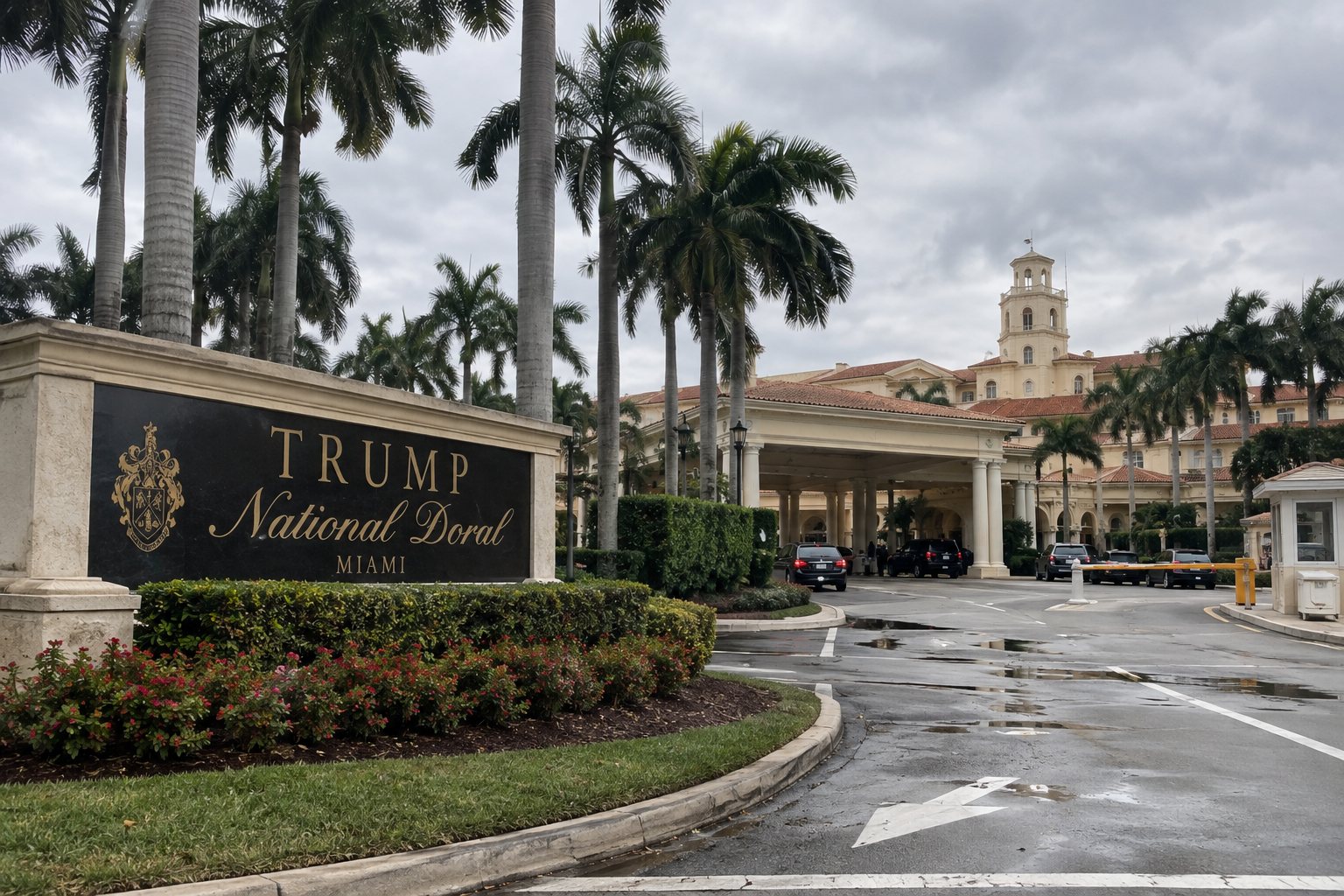
President Donald Trump spent much of a 71-minute White House Cabinet meeting Monday defending his abandoned plan to host the 2020 G7 summit at his own Florida golf resort, dismissing a provision of the United States Constitution as "phony" while claiming that serving as president has personally cost him billions of dollars.
The extraordinary remarks came just two days after Trump reversed his administration's decision to hold the international gathering at Trump National Doral Miami, a property he owns and from which he could potentially benefit financially.
"I don't think you people, with this phony emoluments clause," Trump declared while criticizing objections to the arrangement.
The problem for Trump is that the Emoluments Clause is not phony. It is an actual provision of the United States Constitution, specifically Article I, Section 9, which prohibits federal officeholders from accepting gifts, payments, or other benefits from foreign governments without congressional consent.
The provision was designed to protect American government officials from foreign influence and conflicts of interest.
A Presidential Summit at the President's Hotel
On October 17, acting White House Chief of Staff Mick Mulvaney announced that the administration had selected Trump's Doral resort near Miami to host the June 2020 G7 summit.
The decision immediately triggered criticism from Democrats, government ethics experts, and some Republicans, who questioned whether the president was using his public office to direct international business toward his private company.
The administration insisted that the resort would host the event at cost, without generating a profit.
But critics argued that even without a direct profit, hosting world leaders, diplomats, international media, and their delegations at a Trump-owned property could provide substantial promotional benefits.
The controversy intensified until Trump announced Saturday night that the administration would search for another location.
Trump Claims Presidency Has Cost Him Billions
During Monday's Cabinet meeting, Trump insisted that he had sacrificed enormous personal wealth by becoming president.
He claimed the presidency had cost him between $2 billion and $5 billion in lost business opportunities and declining revenue.
Trump provided no documentation supporting those figures.
His claims are particularly difficult to verify because he has refused to release his personal tax returns, breaking with a longstanding practice followed by previous presidents.
Trump also argued that other wealthy presidents, including George Washington, had maintained business interests while serving in office.
However, those comparisons did not resolve the constitutional questions surrounding payments from foreign governments to a business owned by the sitting president.
The Constitution Is Not Optional
The controversy raises a fundamental question about presidential accountability: Can a president use the authority of his office to direct government business toward companies he personally owns?
Trump's critics argue that allowing such arrangements would create opportunities for foreign governments to financially benefit the president, potentially compromising the independence of the office.
The president maintains that his Doral proposal would have saved taxpayers money and that criticism of the arrangement was politically motivated.
Yet the Constitution's restrictions on foreign emoluments do not disappear simply because a president considers them inconvenient.
Trump's dismissal of a constitutional provision as "phony" is especially striking because he took an oath to preserve, protect, and defend the very document containing it.
With the House already conducting an impeachment inquiry into his dealings with Ukraine, Monday's remarks add another controversy to a presidency facing mounting questions about executive power, conflicts of interest, and constitutional accountability.
The G7 summit will now be held somewhere other than Trump's resort. But the larger questions about the president's private business interests and their relationship to his public responsibilities remain unresolved.