On December 6, 2017, President Donald Trump announced that the United States would officially recognize Jerusalem as Israel's capital, reversing decades of American diplomatic policy and triggering condemnation from Palestinian leaders, European allies, and governments throughout the Middle East.
Trump also directed the State Department to begin preparations to relocate the American embassy from Tel Aviv to Jerusalem, fulfilling a campaign promise despite warnings that the decision could destabilize an already volatile region.
The announcement represented one of the most consequential foreign-policy changes of Trump's first year in office.
Decades of American Policy Reversed
For decades, successive American presidents had avoided formally recognizing Israeli sovereignty over Jerusalem, maintaining that the city's final status should be determined through negotiations between Israelis and Palestinians.
Both peoples claimed Jerusalem as their capital, with Palestinians seeking East Jerusalem as the capital of a future independent state.
Although Congress passed legislation in 1995 calling for the American embassy to move to Jerusalem, previous presidents repeatedly delayed implementation over national security and diplomatic concerns.
Trump rejected that approach.
During his White House announcement, he argued that recognizing Jerusalem reflected political reality and could help advance peace negotiations.
His proclamation maintained that the United States was not determining Jerusalem's final boundaries, which would remain subject to negotiations.
American Allies Condemn the Decision
The international response was swift.
Britain, France, Germany, Saudi Arabia, and other American partners criticized the decision, warning that it could undermine peace negotiations and inflame regional tensions.
Palestinian leaders condemned the announcement, arguing that Washington had compromised its ability to serve as an impartial mediator.
Palestinian President Mahmoud Abbas rejected the decision and warned that it threatened prospects for a negotiated settlement.
Turkey also strongly opposed the announcement, while Arab governments expressed concerns about the potential consequences for regional stability.
American diplomatic missions in several countries issued security warnings anticipating demonstrations and possible violence.
Israel Welcomes Trump's Announcement
Israeli Prime Minister Benjamin Netanyahu celebrated the decision, describing American recognition of Jerusalem as an important diplomatic achievement.
Supporters argued that Jerusalem had long functioned as Israel's seat of government and that American policy should acknowledge that reality.
They also noted that Congress had supported relocating the embassy more than two decades earlier.
However, recognition of Jerusalem as Israel's capital did not resolve competing Israeli and Palestinian claims to the city.
International Opposition Intensifies
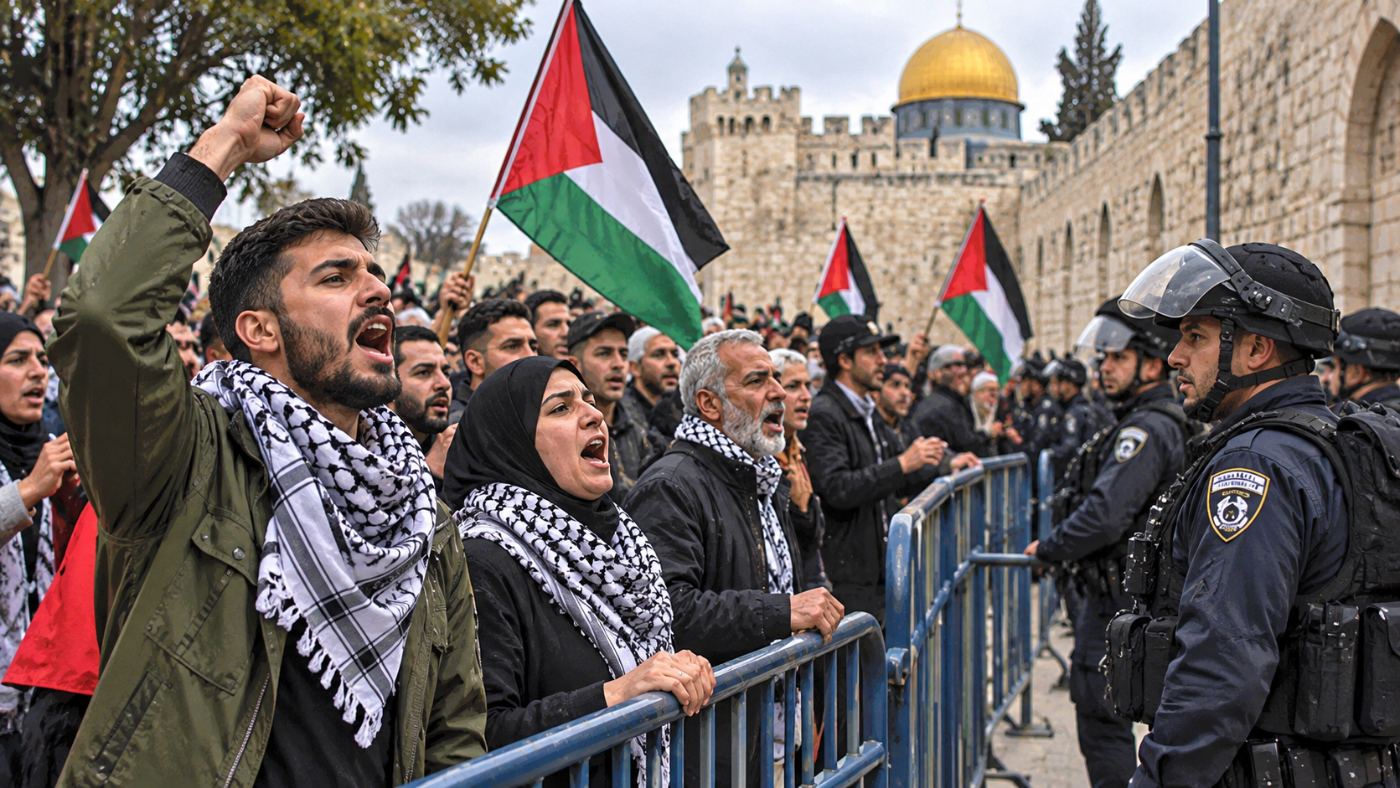
In the days following Trump's announcement, demonstrations erupted in Palestinian territories and elsewhere.
The diplomatic dispute soon reached the United Nations.
On December 18, the United States vetoed a Security Council resolution opposing unilateral changes to Jerusalem's status. The other 14 council members supported the measure.
Three days later, the UN General Assembly adopted a resolution rejecting actions intended to alter Jerusalem's status, with 128 countries voting in favor, nine against, and 35 abstaining.
The votes demonstrated the extent of international opposition to Trump's decision.
The United States ultimately opened its embassy in Jerusalem on May 14, 2018.
A Lasting Foreign-Policy Shift
Trump's announcement achieved a longstanding objective of Israeli leaders and American supporters of embassy relocation.
At the same time, it generated a major diplomatic confrontation with traditional American allies and Palestinian representatives.
Critics argued that the administration had surrendered an important negotiating position without obtaining concessions that might advance a peace agreement.
Supporters maintained that acknowledging Jerusalem as Israel's capital corrected an outdated diplomatic position.
December 6, 2017, marked a fundamental change in American Middle East policy, demonstrating how a single presidential decision could reshape diplomatic relationships and provoke opposition from much of the international community.