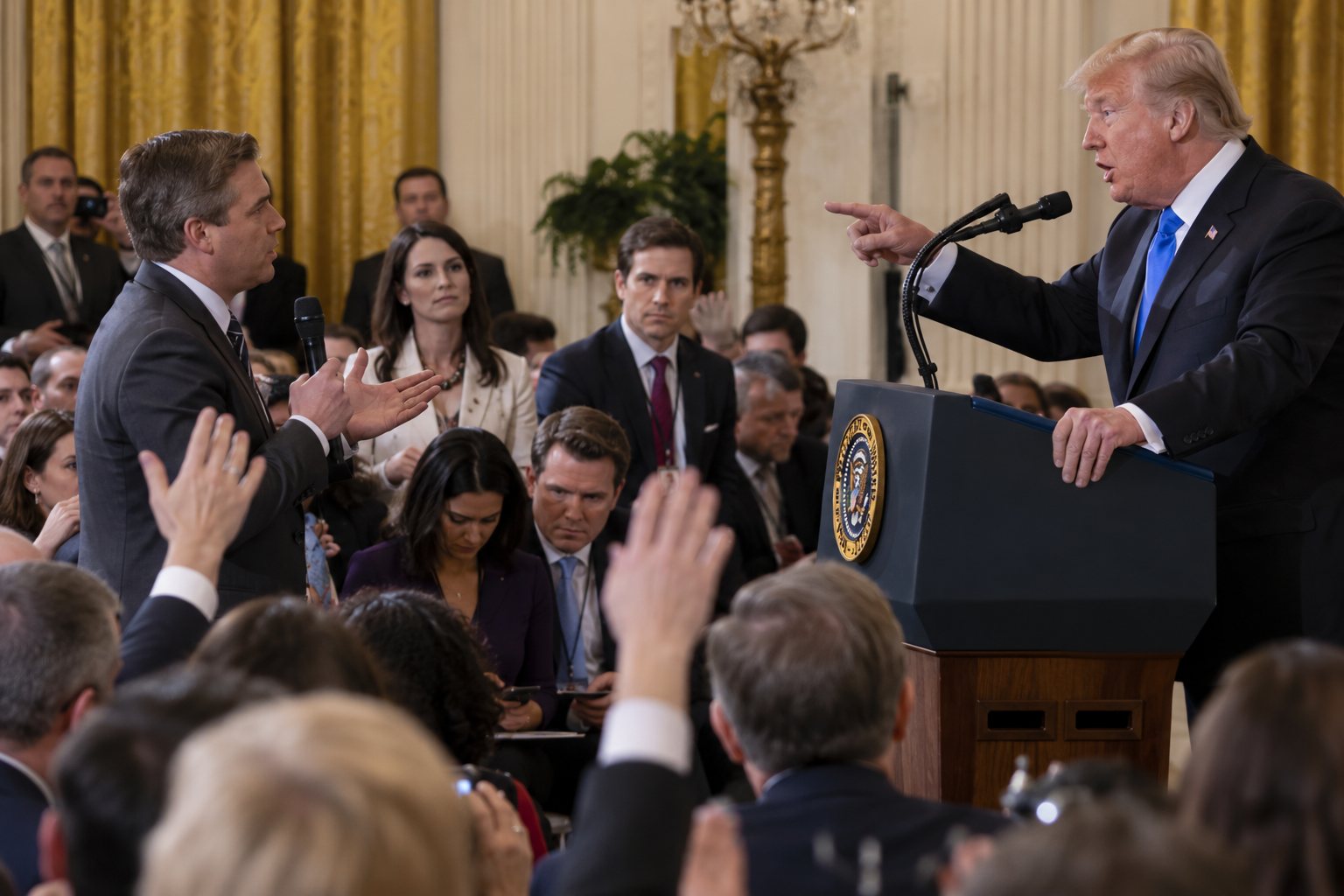
President Donald Trump responded to Republican losses in Tuesday's midterm elections with a combative White House news conference Wednesday, publicly criticizing members of his own party, confronting journalists, and threatening retaliation against Democrats preparing to take control of the House of Representatives.
Despite Republicans losing their House majority, Trump portrayed the election as a success, emphasizing Republican gains in the Senate and taking credit for candidates who embraced his political agenda.
But his remarks also exposed growing divisions within the Republican Party as the president singled out defeated candidates who had distanced themselves from him.
Trump Turns on Fellow Republicans
During the nearly 90-minute news conference, Trump identified several Republican candidates who had declined to campaign closely with him.
Among those criticized were Carlos Curbelo of Florida, Mike Coffman of Colorado, Barbara Comstock of Virginia, and Mia Love of Utah.
Trump suggested their reluctance to embrace him contributed to their electoral difficulties.
He was particularly dismissive of Love, declaring that she had offered him insufficient support.
At the time of Trump's remarks, Love's election had not yet been decided.
Trump also criticized other Republican candidates, including Peter Roskam and Erik Paulsen, whose suburban districts had become increasingly competitive.
The public criticism was unusual for a president addressing his party's election losses, particularly as Republicans attempted to understand why Democrats had gained control of the House.
Reporters Become Targets
The president's confrontational approach extended to journalists questioning his campaign rhetoric.
CNN correspondent Jim Acosta challenged Trump over his description of a caravan of Central American migrants as an invasion.
Trump defended his language before accusing Acosta of behaving disrespectfully.
The confrontation intensified when Acosta attempted to ask about the investigation into Russian interference in the 2016 presidential election.
Trump called Acosta a terrible person and criticized CNN for employing him.
When NBC correspondent Peter Alexander defended Acosta, Trump responded with criticism of Alexander.
PBS NewsHour correspondent Yamiche Alcindor also faced a sharp response after asking whether Trump's description of himself as a nationalist encouraged white nationalists.
Trump called her question racist and rejected its premise.
The exchanges highlighted continuing tensions between the administration and journalists covering the White House.
Democrats Gain Congressional Oversight
Tuesday's election gives Democrats control of the House for the first time during Trump's presidency.
Republicans retain their Senate majority, creating divided government in Washington.
The Democratic victory gives the party authority to lead House committees, conduct investigations, and issue subpoenas examining administration activities.
Trump warned that aggressive congressional investigations would provoke retaliation.
He suggested Republicans could use their Senate majority to launch investigations of Democrats, potentially bringing legislative work to a standstill.
Although Trump expressed willingness to cooperate on infrastructure and healthcare, his warnings illustrated the difficulties facing any bipartisan agreement.
A Divided Republican Party
The election results have intensified debate over Trump's influence on Republican candidates.
Several Republicans in suburban districts struggled as Democrats gained support among voters dissatisfied with the administration.
Trump, however, emphasized victories by Senate candidates who campaigned alongside him.
His remarks suggested that loyalty to his political agenda would remain an important consideration in his relationship with congressional Republicans.
For defeated candidates, the president offered little sympathy.
Washington Faces a New Political Reality
With Democrats preparing to assume control of the House in January, Trump faces a Congress with greater power to scrutinize his administration.
Wednesday's news conference demonstrated the competing approaches the president may take: offering cooperation on selected legislation while promising political confrontation over investigations.
The election has changed the balance of power in Washington.
Trump's response makes clear that the political battles surrounding his presidency are far from over.