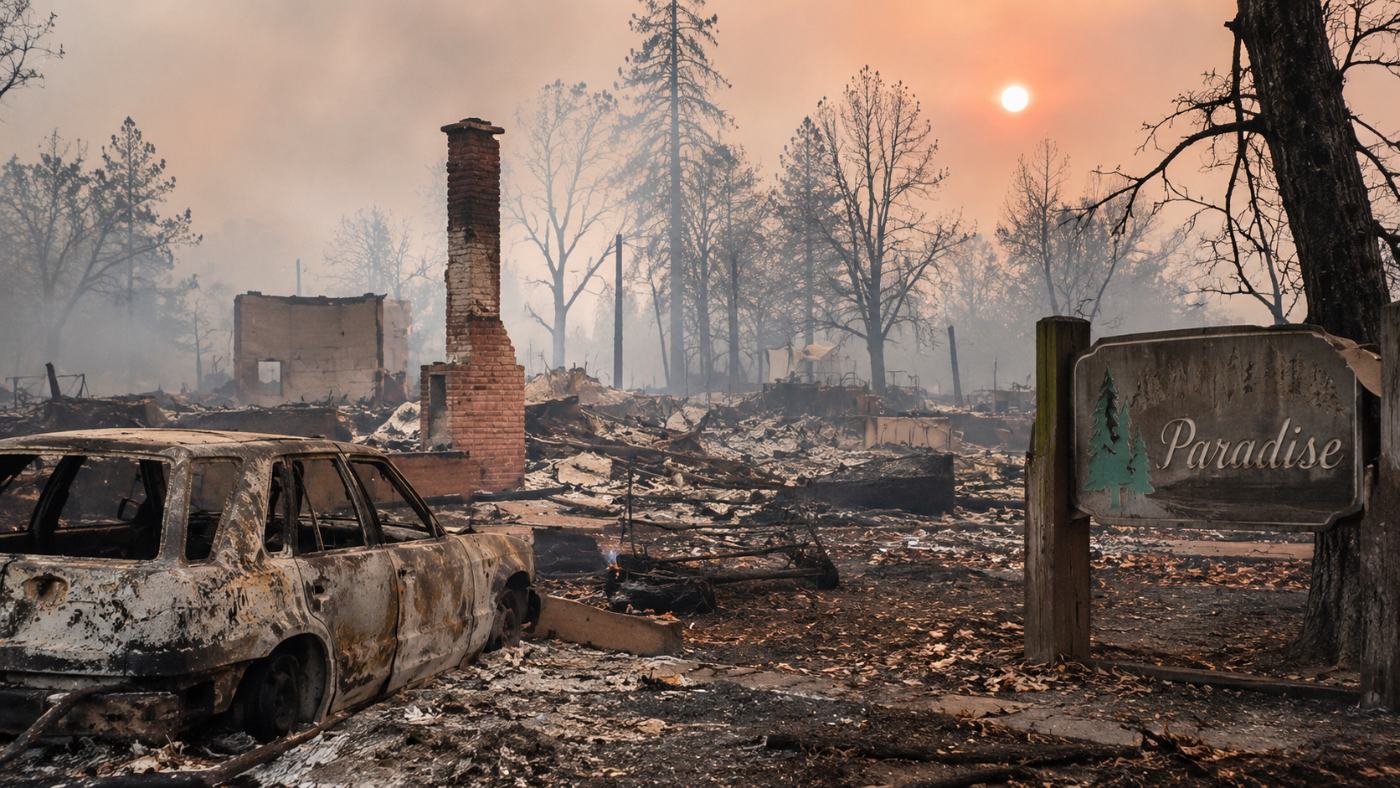
As firefighters battled devastating wildfires across California and rescue crews searched burned neighborhoods for victims, President Donald Trump faced mounting criticism for blaming the disaster on poor forest management and threatening to withhold federal funding.
By November 12, the Camp Fire had become the deadliest wildfire in California history, with authorities confirming 42 deaths. Thousands of homes had been destroyed, entire communities were reduced to ashes, and hundreds of residents remained unaccounted for.
Yet much of the national political conversation centered on the president's response to the catastrophe.
Trump Threatens Federal Funding
On November 10, while attending World War I commemorations in France, Trump posted a message accusing California officials of grossly mismanaging the state's forests.
He claimed poor forest management was responsible for the deadly fires and warned that federal payments could be withheld unless the state corrected the problem.
The comments immediately drew condemnation from firefighters, emergency officials, and California political leaders.
The president repeated his criticism the following day, insisting that better forest management could prevent such devastation.
For firefighters risking their lives to protect communities, the suggestion that California's leadership was primarily responsible for the disaster was particularly controversial.
Firefighters Push Back
The California Professional Firefighters association sharply criticized Trump's remarks.
Its president, Brian Rice, described the president's accusations as a shameful attack on California and the firefighters working to protect its residents.
Fire officials emphasized that extreme winds, dry vegetation, prolonged drought, and unusually dangerous weather conditions had contributed to the rapid spread of the fires.
Experts also challenged Trump's suggestion that California alone controlled the forests involved.
Much of California's forested land is managed by the federal government or private landowners, not state authorities.
Furthermore, the Woolsey Fire in Southern California was burning through suburban hillsides and coastal communities rather than the dense forests Trump's comments suggested were responsible.
Scientists noted that forest management can influence wildfire behavior but cannot eliminate the dangers created by extreme weather and increasingly dry conditions.
Paradise Becomes a Scene of Devastation
The Camp Fire began November 8 near Paradise in Butte County.
Driven by powerful winds, the flames spread rapidly through the community, overwhelming evacuation routes and destroying neighborhoods within hours.
Residents fled through smoke-filled streets as homes, businesses, vehicles, and public buildings burned.
By November 12, authorities reported that more than 7,100 structures had been destroyed.
That evening, Butte County Sheriff Kory Honea announced that search teams had recovered additional remains, raising the confirmed death toll to 42.
Meanwhile, the Woolsey Fire continued burning across Los Angeles and Ventura counties, destroying hundreds of structures and forcing widespread evacuations.
The combined disasters displaced enormous numbers of Californians and placed extraordinary demands on emergency responders.
Trump Changes His Tone
Facing criticism, Trump issued additional statements praising firefighters and emergency personnel.
On November 12, he described first responders and FEMA personnel as brave and commended their efforts.
Later that evening, he approved an expedited major disaster declaration for California, authorizing additional federal assistance.
The action followed his earlier emergency declaration and contradicted fears that he would immediately carry out his threat to withhold aid.
Nevertheless, the controversy over his initial remarks continued.
A Disaster Becomes a Political Confrontation
The November 2018 wildfires exposed tensions between the Trump administration and California's Democratic leadership.
Trump's critics argued that his response placed political blame ahead of the immediate needs of disaster victims. His defenders maintained that forest management deserved greater attention as part of wildfire prevention.
The distinction mattered: experts acknowledged the importance of vegetation management while rejecting the claim that it alone explained the catastrophe.
As California mourned its dead and firefighters continued searching devastated neighborhoods, the dispute illustrated how a national emergency had become entangled in partisan conflict.
For thousands of Californians who had lost their homes, the immediate priority was not political blame. It was survival, recovery, and the enormous task of rebuilding communities destroyed by fire.