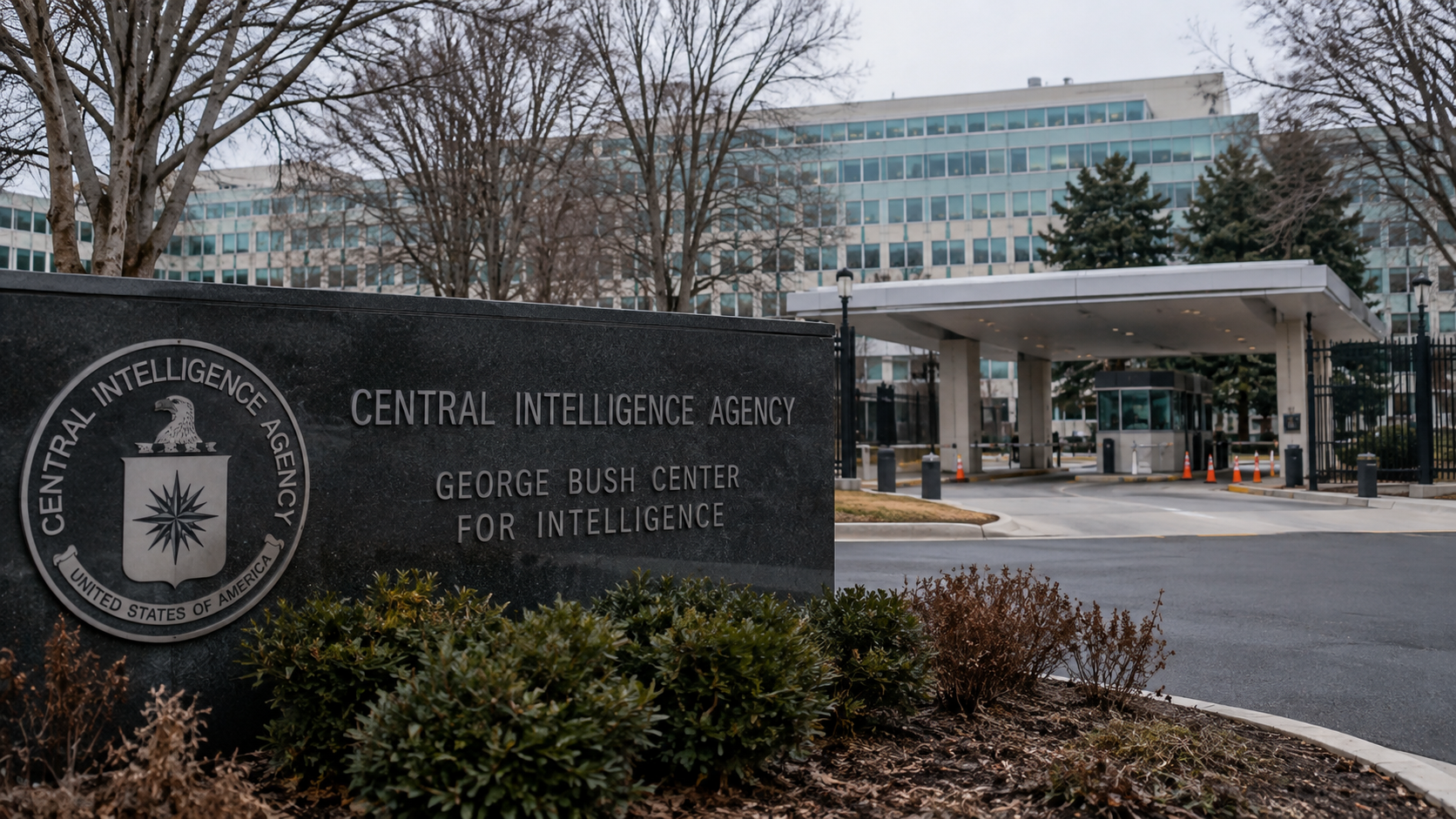
Donald Trump had not yet taken office when he found himself in an extraordinary confrontation with the very intelligence agencies he would soon oversee.
On December 9, reports emerged that the CIA had assessed that Russia interfered in the 2016 presidential election and that Moscow's objective included helping Trump win the White House.
Trump's transition team didn't respond by saying the evidence should be carefully examined.
Instead, it attacked the credibility of America's intelligence establishment.
The transition team's statement invoked one of the intelligence community's most damaging failures: the incorrect prewar assessments concerning weapons of mass destruction in Iraq.
"These are the same people that said Saddam Hussein had weapons of mass destruction," the statement declared.
It then said the election was over and that it was time to move on.
The president-elect was publicly challenging the credibility of American intelligence agencies before becoming their commander in chief.
The Russia Question Was Getting Bigger
Questions about Russian interference hadn't suddenly appeared after Trump's victory.
In October, the Department of Homeland Security and Office of the Director of National Intelligence had publicly attributed the hacking and release of emails from American political organizations to the Russian government.
But the December reporting went further.
The CIA had reportedly concluded that Russia wasn't merely attempting to disrupt or undermine confidence in the American political system. The agency assessed that Moscow's actions were also intended to benefit Trump.
That distinction dramatically raised the stakes.
It did not mean that Russia altered vote totals, nor did it establish that Trump's campaign had coordinated with the Russian government.
But it meant America's intelligence apparatus was examining an extraordinary possibility: that a foreign government had conducted an influence operation intended to affect an American presidential election.
President Barack Obama ordered the intelligence community to conduct a comprehensive review of Russian activities related to the election before he left office.
Trump responded very differently.
Trump: "I Don't Believe It"
On December 11, Trump appeared on Fox News Sunday and directly rejected the reported CIA conclusion.
He called the assessment "ridiculous" and suggested the controversy was being promoted by Democrats unhappy about losing the election.
Asked whether he believed Russia had interfered, Trump said he did not believe the assessment.
It was an unusual situation.
Presidents frequently question intelligence assessments. Intelligence is rarely absolute, analysts can disagree, sources can be incomplete, and history provides plenty of examples in which intelligence agencies have been wrong.
But Trump's response wasn't simply skepticism about a particular conclusion.
He was publicly challenging the credibility of the institutions producing it.
And he was doing so over an intelligence assessment concerning the country that American officials said had interfered in the election that made him president.
The Iraq Intelligence Failure Becomes a Weapon
Trump's transition team had chosen its counterargument carefully.
The intelligence failures preceding the Iraq War remained a powerful example of why intelligence assessments should never automatically be treated as unquestionable facts.
The prewar judgments concerning Iraqi weapons programs had been badly wrong.
But invoking Iraq did not answer the central question confronting the country in December 2016:
What had Russia actually done during the presidential election?
That required examining evidence.
Instead, the public discussion was rapidly becoming a battle over whether the institutions gathering that evidence should be trusted at all.
A Conflict Before Inauguration Day
Trump's confrontation with the intelligence community would eventually become one of the defining institutional conflicts of his presidency.
But it did not begin after he entered the White House.
It was already underway.
The CIA was examining Russian interference.
The outgoing president had ordered a broader intelligence review.
Members of Congress were demanding investigations.
And the incoming president was publicly questioning whether the intelligence community deserved to be believed.
The United States had experienced presidents who disagreed with intelligence assessments before.
What was unusual was seeing an incoming president publicly attack the credibility of the intelligence apparatus he was about to inherit.
Trump still had more than a month before his inauguration.
The conflict between Donald Trump, Russia and the American intelligence community had already begun.